India’s opposition alliance is moving to turn allegations of “vote theft” into a sustained political campaign, sharpening the dispute over election-roll revisions that has already reached the Supreme Court and could deepen scrutiny of the Election Commission ahead of key state and national contests.
India opposition escalates voter-roll dispute
Leaders of the INDIA bloc are scheduled to hold an online meeting on Thursday evening under Congress president Mallikarjun Kharge to discuss their strategy on protests over alleged electoral fraud and to press chief election commissioner Gyanesh Kumar to resign, according to reports. The meeting will also review preparations for a rally in Delhi on Nov. 1, signalling that the bloc wants to keep the issue in the public arena rather than let it fade after last week’s march to the Supreme Court.
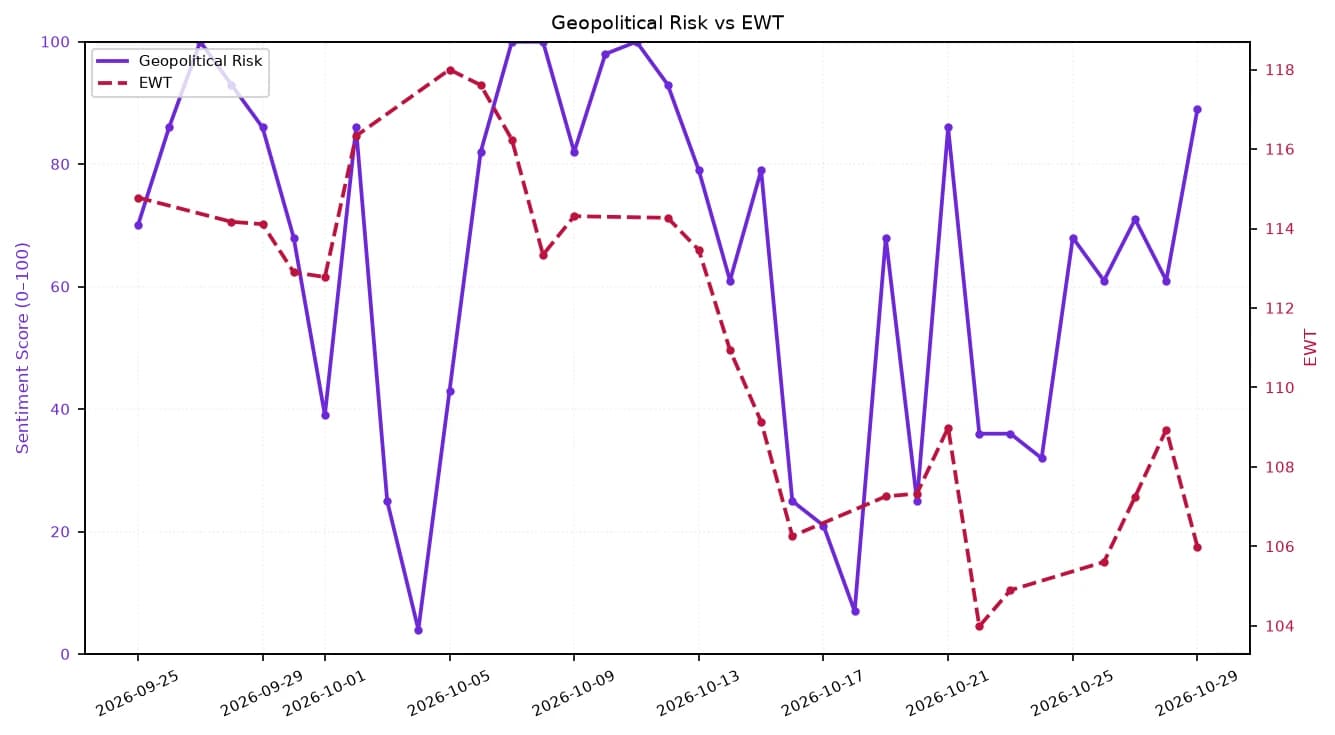
Sentiment Indicators
The confrontation matters because it goes to the core of democratic legitimacy and voter participation in the world’s most populous election market. The opposition’s accusation is not only political theatre: it is tied to a broader fight over the Special Intensive Revision of voter rolls, a process that has already triggered petitions claiming irregularities and questions over whether eligible voters are being wrongly removed. The controversy has widened after reports that about 130 million names were removed from electoral rolls in a recent Special Summary Revision across 17 states and union territories, a scale large enough to fuel concerns about disenfranchisement even as authorities argue the clean-up is needed to fix errors and eliminate duplicate or ineligible entries.
For investors, the immediate channel is not direct market pricing but policy and institutional risk. A prolonged standoff between the opposition and the Election Commission raises the probability of sharper political polarization, louder legal challenges and more scrutiny of the electoral process before major votes. That can matter for risk assets by increasing uncertainty around policy continuity, especially if the row becomes a proxy battle over the conduct of future elections. India’s equity market has recently shown signs of fragility, with the India ETF EPI trading at $46.73 on Oct. 27, below its 50-day moving average of $48.01 and its 200-day average of $49.26, while the broader SPY gauge in the data shows “Extreme Fear,” underscoring a wider global appetite for caution.
The opposition’s strategy also has a clear political logic. By linking the “vote theft” charge to the voter-roll revision, the INDIA alliance is trying to broaden the issue beyond partisan grievance into a question of democratic process. Rahul Gandhi’s tea meeting with alliance leaders after the Supreme Court protest helped frame the campaign as coordinated and ongoing, not a one-off demonstration. That increases pressure on the ruling establishment to defend the integrity of the revision exercise and on the poll body to show that deletions and corrections are being handled transparently.
The bullish case for the government is that the revision is a necessary administrative cleanup and that the courts, not street pressure, will settle the dispute. The bearish case is that the issue sticks, feeding mistrust among voters and opposition parties and forcing the Election Commission into a defensive posture. With the Nov. 1 rally approaching, the main catalyst is whether the alliance can convert legal and street protests into a broader political narrative capable of sustaining pressure on the poll body. If it does, the row could remain a recurring source of headline risk well into the next election cycle.
| Entity | Gains | Losses |
|---|---|---|
| INDIA bloc | ▲Political momentum | ▼Institutional goodwill |
| Election Commission | ▲Administrative authority | ▼Public trust |
| Ruling coalition | ▲If revisions are defended | ▼If controversy expands |
| Voters questioning roll deletions | ▲Visibility for grievances | ▼Time and certainty |