India’s corporate governance gap is widening just as investors are demanding higher standards from one of the world’s fastest-growing markets.
India boardroom gaps widen across Nifty 100
Women still occupy only one in five board seats across Nifty 100 companies, a share that has not budged in four years, while the number of independent directors under 50 has also slipped, according to the latest boardroom review. More worrying for capital allocators, 17 companies — largely state-run — do not meet the required minimum of independent directors, underscoring how uneven governance remains across India Inc.
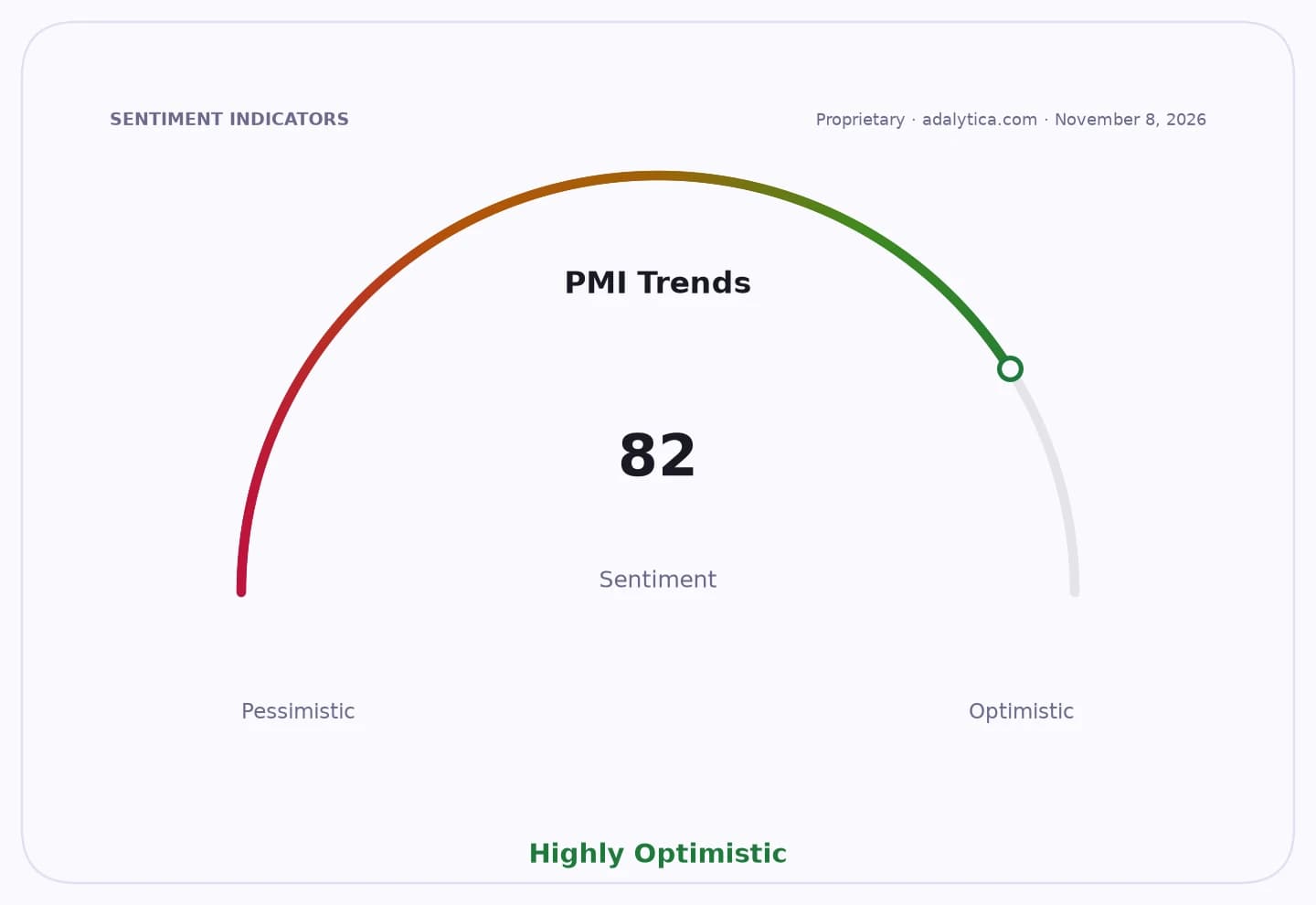
Sentiment Indicators
That matters because board quality is not a cosmetic issue. In India, where retail participation is rising and global funds continue to look for long-duration growth, weak board oversight can translate into slower capital deployment, poorer disclosure, weaker checks on management and ultimately a higher cost of capital. Companies with more credible governance typically get rewarded with deeper investor trust, better access to funding and, over time, a valuation premium. Those that do not risk a persistent discount.
The numbers also point to a problem the market has been underestimating: reform has stalled even as India’s economy has been trying to project global ambition in sectors from clean energy to infrastructure. If board composition is stuck, it suggests the governance improvements investors hoped would accompany India’s growth story are not flowing evenly through the listed universe. That leaves the best-run private companies better positioned to attract capital, while weaker public-sector names may remain trapped in a lower-confidence lane.
For investors, the takeaway is simple: governance is becoming a more important filter, not a side note. The opportunity is still in India, but it is increasingly concentrated in companies that combine structural growth with boardroom discipline. The market may continue to reward scale and secular expansion, but over the next cycle, governance quality could be the difference between compounding wealth and capital tied up in laggards.
| Entity | Gains | Losses |
|---|---|---|
| Well-governed private firms | ▲Higher valuation multiples | ▼Less standout if peers improve |
| State-run companies with board gaps | ▲Little near-term benefit | ▼Governance discount, scrutiny |
| Global institutional investors | ▲Better screening edge | ▼More due diligence burden |
| Minority shareholders | ▲Stronger oversight potential | ▼Weaker protection where boards are thin |