India is renewing its campaign to win a place in major global bond benchmarks after scrapping taxes on foreign investors and widening access to long-dated government securities, a move that could draw billions of dollars into the country’s debt market and lower borrowing costs.
India bond benchmarks gain after tax cuts
The fresh pitch matters because benchmark inclusion would turn policy reforms into structural capital flows, not just a one-off boost to sentiment. India has been trying to persuade index providers that it has fixed the main frictions that kept sovereign debt out of the biggest global portfolios: tax treatment, market access and settlement plumbing. Bloomberg earlier held back inclusion in its flagship Global Aggregate Index because of those operational hurdles.
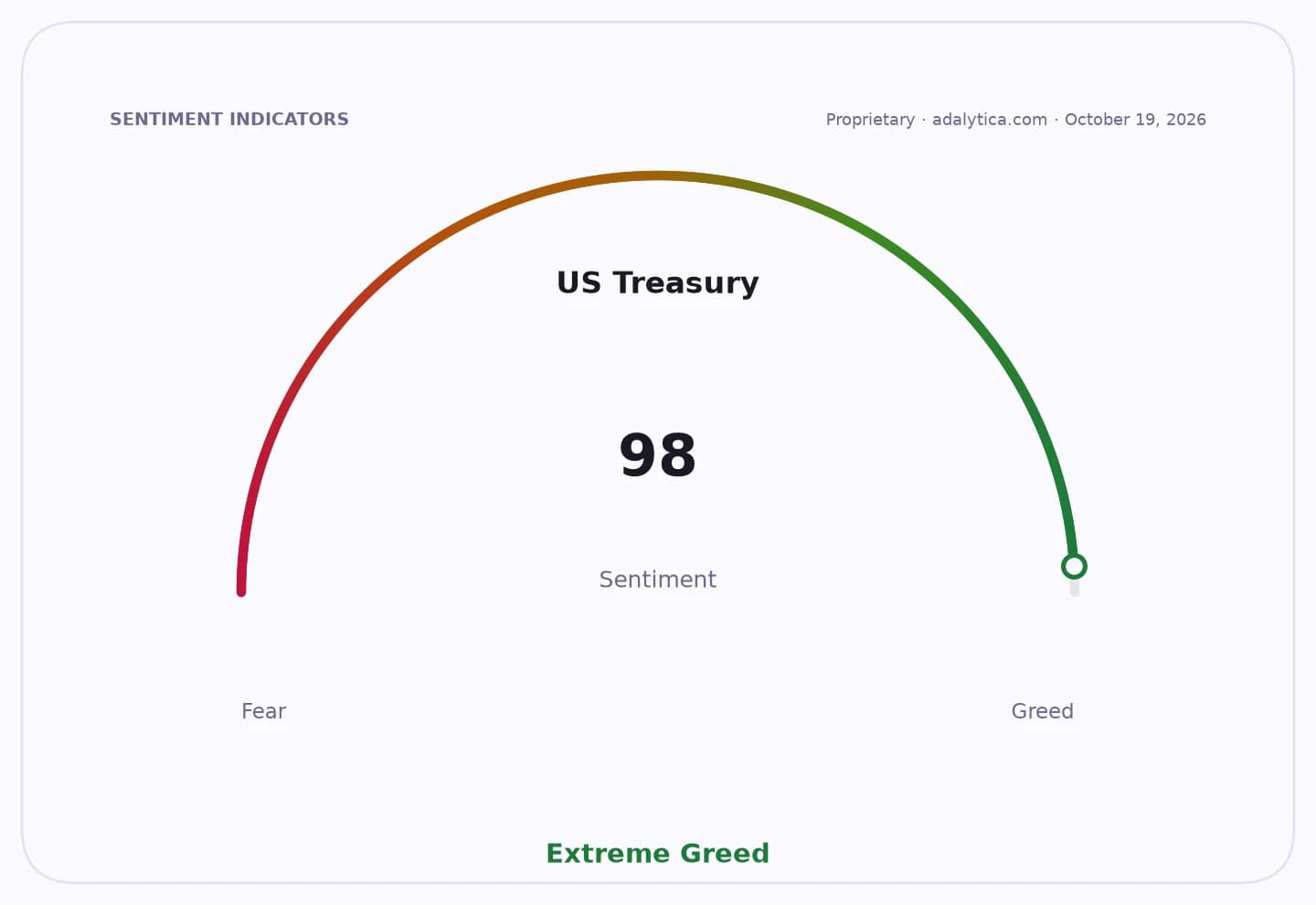
Sentiment IndicatorsⓘProprietary · adalytica.com · October 6, 2026
This is a snapshot — live sentiment, awareness and momentum for 130+ markets update continuously in the dashboard.Open AlphaPulse
According to the report, officials from the Reserve Bank of India and the finance ministry are preparing to engage index operators and may also speak with the Bank for International Settlements, after the government moved to make rupee debt more attractive to overseas buyers. The reforms reportedly eliminate the 12.5% long-term capital gains tax and the 20% withholding tax foreign portfolio investors paid on government securities, while also bringing 15-year, 30-year and 40-year bonds, plus sovereign green bonds, into the Fully Accessible Route.
That combination is designed to solve a problem global benchmark managers have repeatedly raised: even when a market is large and liquid, it can be kept out of passive indices if foreign investors face tax friction or settlement constraints. Standard Chartered’s Parul Mittal Sinha said the exemptions strengthen India’s case for inclusion, especially if the bonds become eligible for Euroclear settlement.
The economic stakes are significant. Market participants quoted in the report estimate the latest changes could attract $7 billion to $11 billion in fresh foreign inflows, with about $5 billion potentially arriving even before any formal index inclusion. If India were admitted to the Bloomberg Global Aggregate Index, passive allocations from benchmark-tracking funds could deepen the domestic bond market, support the rupee and reduce the government’s funding bill over time.
For investors, the key issue is not just the size of the potential inflows but their quality. Index-linked demand tends to be steadier than discretionary buying and can compress yields by broadening the investor base. That would help the sovereign, but it could also alter relative-value trades across emerging-market debt as managers rebalance toward India from markets already crowded in global benchmarks. India is already in JPMorgan’s EM bond index, Bloomberg’s EM local-currency government index and FTSE Russell’s emerging-market index, so the next leg is about winning the last major holdout.
The bear case is that inclusion is still not guaranteed. Bloomberg deferred India’s entry earlier this year, showing that reform headlines alone may not be enough if operational access and settlement issues linger. But the policy direction is now clearer, and the government appears intent on removing every objection it can. If those changes stick and index providers are satisfied, India could move from being a large but partially gated bond market to one of the most important fixed-income destinations in emerging markets.
| Entity | Gains | Losses |
|---|---|---|
| India government | ▲Lower borrowing costs; broader investor base | ▼Greater scrutiny on market access reforms |
| Foreign portfolio investors | ▲Tax relief; easier bond access | ▼Less room for yield premiums from illiquidity |
| Passive index funds | ▲New allocation opportunity | ▼Need to rebalance into India |
| Existing bondholders | ▲Potential price support from inflows | ▼Lower yields, richer valuations |