Central government employee groups are pressing the 8th Pay Commission to merge dearness allowance with basic pay once DA reaches 25%, a move that could materially accelerate wage growth for lower- and mid-level staff and raise the government’s long-term salary bill.
India central employees seek DA merger at 25%
The push matters because the DA is now adjusted twice a year but is never folded into basic pay under the current system, leaving employees waiting years for a meaningful reset in their take-home structure. Unions say an early merger would help workers keep pace with living costs, especially in large cities where housing, food and transport expenses bite hardest.
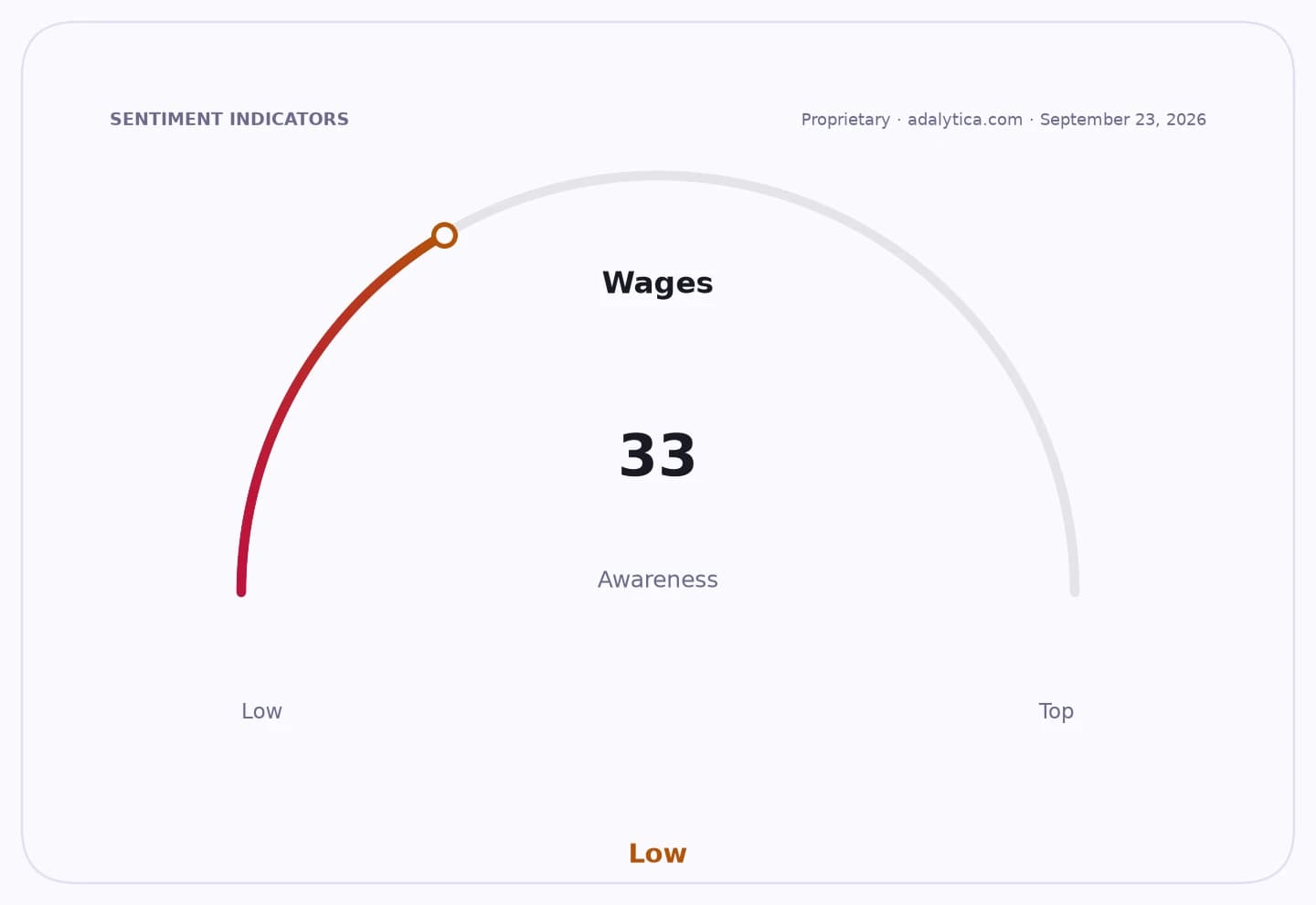
Sentiment IndicatorsⓘProprietary · adalytica.com · September 10, 2026
This is a snapshot — live sentiment, awareness and momentum for 130+ markets update continuously in the dashboard.Open AlphaPulse
Under one estimate cited by employee bodies, a Level 6 worker with a basic pay of Rs 37,800 under the 7th Pay Commission could see gross pay rise to about Rs 77,694 by January 1, 2033 if the 8th Pay Commission adopts a 2.1 fitment factor, annual DA increases average 4% and annual increments rise to 7%. That would imply a jump of roughly 106% from the revised basic pay level and, if DA is merged at around 28%, would effectively double the basic salary over seven years.
The proposal is part of the broader fight over how generous the next pay commission should be when it takes effect from January 1, 2026. The government has already signaled a revised national pay scale for 2026, with a minimum pay of Rs 20,000 and a maximum of Rs 156,000, but the final outcome will depend on the commission’s report and cabinet approval.
For investors, the issue is less about one salary chart than about the fiscal consequences. A DA merger would lift recurring pay and pension obligations for the central government, potentially widening budget pressure even as it gives millions of employees more disposable income and could support consumer spending in a weak demand environment.
That also makes the debate relevant for consumer-facing sectors and rate-sensitive markets. Higher government wages can support discretionary demand, but a larger pay-and-pension outlay can complicate fiscal math at a time when inflation, growth and spending commitments are already competing for room in the budget.
The next catalyst is the 8th Pay Commission’s formal recommendations and the government’s response, which will determine whether the DA-merger demand stays a union proposal or becomes part of the new pay structure.
| Entity | Gains | Losses |
|---|---|---|
| Level 6 central government employees | ▲Faster salary growth | ▼Longer wait under current DA system |
| Lower-paid employees in big cities | ▲Higher real income | ▼Inflation erosion without merger |
| Central government | ▲Political goodwill if pay rises | ▼Bigger recurring wage and pension bill |
| Consumer-facing companies | ▲Stronger household spending | ▼Fiscal tightening if payouts strain budget |