From October 1, salaries will be raised across several categories of Russian public-sector workers, with regional governments also adding their own indexation as wage pressure and inflation keep eroding pay.
Russian Regions Raise Public Sector Wages from Oct. 1
The biggest immediate gain goes to employees of state institutions outside the so-called “decree” categories — teachers, doctors, nursery staff, social workers and cultural workers are covered by separate pay rules — with Novosibirsk Oblast lifting their pay by at least 7.5% for about 38,000 workers in its public institutions.
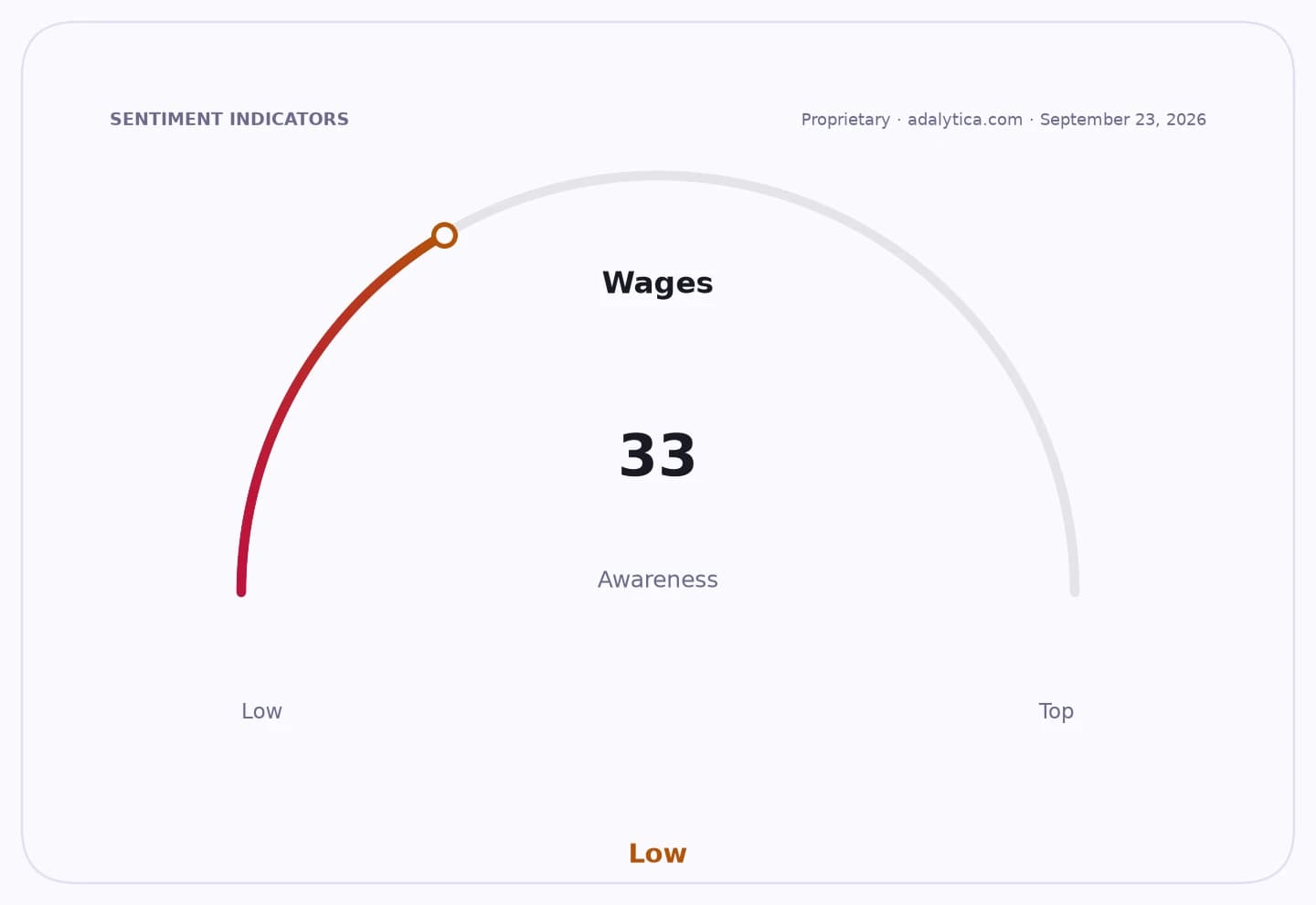
Sentiment IndicatorsⓘProprietary · adalytica.com · September 23, 2026
This is a snapshot — live sentiment, awareness and momentum for 130+ markets update continuously in the dashboard.Open AlphaPulse
The move matters because public-sector wages are a major channel through which the state supports household income, consumption and local demand. In regions where budgets are already tight, even a 4% to 7.5% increase forces governors to weigh payroll costs against spending on infrastructure, utilities and services.
The indexation is not uniform. Ivanovo Oblast will raise minimum salaries for workers in regional state institutions and government bodies by 7.4%, Udmurtia will add 6.3%, Bryansk Oblast will index tariffs and official pay scales by 4%, and Sverdlovsk Oblast will increase wage funds by 4% for budget workers outside the presidential decree categories and for local government employees.
For investors, the story is less about direct market exposure than about the broader inflation-and-spending backdrop. Higher public pay can support consumer demand, but it also raises fiscal pressure for Russian regions and can feed wage growth expectations at a time when policymakers are still trying to balance incomes, budget discipline and price stability.
That makes the October round of increases worth watching as a read-through for future regional budgets, household spending and any further wage policy moves heading into year-end. The next catalyst will be how quickly other regions follow with their own indexation and whether the increases translate into broader labor-market wage drift.
| Entity | Gains | Losses |
|---|---|---|
| Regional public workers | ▲Higher monthly pay | ▼None directly |
| Russian regional governments | ▲Short-term labor stability | ▼Higher payroll costs |
| Households/consumers | ▲More disposable income | ▼Inflation risk if costs pass through |
| Budget discipline | ▲— | ▼Tighter fiscal room for spending |