Kirov region’s average after-tax salary of 56,703 rubles in the second quarter of 2026 underscores how far incomes in much of regional Russia remain below the country’s wealthiest labor markets, and why local wage claims are drawing scrutiny.
Kirov Region Average Salary Is 56,703 Rubles
The figure, published in a ranking by RIA and based on the ratio of earnings to the cost of a fixed basket of goods, put Kirov 56th out of 85 regions. That places it squarely in the middle of the lower half of the national table, where a modest pay packet buys less than it would in Russia’s richer regions. The same ranking showed Moscow with average pay of 119,900 rubles, roughly double Kirov’s level, while the oil-and-gas-heavy Yamalo-Nenets autonomous district led the country at 155,000 rubles. At the bottom was Chechnya, with 35,800 rubles.
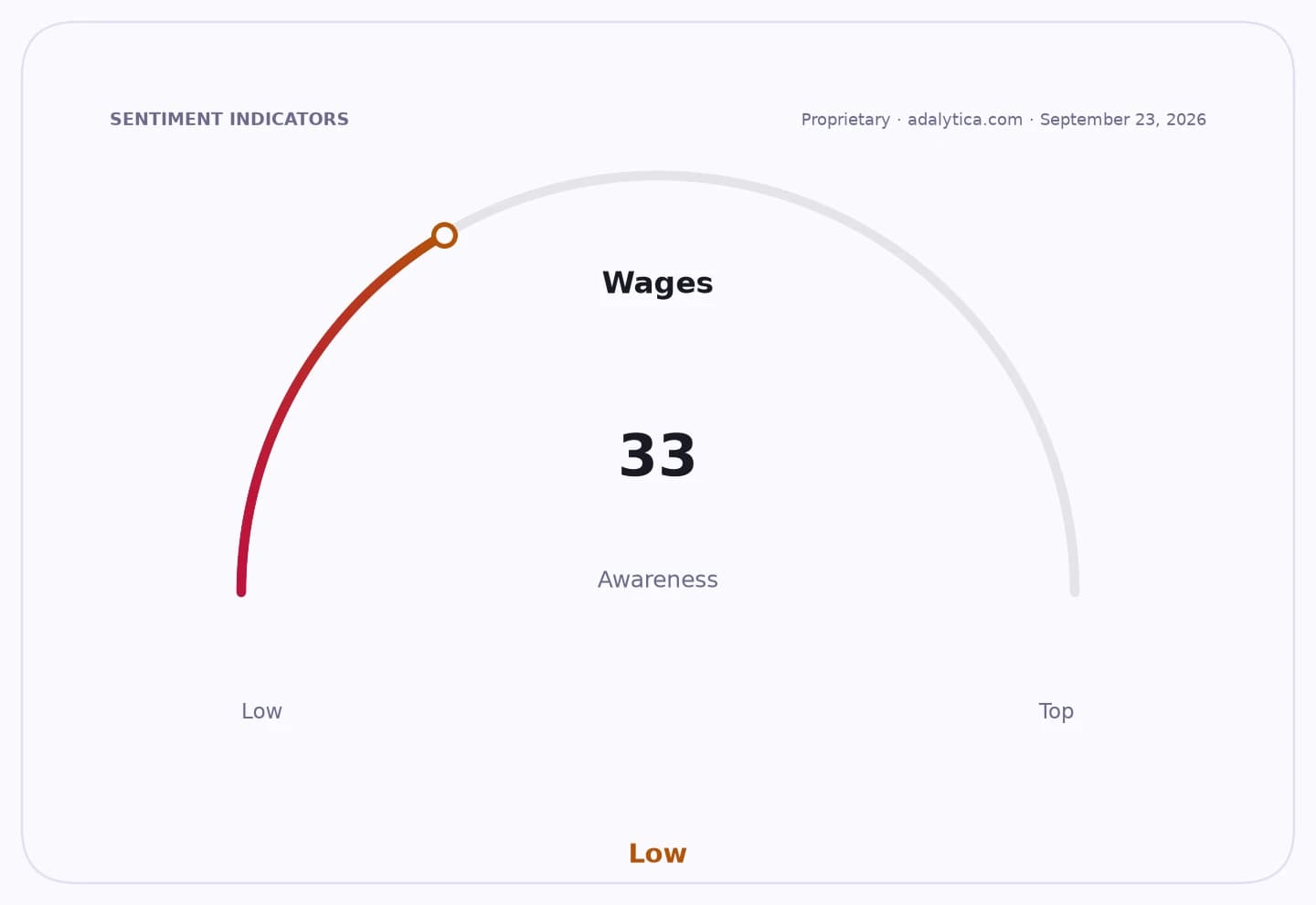
Sentiment IndicatorsⓘProprietary · adalytica.com · September 25, 2026
This is a snapshot — live sentiment, awareness and momentum for 130+ markets update continuously in the dashboard.Open AlphaPulse
The more immediate economic significance is the gap between what residents actually take home and the higher wage levels previously cited by local authorities, who had put the average above 70,000 rubles. That discrepancy matters because wage data feed directly into expectations for consumption, household resilience and the political narrative around living standards. If official local claims overstate pay, the risk is that policy responses are calibrated to a reality that is too optimistic.
For investors and businesses, the number is another reminder that Russia’s consumer market is highly uneven and that regional demand is constrained by real purchasing power, not just nominal wages. A salary of 56,703 rubles after tax leaves less room for discretionary spending, especially when measured against basic living costs. That can temper retail sales, limit service-sector growth and keep pressure on employers trying to attract and retain workers without sharply raising payrolls.
The ranking also highlights a broader tension in Russia’s labor market: wages are rising in some sectors and regions, but not uniformly enough to erase structural disparities. That has become more visible as debate intensifies around minimum wage reform, with workers in lower-paid occupations pushing for higher floor pay while firms warn that further increases could worsen hiring freezes and squeeze margins. The latest regional data fit that backdrop, suggesting that the country’s wage gap is not just a statistical issue but a drag on consumption and labor mobility.
For markets, the key takeaway is that regional income data remain a useful gauge of the health of domestic demand in Russia outside the biggest urban centers. As long as pay growth in places such as Kirov lags both headline claims and richer regions, consumer spending will likely stay uneven, favoring essentials over discretionary categories and leaving little room for broad-based retail recovery.
| Entity | Gains | Losses |
|---|---|---|
| Kirov employers | ▲Lower wage burden | ▼Harder worker retention |
| Local consumers | ▲Small boost to headline income clarity | ▼Weak purchasing power |
| Moscow and richer regions | ▲Wider talent pull | ▼— |
| Retailers outside top cities | ▲Stable low-cost demand base | ▼Slower discretionary spending |