India and China have widened their military dialogue to the eastern frontier for the first time, a modest but economically important step that could help keep one of Asia’s most dangerous borders from spilling into trade, investment and market sentiment.
India-China armies hold Arunachal border talks

The two armies held their first Corps Commander-level meeting in Arunachal Pradesh on Sunday, marking the first time this mechanism has been used in the eastern sector rather than just Ladakh. That matters because the India-China border is not only a military flashpoint; it is a persistent geopolitical risk premium for companies, exporters and foreign investors weighing exposure to the world’s two most populous nations.
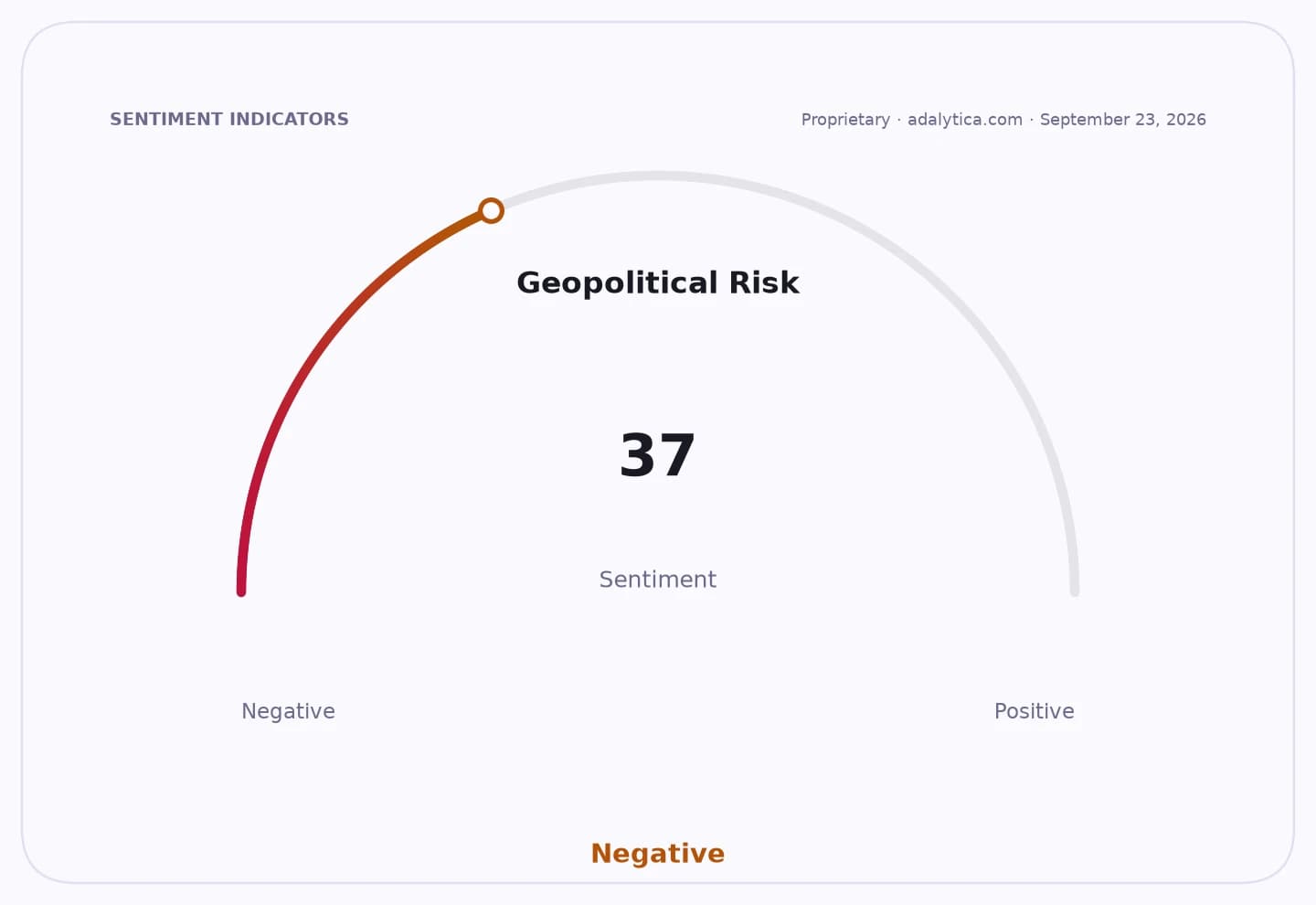
Sentiment IndicatorsⓘProprietary · adalytica.com · September 7, 2026
This is a snapshot — live sentiment, awareness and momentum for 130+ markets update continuously in the dashboard.Open AlphaPulse
The meeting at Vacha-Damai came amid reports of tension in the Taksing area of Upper Subansiri district and only days after India and China held back-to-back diplomatic engagements on border affairs. The sequence suggests both sides are trying to preserve communication even as patrol friction and territorial claims remain unresolved. For investors, that is the key takeaway: the relationship is still strained, but the channels that reduce the odds of a sudden escalation are widening.
The dialogue also arrives just before India hosts the BRICS summit in New Delhi, where Chinese President Xi Jinping is expected to attend. That timing underlines how strategic competition and economic pragmatism are still moving in parallel. Neither side is backing away from its positions, but both appear intent on preventing border tensions from overwhelming broader regional engagement.
India’s Army said the 3 Corps, based in Rangapahar, is responsible for the LAC in Arunachal Pradesh, alongside the Tezpur-based 4 Corps. Expanding the Corps Commander mechanism to the east gives the two militaries another practical tool to manage disputes in a region where road building, troop deployments and surveillance activity all raise the risk of miscalculation.
That is why the latest meeting matters beyond the Himalayas. Stable India-China ties can support sentiment across Asian risk assets, reduce pressure on defense budgets over the medium term and make it easier for India to sell itself as a destination for manufacturing and capital that want an alternative to China without a crisis on its border. It also helps explain why India continues to attract strategic attention from countries seeking a counterweight to Beijing.
The economic stakes are not trivial. A serious border flare-up could disrupt logistics, lift military spending, unsettle the rupee and revive the kind of risk-off trade that pushes investors toward havens such as gold. By contrast, even incremental confidence-building lowers the odds of a shock that would hit sentiment first and trade flows second.
That backdrop has shown up in markets, where China-related risk gauges have remained elevated and gold has stayed well supported as investors hedge geopolitical uncertainty. India, meanwhile, continues to draw attention as a long-term growth story, but one that is still shadowed by border security concerns. For patient investors, the message is not to trade every headline, but to recognize that diplomacy on the frontier is one of the quiet supports behind broader Asian stability.
The latest talks do not solve the dispute. They do, however, show that both sides still prefer management over confrontation. For investors, that makes the Arunachal meeting worth watching: it may not change earnings next quarter, but it can shape the risk environment that determines whether long-term capital feels comfortable staying put.
| Entity | Gains | Losses |
|---|---|---|
| India and China militaries | ▲Better communication | ▼Less room for ambiguity |
| Border-region investors | ▲Lower escalation risk | ▼Fewer crisis-driven trades |
| Gold and safe-haven assets | ▲Continued hedge demand | ▼If tensions ease further |
| Defense hawks | ▲Validation of caution | ▼Reduced urgency from immediate flare-up |