India’s power system is under fresh stress as nearly 40% of coal-fired plants have dropped to critically low fuel stocks, raising the risk of higher generation costs and more government intervention just as electricity demand remains elevated.
India coal stocks fall to low levels
Data from the Central Electricity Authority showed 74 plants on September 19 had coal inventories below 25% of required levels, or enough to run for less than three days, up from about 60 a week earlier. That is a material deterioration for the world’s second-largest coal consumer, because it signals tighter operating buffers across the grid at a time when peak demand has been hovering between 230 gigawatts and 250 gigawatts after touching a record 270.70 gigawatts in May.
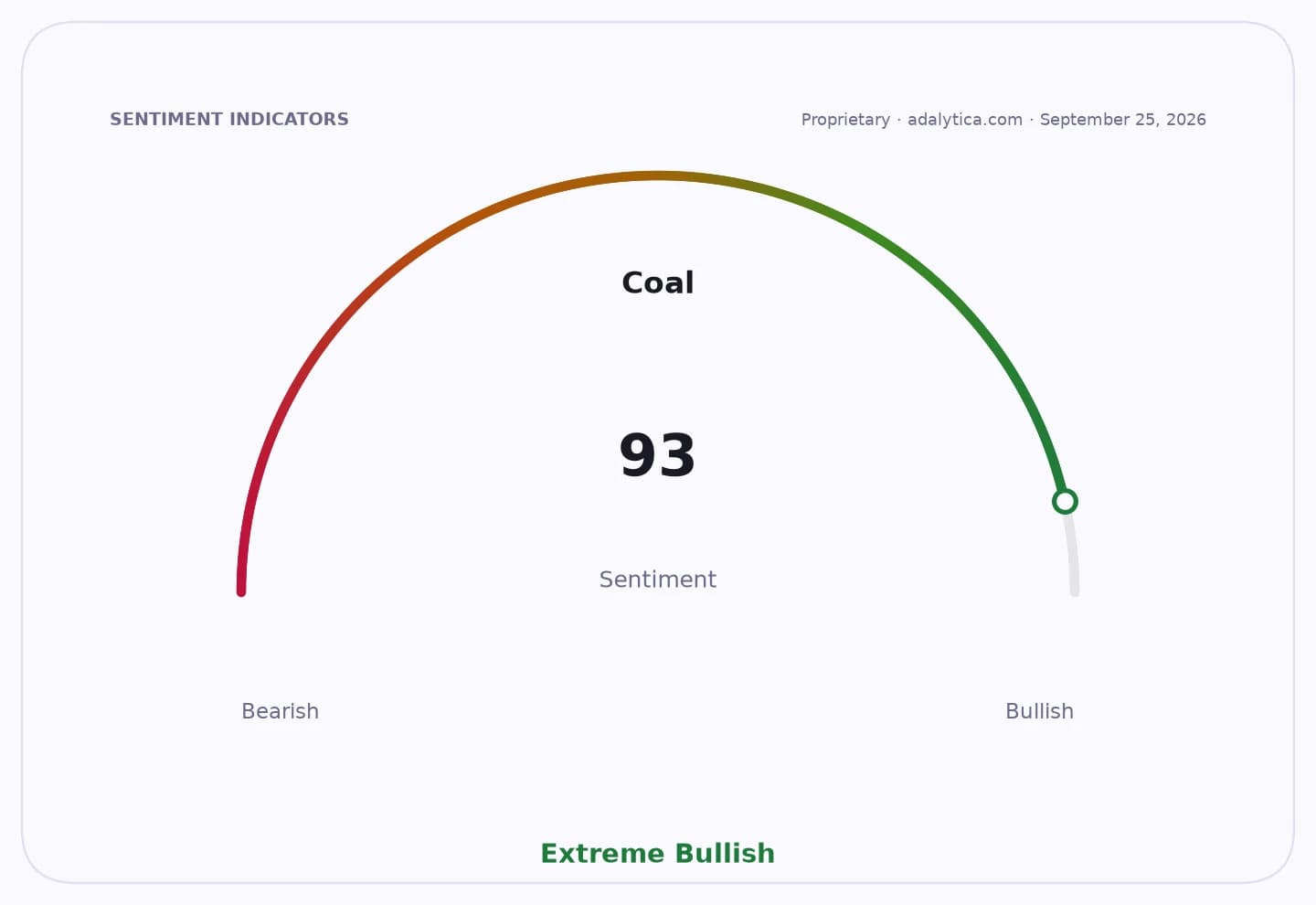
Sentiment IndicatorsⓘProprietary · adalytica.com · September 24, 2026
This is a snapshot — live sentiment, awareness and momentum for 130+ markets update continuously in the dashboard.Open AlphaPulse
The immediate economic impact is not just about shortages, but about price and reliability. When plants run low, utilities are forced to lean on costlier imported coal, raise purchases in the spot market or slow output from thermal units. Reuters reported last week that Indian power producers’ coal imports rose in August to a 15-month high as a heatwave lifted demand and hydro generation stayed weak. That combination lifts the cost of electricity generation and pressures margins for utilities that cannot fully pass through fuel costs.
Crisil analysts said the decline in coal stocks appears to be a temporary logistical problem rather than evidence of a structural supply squeeze, but that distinction matters little for investors in the near term. Even a logistics-driven shortage can ripple through the market by pushing up import volumes, forcing higher working capital needs, and keeping coal-linked equities and thermal power names in focus. The market tends to underestimate how quickly a buffer-stock problem becomes a pricing problem when demand is already running hot.
For investors, the setup is a classic second-order trade. Coal producers and miners benefit from stronger dispatches and import demand, while power generators exposed to fuel costs face margin pressure. Companies with secure captive supply, port access or logistics advantages should be better positioned than peers dependent on fragmented coal delivery chains. Any further strain would also strengthen the case for policy support, including faster coal movement, state intervention and potentially more domestic production incentives.
The broader narrative is that India’s energy transition is not replacing coal fast enough to eliminate its role as the grid’s shock absorber. Until storage, transmission and renewable balancing scale more aggressively, coal will keep absorbing demand spikes — and every supply disruption will translate into a market opportunity for the best-positioned miners, traders and utility operators. The trade here is not to panic over a temporary stock drawdown, but to own the firms that profit when the grid is forced to pay up for reliability.
| Entity | Gains | Losses |
|---|---|---|
| Coal India and miners | ▲Higher dispatches and pricing power | ▼Inventory normalization pressure |
| Imported coal suppliers | ▲Stronger demand from utilities | ▼Freight and cost volatility |
| Thermal power generators with low stock | ▲Potential policy support | ▼Margin squeeze from costlier fuel |
| Coal-linked utilities without captive supply | ▲Short-term demand visibility | ▼Higher working capital and spot fuel costs |