India's employment-based green-card queue gets a small but meaningful reprieve in November, with the EB-3 category moving ahead by 21 days while EB-1 and EB-2 stay frozen. For thousands of Indian applicants stuck in the world's longest U.S. immigration backlog, the shift does not clear the line, but it does signal modest movement in a system that has been constrained by per-country caps and years of demand.
India EB-3 Visa Bulletin Advances 21 Days
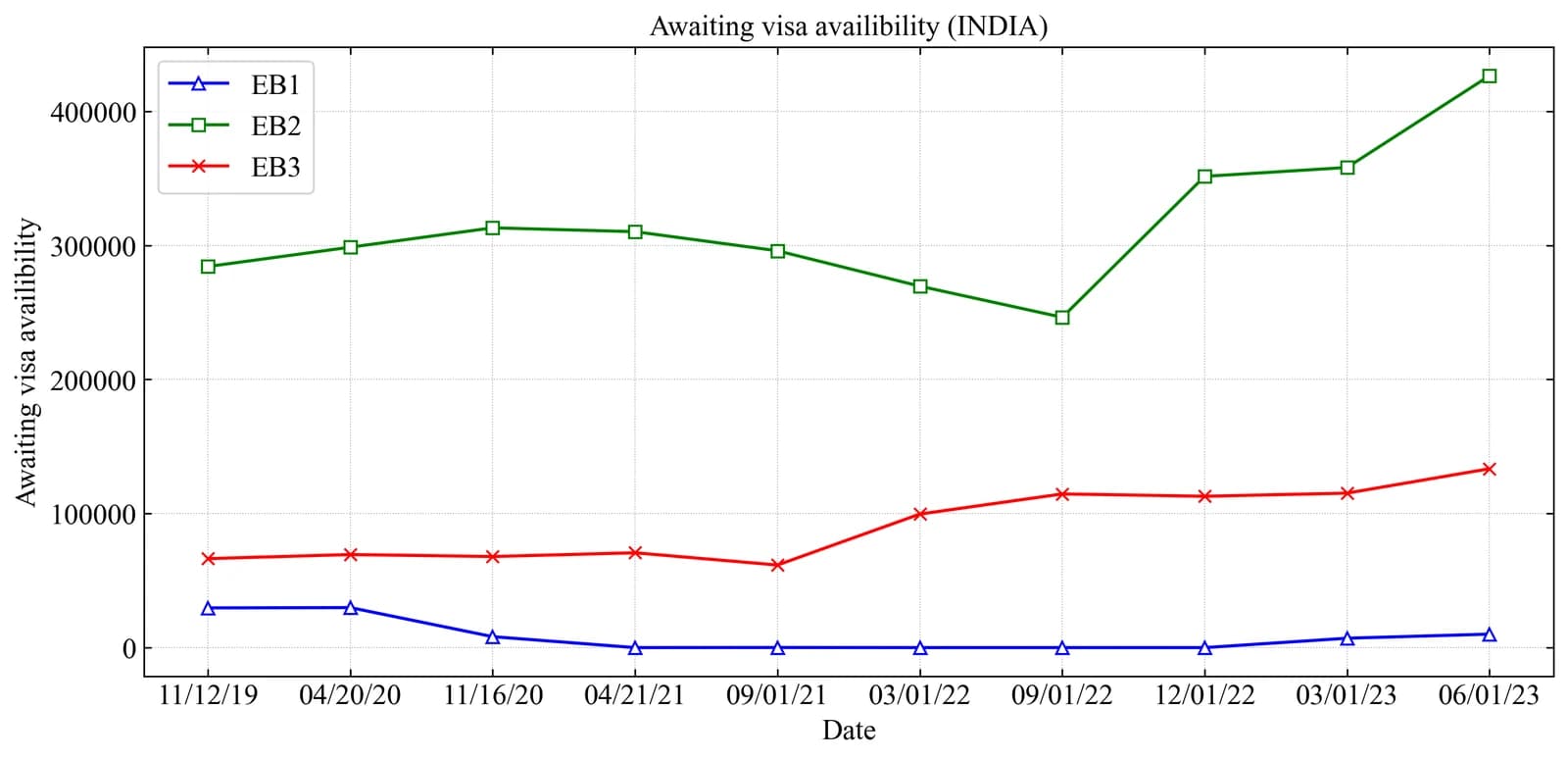
The U.S. State Department's latest Visa Bulletin sets India's EB-3 final action date at a later point in the calendar, while leaving the higher-skilled EB-1 and EB-2 categories unchanged from the prior month. That matters because the bulletin determines when green cards can actually be issued, affecting how long workers, employers and families must wait for permanent residency decisions.
Sentiment Indicators
The contrast across categories underscores how uneven the pipeline remains for Indian nationals. EB-1 and EB-2 are the main routes for highly skilled workers, including many in technology and professional services, so a stall there keeps pressure on employers that rely on long-tenured foreign staff and on applicants facing years of uncertainty over work authorization and family planning.
Family-sponsored categories also remain heavily backlogged. The F1 category for unmarried adult children of U.S. citizens stands at January 22, 2021, while F2A for spouses and children of permanent residents is at October 22, 2026; India's F4 family category is still at December 15, 2006. The persistence of those dates shows the broader immigration system is still rationing green cards far below demand.
For investors, the bulletin is more a labor-market and policy signal than a direct market catalyst, but it still matters for companies that recruit globally and for the U.S. tech and consulting sectors that depend on Indian talent. Visa delays can affect retention, staffing flexibility and the willingness of high-skilled workers to stay in the U.S. labor force, especially as political scrutiny of immigration and visa fraud intensifies.
The broader backdrop is a tougher political tone around visas and foreign labor, with lawmakers pressing for stricter enforcement and closer review. That makes any forward movement in the employment-based queue notable, even if November's update is too small to change the overall economics of the backlog.
| Entity | Gains | Losses |
|---|---|---|
| Indian EB-3 applicants | ▲Slightly shorter wait | ▼Still faces backlog |
| Indian EB-1/EB-2 applicants | ▲None | ▼Queue remains frozen |
| U.S. employers in tech/consulting | ▲Small relief on retention timing | ▼Ongoing visa uncertainty |
| Immigration backlog overall | ▲Marginal movement | ▼Demand still far exceeds supply |