India’s jobs problem is increasingly a regional one, with former NITI Aayog vice chairman Rajeev Kumar warning that weak employment creation in states such as Bihar, Jharkhand and parts of eastern India is forcing workers to move elsewhere in search of income.
India jobs gap widens across eastern states
That matters economically because the uneven spread of growth is no longer just a political talking point: it is shaping labor mobility, household earnings and the ability of poorer states to participate in the national expansion. Kumar cited official Periodic Labour Force Survey data showing unemployment among 18- to 25-year-olds at about 17%, a level that points to persistent underemployment in the country’s core working-age cohort. He also highlighted stark inter-state income gaps, saying Goa’s per capita income is roughly 10 times Bihar’s, underscoring how national averages can mask deep local disparities.
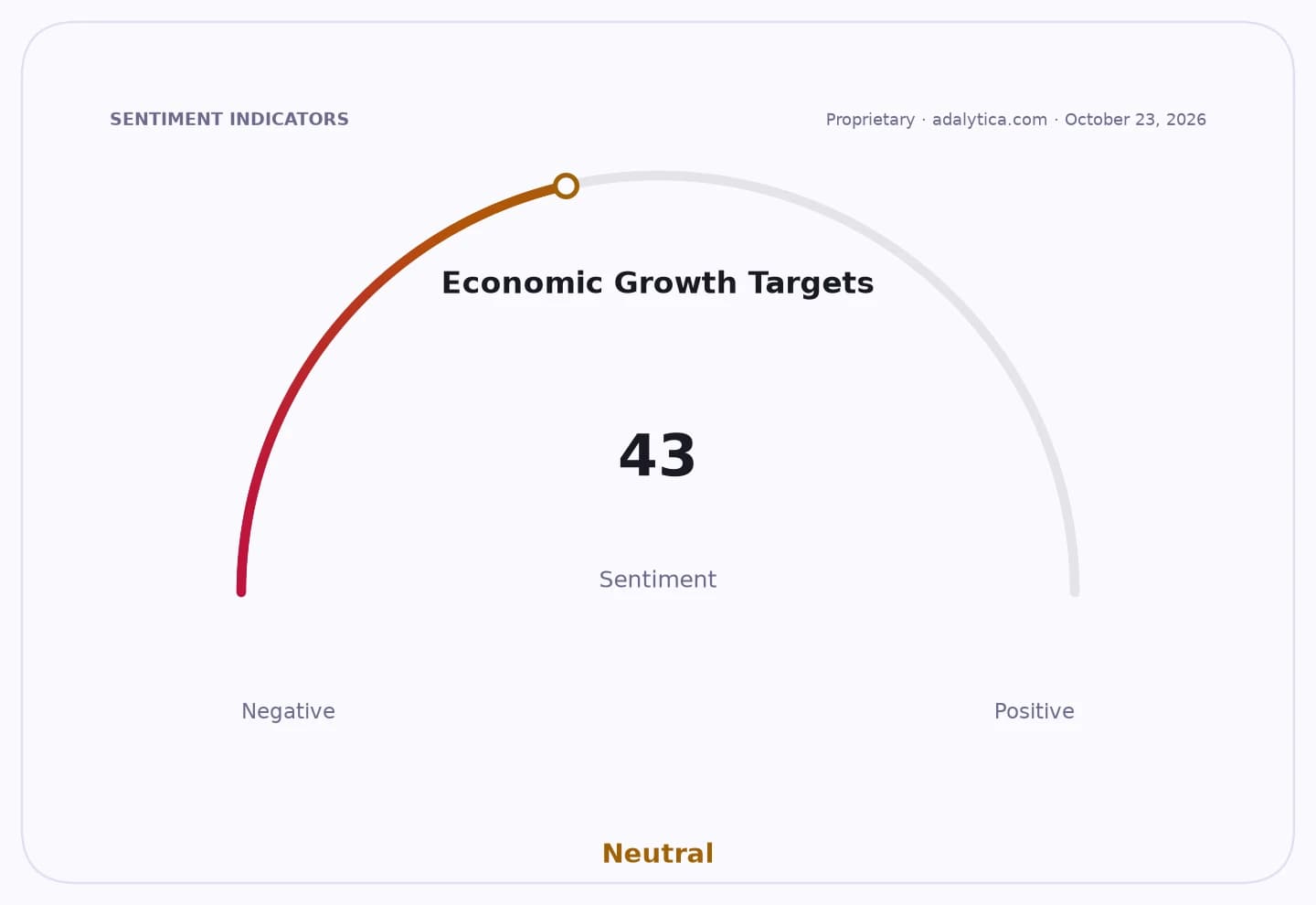
Sentiment Indicators
For investors, the message is that India’s growth story still depends on whether low-income states can generate jobs, raise skills and keep more of their workforce productively employed. If they cannot, migration pressure will stay elevated, wage growth in weaker regions will remain subdued and consumption demand will be uneven, favoring companies with exposure to urban and western India over those reliant on poorer eastern markets.
Kumar’s comments also land at a time when the labor market is showing some improvement on the margins. The latest PLFS data cited in the report showed labor-force participation for people above 15 years old at 55.5%, while urban participation rose to 50.7% in September from August and women’s participation increased to 34.6%. But those gains do not erase the structural divide Kumar described between states that can absorb labor and those that export it.
The policy implication is clear: Bihar, Jharkhand, Odisha, Chhattisgarh, eastern Uttar Pradesh and the northeast need more targeted capital spending, industrial activity and vocational training if India wants to convert a young population into a growth engine rather than a source of outward migration. The risk for markets is that without a broader spread of job creation, India’s domestic-demand story remains strong in headline terms but patchy in practice.
| Entity | Gains | Losses |
|---|---|---|
| Migrant workers | ▲Income opportunities | ▼Local employment access |
| Bihar, Jharkhand, eastern states | ▲Higher policy attention | ▼Labor outflow |
| Urban and western India | ▲Workforce supply | ▼Wage pressure |
| Consumer-facing companies | ▲Migrant spending | ▼Rural demand weakness |