Mustard and soybean oilseed prices rose last week in India as supplies tightened and festive-season buying picked up, while peanuts, cottonseed and palm oil weakened on fresh arrivals and softer overseas benchmarks.
India edible oilseed prices rise on tight supply
The shift matters because edible oilseed prices feed directly into food inflation, crushing margins and import demand in one of the world’s biggest vegetable oil markets. Strength in mustard and soybean can lift farmgate returns and support domestic processors, but it also raises costs for refiners and consumers heading into the festival period.
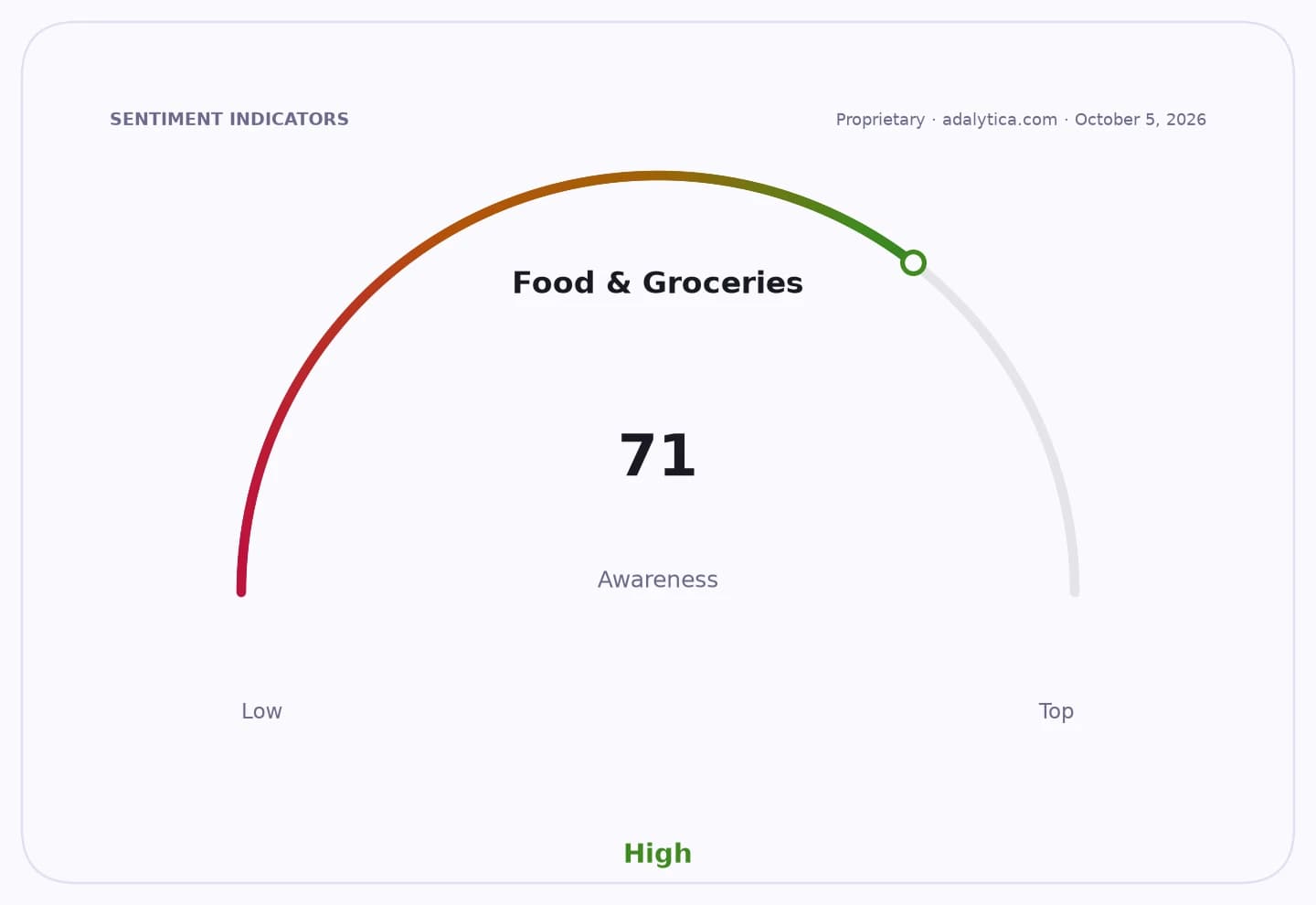
Sentiment IndicatorsⓘProprietary · adalytica.com · October 4, 2026
This is a snapshot — live sentiment, awareness and momentum for 130+ markets update continuously in the dashboard.Open AlphaPulse
Mustard seed gained 150 rupees to 8,400-8,450 rupees per quintal, while mustard oil in Dadri rose 300 rupees to 17,000 rupees per quintal. Mustard oil in packed and kachi ghani form also edged higher, reflecting tighter availability and stronger demand from oil mills.
Soybean seed and loose soybean rose 100 rupees and 50 rupees, respectively, to 6,050-6,100 rupees and 5,750-5,850 rupees per quintal. Soybean oil in Delhi climbed 100 rupees to 15,250 rupees per quintal, while Indore soybean oil and degummed soybean oil also firmed, supported by local festive demand and buying from larger plants.
By contrast, peanut oilseed fell 150 rupees to 7,400-7,850 rupees per quintal as new crop arrivals increased. Gujarat peanut oil dropped 500 rupees to 16,500 rupees per quintal, and solvent refined peanut oil also eased.
Palm oil and palmolein slipped as well after stocks rose in Malaysia and Indonesia, pressuring futures abroad and filtering through to domestic prices. Palmolein in Delhi fell 150 rupees to 15,350 rupees per quintal, while ex-Kandla palmolein declined 100 rupees to 14,100 rupees.
Cottonseed oil dropped 450 rupees to 14,550 rupees per quintal on the start of new crop arrivals, underscoring how fresh supply is beginning to cap prices across the oilseed complex.
The mixed trend points to a market balancing tighter domestic availability in some oils against a broader seasonal influx of crops and weak global palm prices. Traders will now watch whether festive demand keeps mustard and soybean firm, or whether larger arrivals and soft import parity pull the complex lower again in the coming weeks.
| Entity | Gains | Losses |
|---|---|---|
| Mustard farmers | ▲Higher seed prices | ▼- |
| Soybean growers/processors | ▲Better realizations | ▼- |
| Oil mills | ▲Stronger raw-material demand | ▼Higher input costs |
| Peanut, palm and cottonseed sellers | ▲- | ▼Lower prices on arrivals/weak overseas cues |