India’s emissions stopped rising at the breakneck pace investors and policymakers had grown used to in 2025, and the reason matters: clean electricity is starting to displace coal rather than merely chase faster demand.
India emissions flatten as renewable power rises
That is a meaningful shift for the world’s third-largest emitter because power demand is still growing, the economy is still expanding and coal still supplies the bulk of India’s electricity. Yet the latest United Nations Environment Programme report suggests the balance is beginning to change. Renewable generation rose by about 98 terawatt-hours in 2025, roughly twice the increase in demand, allowing coal-fired output to fall by about 44 TWh, or 2.9%. Coal’s share of generation slipped to around 71% from about 75% a year earlier.
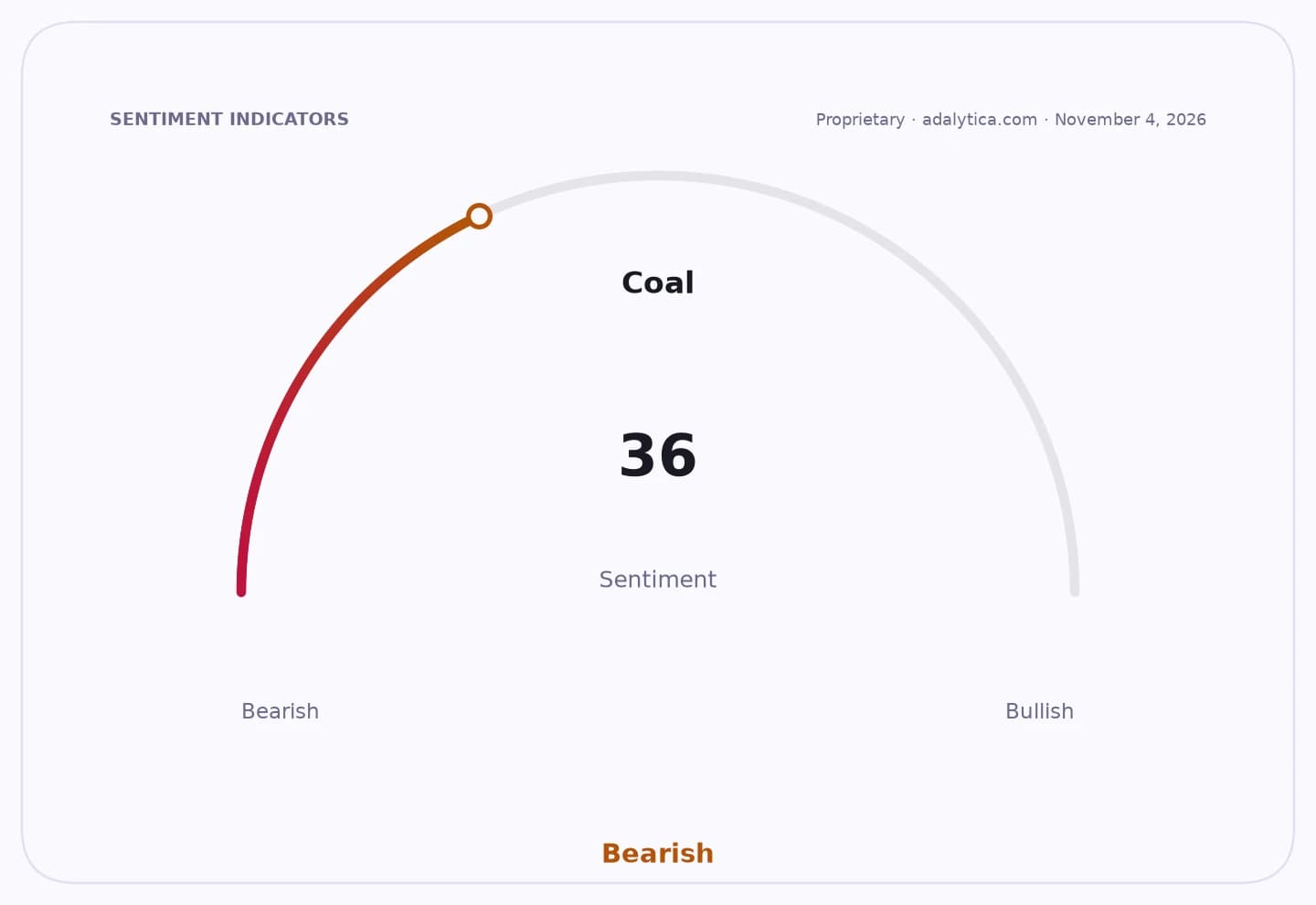
Sentiment Indicators
For investors, the key question is not whether India will need more electricity — it will — but what kind. If renewable supply keeps outpacing new demand, the growth story for India’s grid becomes less about ever-higher coal burn and more about batteries, transmission lines, solar developers and grid equipment. That is the kind of transition that can reshape capital allocation for years, not quarters.
The scale of the clean-power buildout was striking. Solar generation jumped 37% to add 53 TWh, wind contributed another 22 TWh and hydropower recovered by about 21 TWh after weaker conditions in earlier years. Combined wind and solar growth hit 75 TWh, more than double the previous record in 2022. For the first time, solar overtook hydropower as India’s largest single clean-energy source, while all non-fossil generation, including nuclear, rose to about 27% of total electricity.
This is why long-term investors should pay attention. India’s energy transition is no longer only a policy ambition; it is beginning to show up in the operating data. That does not make the country a low-carbon market overnight. Coal still generated about seven in every 10 units of electricity, and coal output in 2025 remained 46% above 2015 levels. But the direction of travel matters more than the snapshot, especially in a country where power demand can swing sharply with weather, industrial activity and monsoon conditions.
There are, however, important caveats. Milder weather helped reduce cooling demand, and researchers estimate that cooler summer temperatures cut electricity use by about 32 TWh. GDP still grew by about 6.6%, but industrial demand slowed. In other words, 2025 may not be a clean read on structural decarbonisation so much as the first year in which renewable growth was strong enough to absorb a softer demand environment and still pressure coal.
That distinction matters for portfolio construction. If you are looking at Indian utilities, power equipment makers or renewable developers, the opportunity is tied not just to capacity additions but to the grid’s ability to absorb them. Solar and wind need storage to shift daytime power into the evening peak, transmission to move electricity from renewable-rich states such as Gujarat and Rajasthan to load centres, and flexibility in the wider system so clean power is not curtailed when supply is abundant.
That is where the next investment cycle likely sits. India’s transmission buildout, battery storage ecosystem and pumped-hydro projects may matter as much as raw megawatt additions. The country’s Green Energy Corridor and broader transmission plans are designed to connect more than 500 GW of non-fossil capacity by 2030, but delays could blunt the impact if generation keeps outrunning grid readiness.
For shareholders, this makes the clean-energy story more nuanced than a simple “renewables up, coal down” trade. Coal will not disappear quickly, and the sector still anchors reliability in a fast-growing economy. But the market value may increasingly shift toward companies that can solve the bottlenecks: grid operators, storage suppliers, solar developers with scale, and utilities that can balance intermittent supply with rising demand.
The broader message for investors is encouraging. India’s emissions may not have entered a sustained decline yet, but 2025 looks like the first year in which clean power began to bend the curve. If hotter years do not reverse the trend, and if storage and transmission keep pace, India could move from a coal-led growth model to a more diversified electricity system. That would be a major structural change for the economy — and a long runway for patient investors who can own the transition, not just watch it.
| Entity | Gains | Losses |
|---|---|---|
| Renewable developers | ▲Higher demand for solar and wind | ▼Slower fossil-fuel expansion |
| Grid and storage firms | ▲More need for batteries and transmission | ▼Less room for delay |
| Coal generators | ▲Short-term reliability role | ▼Falling generation share |
| Long-term investors in India clean power | ▲Exposure to structural growth | ▼Near-term weather-driven volatility |