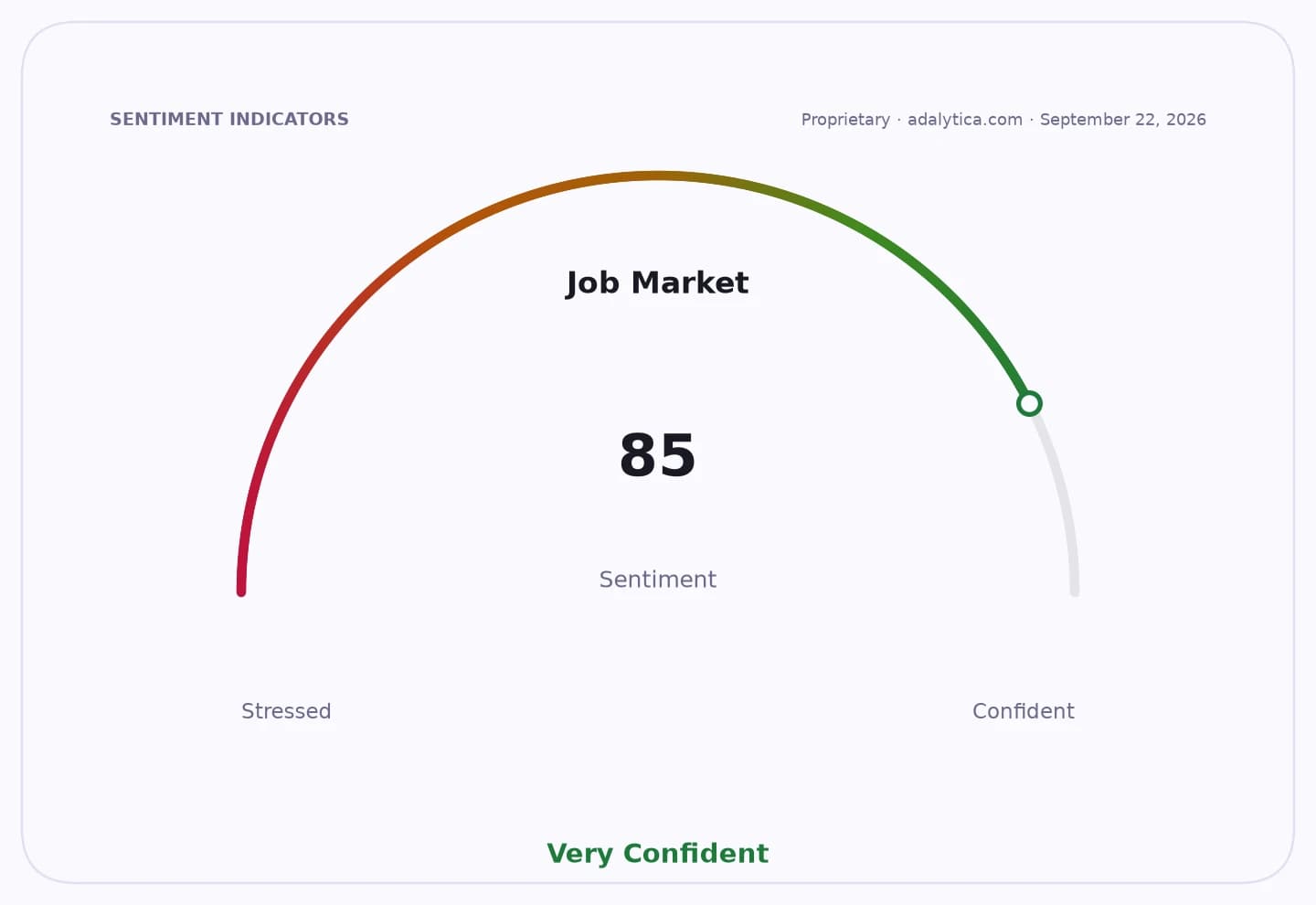
Indian families are confronting a painful new question: if artificial intelligence is changing entry-level work and the value of a degree can shift in just a few years, what should children actually study now?
India families rethink degrees as AI changes jobs
That matters far beyond anxious dinner-table talk. Education decisions in India have long been built around a simple bargain — engineering, medicine or a top overseas degree could unlock stable careers and social mobility. AI is weakening that bargain at the very moment geopolitical tensions are making foreign study less predictable, especially for families who once saw the U.S. as the obvious destination.
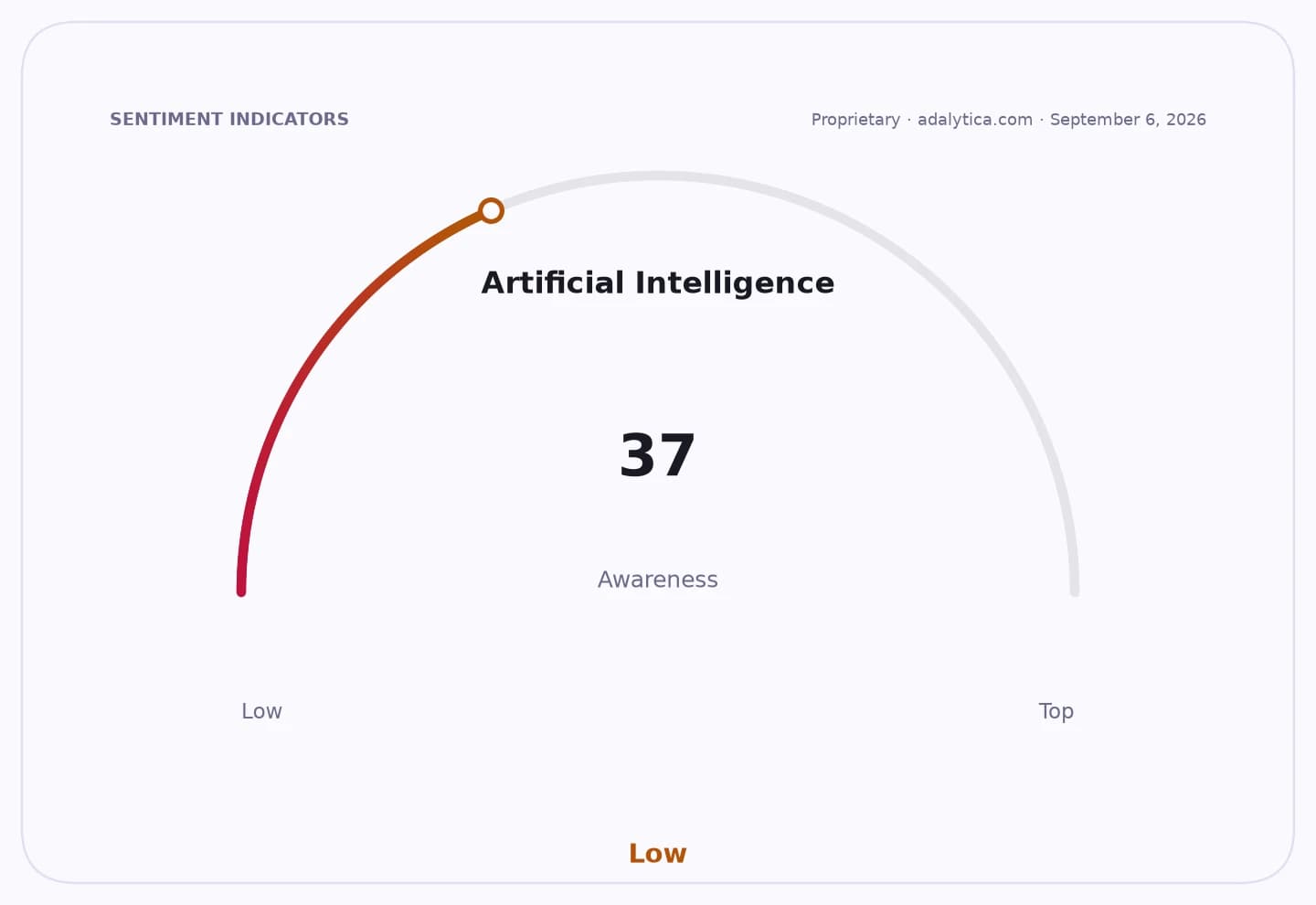
Sentiment IndicatorsⓘProprietary · adalytica.com · September 6, 2026
This is a snapshot — live sentiment, awareness and momentum for 130+ markets update continuously in the dashboard.Open AlphaPulse
Parents are already responding in real time. Some are steering children toward fields that seem harder to automate, such as antiques, acting, law and the humanities. Others are still betting on computer science, but with a much more skeptical eye. The old idea that a child could study one discipline, land one job and ride it for 40 years is giving way to a more fragile, and more realistic, model of continuous reskilling.
For investors, the shift is a reminder that AI is not just a corporate capex story. It is also a demand story for education, test preparation, online learning, credentialing and career-skills platforms that can help students adapt faster than traditional universities. It also puts pressure on legacy colleges, which many parents now see as too slow to update curricula for a workplace where junior tasks are already being automated.
That tension is visible in the market too. Shares of online education names such as TAL Education and New Oriental Education have been volatile, even as the broader thesis around AI-driven reskilling remains intact. TAL’s recent technical readings show the stock trading above both its 50-day and 200-day moving averages, while New Oriental has also held above those benchmarks, suggesting investors are still willing to pay for education businesses that can adapt to new learning demands. Shares of LRN, meanwhile, have bounced back from earlier weakness, underscoring that the market is looking for education models with resilience and recurring demand.
The deeper story is that AI may not kill education spending; it may change what families want to buy. Parents are no longer asking only, “What course leads to a job?” They are asking, “What kind of learner will my child need to become?” That favors schools, platforms and institutions that teach adaptability, practical digital fluency and lifelong learning over narrow degrees built for a world that no longer exists.
There are real risks in drawing the wrong conclusion. Not every “AI-proof” career will stay safe, and not every tech degree is obsolete. But the long-term investor takeaway is clear: the winners in education will be the businesses that help students keep reinventing themselves. In a world where careers may last three to five years before changing shape, that is the most valuable lesson of all — and it is worth watching closely.
| Entity | Gains | Losses |
|---|---|---|
| Adaptive education providers | ▲Higher demand for reskilling | ▼Legacy curriculum models |
| AI-literate students | ▲Better job flexibility | ▼Narrow degree tracks |
| Overseas universities | ▲More scrutiny on ROI | ▼Confidence in foreign degrees |
| Traditional “safe” careers | ▲Fresh interest from families | ▼Automatic status as default choices |