China is widening its official job map to capture the labor needs of AI, robotics and the green economy, a sign that the world’s second-largest economy is trying to hardwire industrial upgrading into its education and employment system.
China Expands Jobs List for AI, Robotics, Green Economy
That matters because Beijing is not just naming new occupations — it is signaling where capital, hiring and policy support are likely to flow next. The latest addition of 11 professions and 23 work types gives the government a framework to channel workers into fast-growing areas such as embodied intelligent robots, digital twin engineering, hydrogen production and microgrid management, all of which sit at the center of China’s push for higher-value manufacturing and cleaner growth.
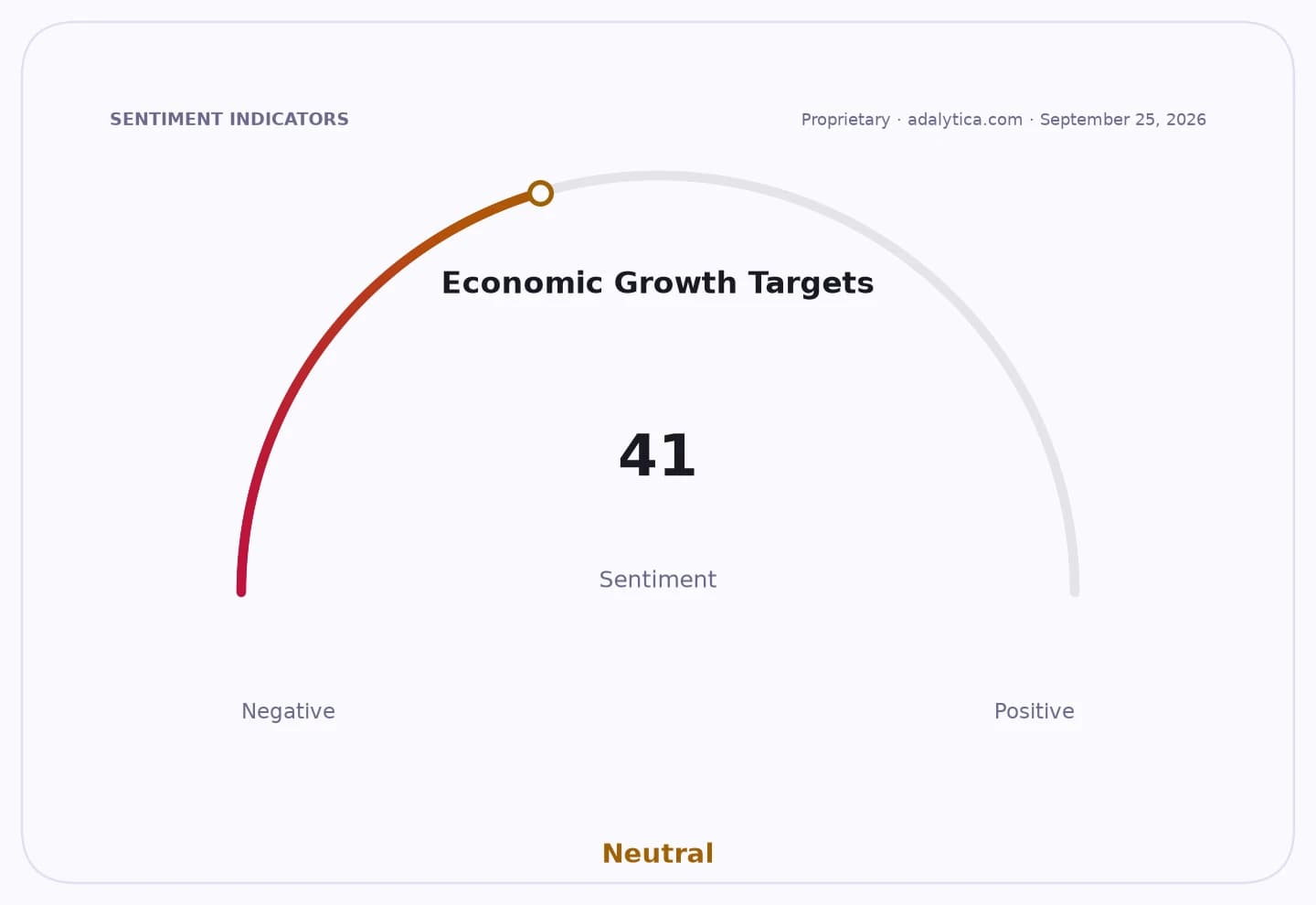
Sentiment IndicatorsⓘProprietary · adalytica.com · September 26, 2026
This is a snapshot — live sentiment, awareness and momentum for 130+ markets update continuously in the dashboard.Open AlphaPulse
The move also underlines a hard economic reality: China’s labor market is changing faster than its workforce pipeline. Officials say the country will face a sizable shortage of digitally skilled workers for some time, while McKinsey has projected demand for 6 million AI professionals by 2030, with a potential shortfall of 4 million. In a market where the core digital economy already makes up more than 10.5% of GDP and the core AI industry is worth more than 1.2 trillion yuan, the bottleneck is no longer just technology or funding — it is talent.
For investors, that creates a clear set of beneficiaries. Companies that supply AI infrastructure, industrial software, robotics, training systems and cloud tools stand to gain from a longer capex cycle as universities and employers scramble to produce more usable skills. Huawei’s training camp with Beijing University of Posts and Telecommunications is a good example of how enterprise-linked education is becoming part of the industrial policy toolkit, with practical training in model development, tuning and testing aimed at creating engineering-oriented AI workers. That is the kind of ecosystem that tends to favor the picks-and-shovels names over speculative end-apps.
The policy backdrop is even more important than the headline numbers. China’s education ministry has expanded its undergraduate major catalog to better fit emerging interdisciplinary fields, while an “AI + Education” action plan is pushing universities to make AI a basic course and redesign curricula around industry demand. In other words, Beijing is not waiting for the labor market to fix itself; it is trying to build a domestic supply chain for human capital the same way it built supply chains for steel, batteries and EVs.
That is bullish for the industrial upgrading story and for firms exposed to automation, digitalization and green infrastructure. It is also a warning to legacy employers that do not adapt: the competition for talent is shifting toward compound skills, and the wage premium is likely to concentrate in roles that combine technical, digital and domain expertise. The more China institutionalizes these occupations, the more it should support adoption in factories, logistics, energy systems and services.
The next catalyst is execution. If Beijing follows through with national standards, vocational certifications and broader enterprise-university partnerships, the current policy push could deepen into a multi-year hiring and investment cycle. For investors, the takeaway is straightforward: the market may still underprice China’s talent buildout as a structural driver of AI, robotics and green industrial demand.
| Entity | Gains | Losses |
|---|---|---|
| AI infrastructure providers | ▲More training and deployment demand | ▼Slower demand growth if skills lag |
| Huawei and university partners | ▲Stronger talent pipeline | ▼Standalone schools with outdated curricula |
| Robotics and industrial software firms | ▲Larger addressable labor pool | ▼Labor-intensive legacy manufacturers |
| Workers with AI and green skills | ▲Higher-wage career paths | ▼Workers in declining routine roles |