India’s biggest online shopping week is delivering more transactions but less money, a sign that higher prices and thinner discounts are forcing consumers to scale back big-ticket purchases even as they keep buying.
India festive sales: card spend falls, transactions rise

Credit card spending during the first week of Flipkart and Amazon’s festive sales fell 8% to Rs 37,385 crore from Rs 40,652 crore a year earlier, according to Reserve Bank of India data. At the same time, the number of credit card transactions rose 8% to 491 lakh, pulling the average ticket size down 15% and underscoring a shift from high-value electronics purchases toward smaller, more frequent orders.
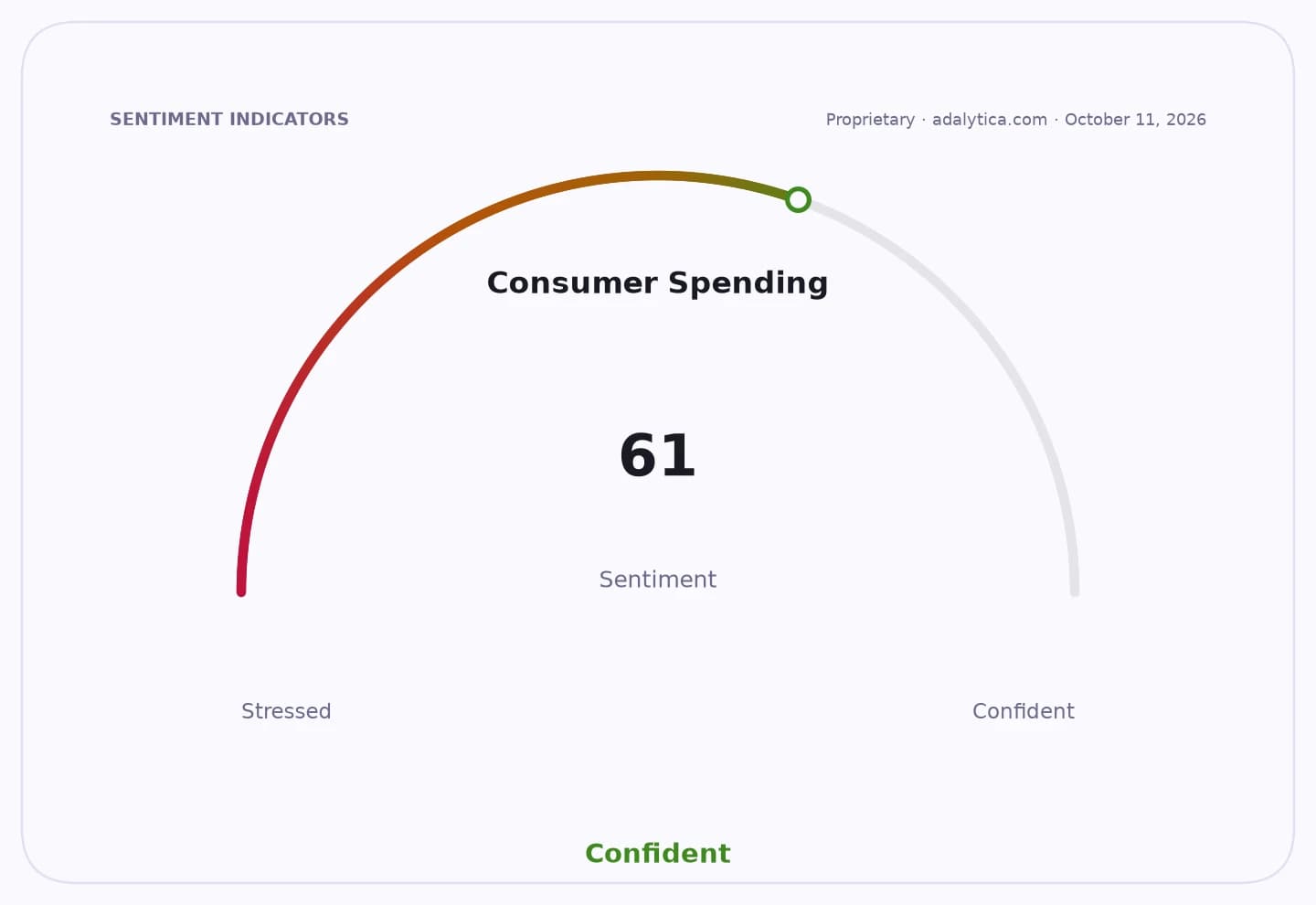
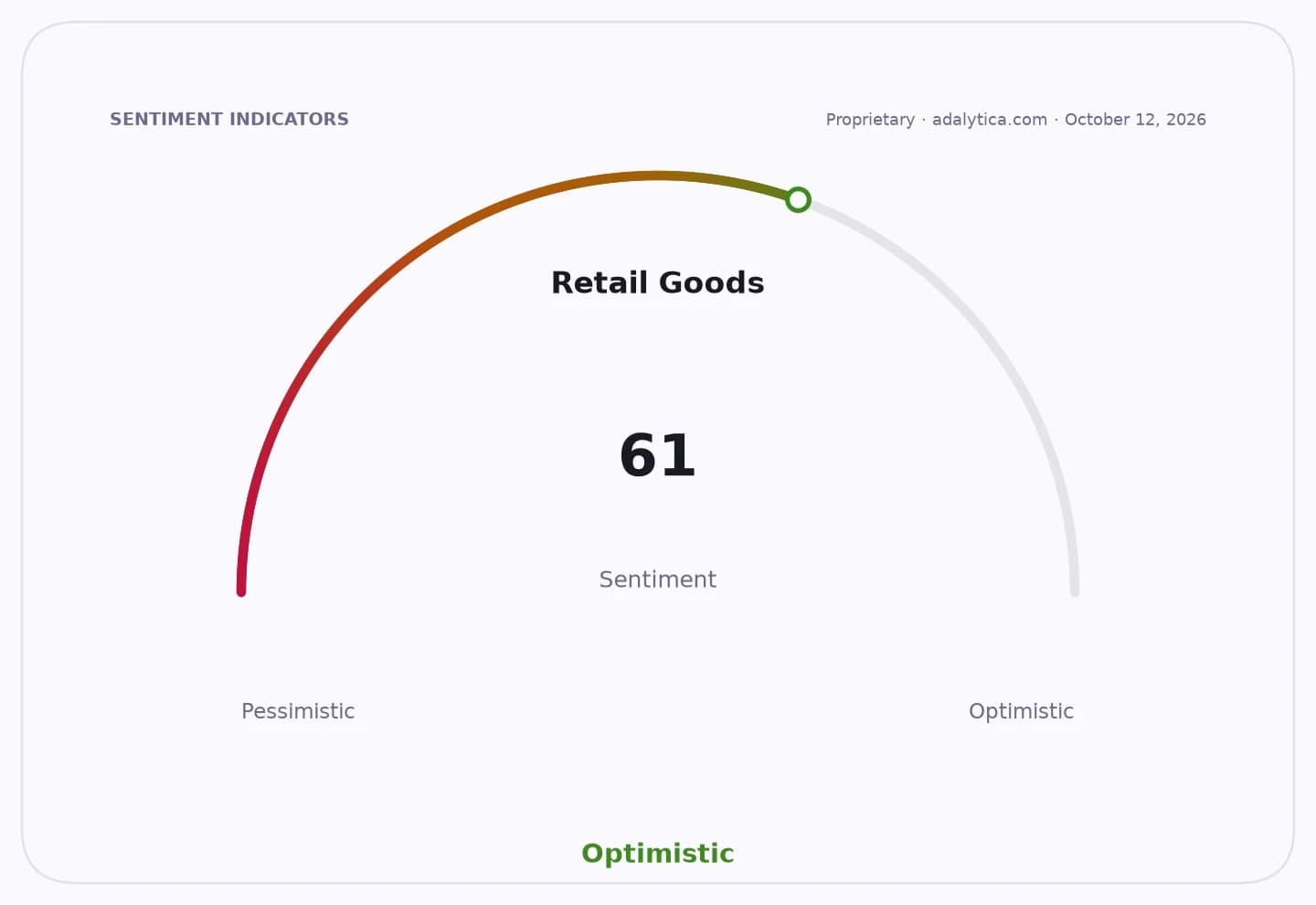
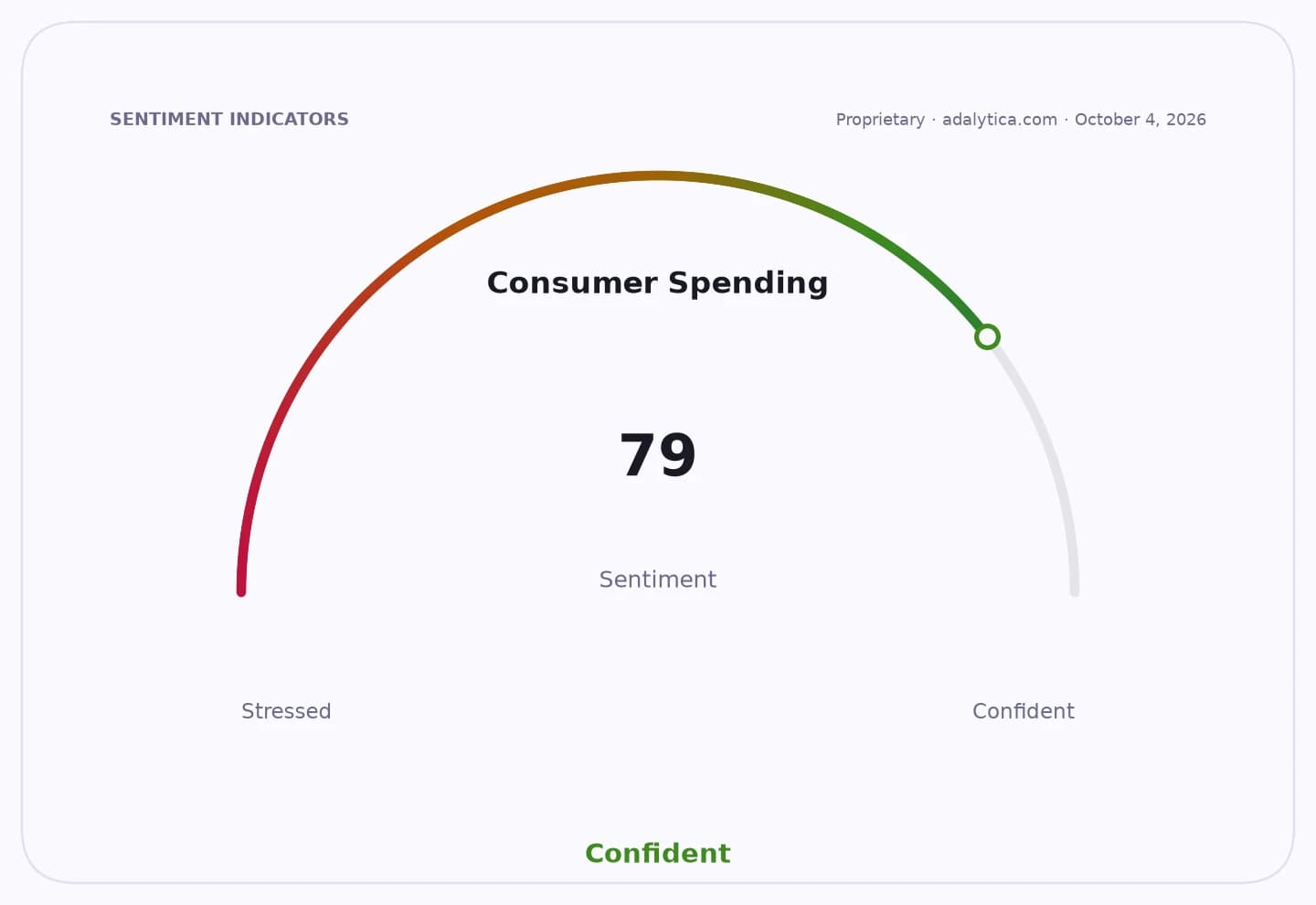
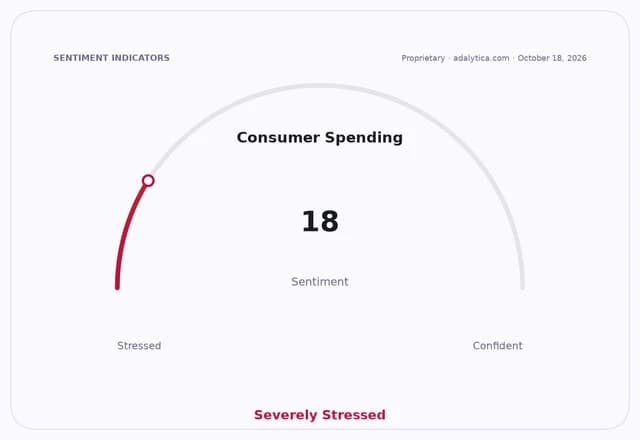
Sentiment IndicatorsⓘProprietary · adalytica.com · October 18, 2026
This is a snapshot — live sentiment, awareness and momentum for 130+ markets update continuously in the dashboard.Open AlphaPulse
That matters because the festival sale period is one of the most important demand checks for India’s consumer economy and for e-commerce platforms that rely heavily on card-led discounting. Credit cards are central to the offer stack on Flipkart and Amazon, and online purchases account for more than two-thirds of all card spending in a normal month, rising to as much as 75% during the sales window. When card value falls even as volumes rise, it usually means consumers are still active but are trading down on price or deferring purchases.
The weakness is especially pronounced in phones and electronics, where prices have climbed sharply. Industry watchers say prices in the Rs 15,000 to Rs 30,000 smartphone band — the core of the Indian market — are up by almost 50%, while manufacturers have less room to discount because component costs have squeezed margins. That leaves retailers with less promotional firepower than a year ago, when the first day of sales also benefited from GST cuts on some products and helped push single-day spending above Rs 10,000 crore.
For investors, the read-through is mixed. E-commerce GMV may still grow over the full quarter as spending spreads across several weeks rather than a few concentrated days, but the early numbers suggest that revenue recognition may be slower and more promotion-dependent than last year. Platform operators may need to lean harder on financing offers, bundled discounts and longer sale calendars to preserve growth. Consumer discretionary and payment companies tied to festive demand will be watching whether the current trend reflects timing shifts or a more persistent loss of pricing power.
Offline card spending did rise 6% in the same period, but that is small compared with the online channel’s weight in festival economics. UPI, meanwhile, is absorbing more of the broader retail flow, with transaction counts crossing 870 million on October 8 and 9, but its scale makes festival spikes far less visible than on cards. The bigger question now is whether India’s festive season is being elongated by quick commerce and broader digital adoption, or whether demand is simply getting weaker at the top end.
For now, the evidence points to a consumer who is still spending, but with more caution. That tends to favor merchants selling lower-ticket necessities and payment networks that capture transaction counts, while pressuring electronics sellers, margin-thin retailers and any earnings model that depends on a strong festive surge in average order values.
| Entity | Gains | Losses |
|---|---|---|
| UPI and smaller-ticket merchants | ▲More transaction flow | ▼Less visible festival upside |
| Flipkart and Amazon | ▲Higher order counts | ▼Lower average basket value |
| Electronics and smartphone sellers | ▲Slower inventory clearing | ▼Weaker big-ticket demand |
| Credit card networks | ▲More transactions | ▼Lower spend per swipe |