India’s move to scrap long-standing tax exemptions on gold, silver and platinum imports from April 1 is pushing up domestic bullion prices and may curb near-term imports as banks and traders adjust to the new 3% integrated goods and services tax.
India scraps gold import tax exemptions
The change matters because India is one of the world’s biggest bullion markets, and even a modest tax shift can ripple through imports, dealer pricing and retail demand. Officials said the exemption was being withdrawn to stop tax arbitrage and round-tripping that had allowed some importers to exploit the system, leaving the exchequer exposed to lost revenue. For a market that relies heavily on bank-mediated imports, the end of relief effectively raises landed costs on every gram brought in under the old arrangement.
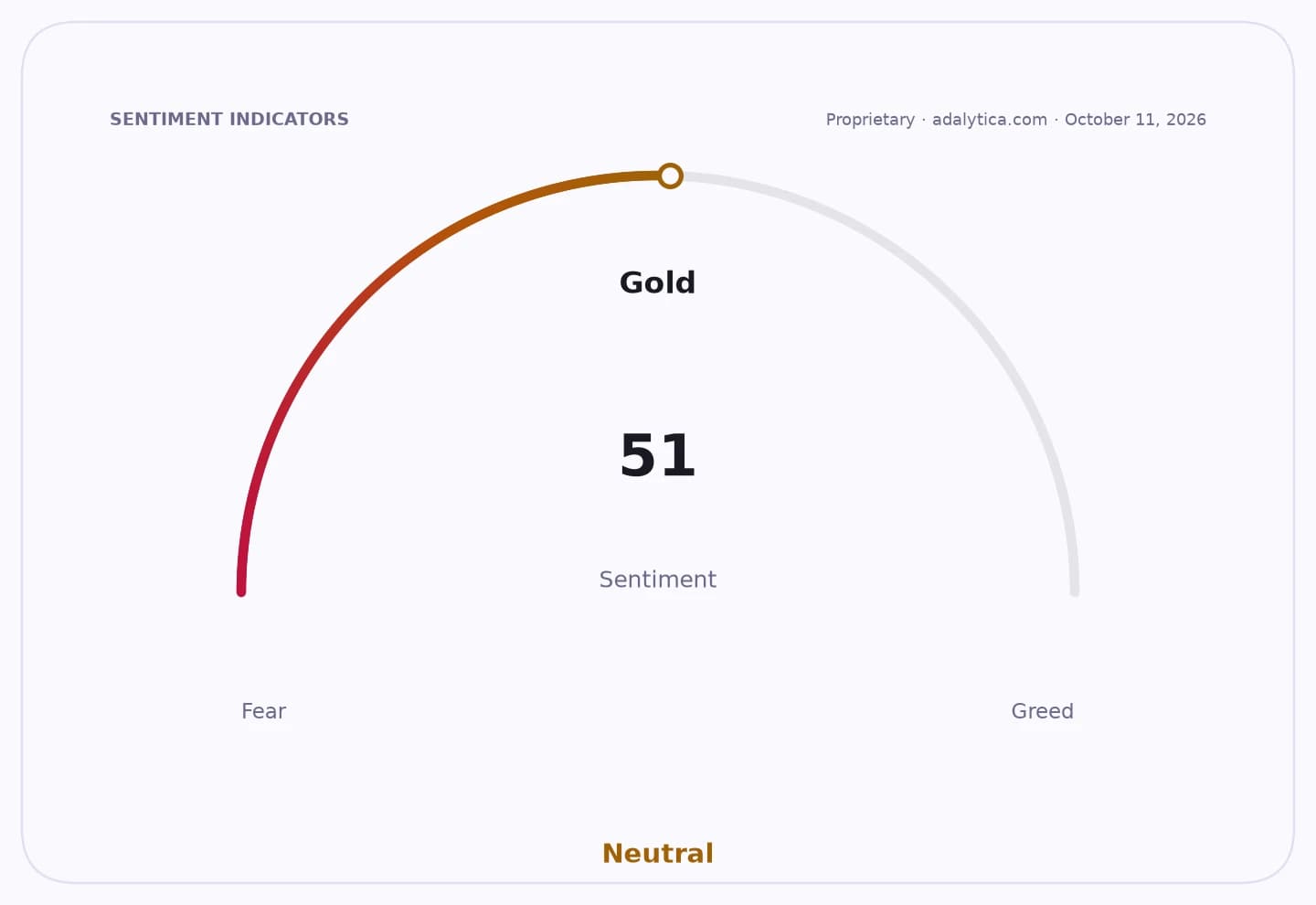
Sentiment IndicatorsⓘProprietary · adalytica.com · October 11, 2026
This is a snapshot — live sentiment, awareness and momentum for 130+ markets update continuously in the dashboard.Open AlphaPulse
That has already filtered into pricing. In Hyderabad on Thursday, 24-carat gold rose by Rs1,140 per 10 grams to Rs1,50,710 a tola, while 22-carat gold gained Rs1,050 to Rs1,38,150. Silver was quoted at Rs2,45,000 a kilogram. Traders said the tax move may be part of the reason for the jump, as dealers built in the higher import cost and feared temporary supply tightness if banks paused fresh orders while the new regime settles.
The policy shift also comes against a supportive global backdrop for bullion. Gold futures have been holding above their 50-day moving average, even as the RSI remains weak by conventional technical measures, and ETF flows have shown renewed interest: Adalytica’s Gold Fear & Greed Index was neutral overall but showed extreme greed in awareness, suggesting the metal is back on investors’ radar. A firmer dollar and higher Treasury yields can cap upside, but gold has still been resilient as policy uncertainty and trade tensions keep safe-haven demand alive.
For investors, the immediate question is whether the Indian tax change creates only a short-lived domestic price pop or a more durable shift in import economics. Bulls will argue that higher landed costs, a tighter legal import channel and firm global prices support domestic premiums. Bears will counter that the move is mainly a one-off tax adjustment and that higher prices could eventually damp jewelry demand and prompt consumers to delay purchases.
The bigger implication is that the government is trying to close loopholes without derailing formal bullion trade. If banks and dealers pass through the tax cleanly, domestic prices should stabilize at a higher floor. If the new levy disrupts procurement longer than expected, it could widen the gap between local and international prices and reinforce volatility in India’s gold and silver market.
| Entity | Gains | Losses |
|---|---|---|
| Indian government | ▲Higher tax revenue | ▼Less tax leakage |
| Domestic bullion dealers | ▲Higher pass-through prices | ▼Near-term supply uncertainty |
| Jewelry buyers | ▲Potentially none | ▼Higher purchase costs |
| Tax arbitrage players | ▲Stricter enforcement | ▼Lost loopholes |