S&P Global kept India’s growth forecast at 7% for fiscal 2027 and 2028, but the bigger message for policymakers and investors is that stubborn inflation may force the Reserve Bank of India to tighten further even as the economy keeps expanding above trend.
India Growth Forecast Held at 7% as Inflation Stays High

The rating firm said India’s expansion has been supported by strong goods exports, government-led capital spending and resilient household demand, with credit growth helping to sustain consumption. That combination has made India one of the fastest-growing major economies, and it also explains why external commentary on the country increasingly centers on whether growth can hold without a fresh inflation flare-up.
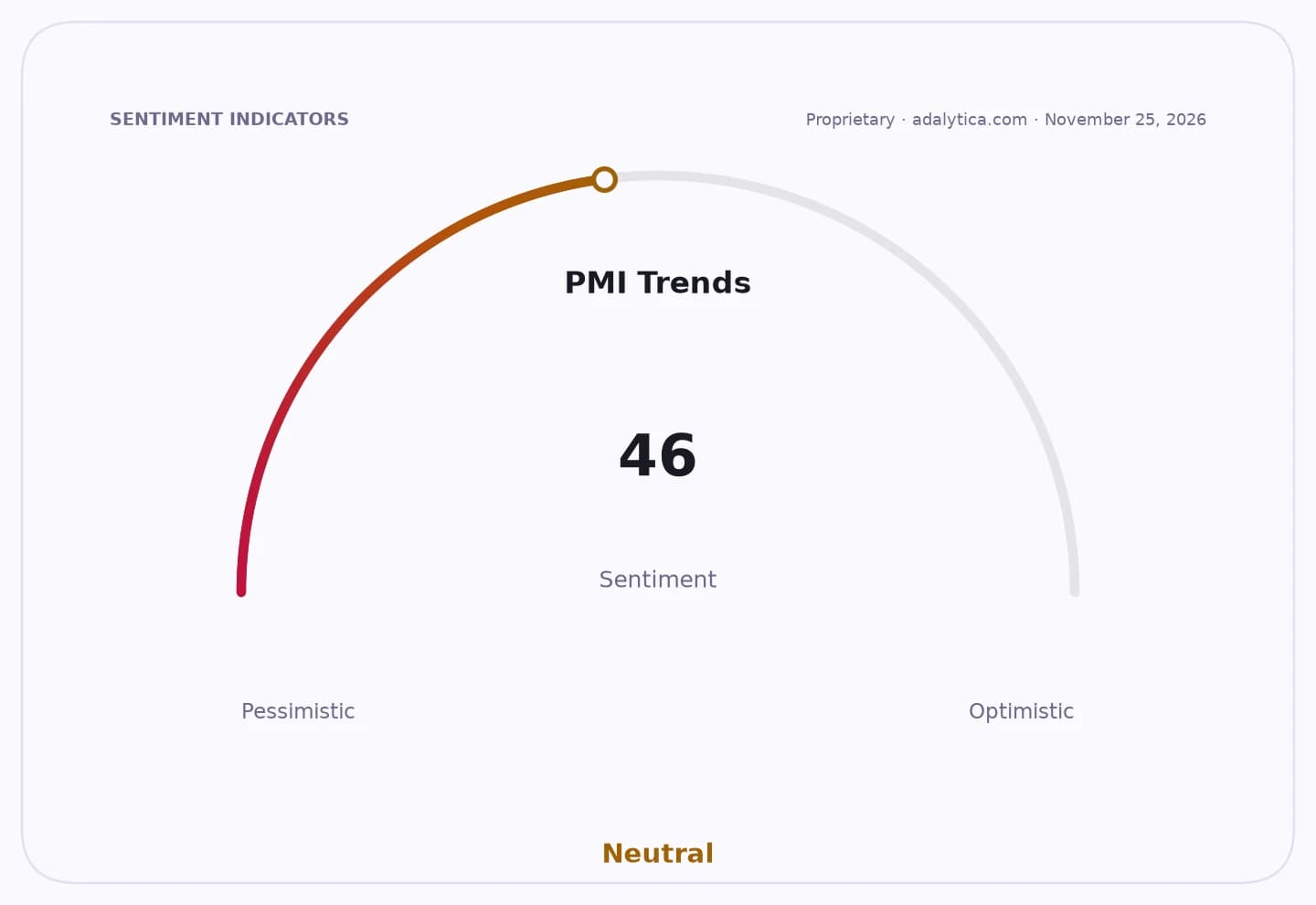
Sentiment Indicators
S&P’s outlook matters because it suggests the current growth model remains intact for now: manufacturing-linked exports in electronics, engineering goods and chemicals are benefiting from India’s deeper role in global supply chains, while public investment continues to crowd in private activity. The firm’s call that inflation will average 5.3% in the year ending March 2027, before easing to 4.7% in the following fiscal year, implies price pressures will stay uncomfortable for longer than the central bank would like.
That is the key macro tension. Faster growth usually gives policymakers room to tolerate volatility, but higher inflation reduces that flexibility by eroding real incomes, squeezing margins for firms unable to pass through costs and keeping borrowing costs elevated for households and companies. S&P said the RBI is likely to raise rates by 25 basis points in December and could lift them again in early 2027, a sign the central bank may have to lean against prices even if growth remains strong.
Long-term Inflation Expectations
For investors, the forecast is supportive for cyclical exposure to India, but not unambiguously bullish. Equity holders may continue to favor exporters and capital-goods names tied to infrastructure spending, while rate-sensitive sectors such as consumer finance, housing and parts of domestic consumption could face pressure if policy stays tighter for longer. Higher rates also matter for foreign portfolio flows, since the earnings outlook is only part of the equation when discount rates are moving up.
The forecast also fits a broader global backdrop in which India stands out for growth but not for disinflation. That makes the rupee, bond yields and the RBI’s reaction function especially important in the months ahead. If inflation proves stickier than expected, the market may begin to price a slower policy easing cycle than investors have hoped for, even if headline GDP remains near 7%.
| Entity | Gains | Losses |
|---|---|---|
| Exporters | ▲Stronger external demand | ▼Higher domestic rates |
| Government capex contractors | ▲Steady public spending | ▼Cost inflation |
| Indian banks | ▲Credit growth support | ▼Tighter monetary policy risk |
| Domestic consumers | ▲GDP growth momentum | ▼Eroding purchasing power |