Sri Lanka’s central bank tightened policy again on Tuesday, lifting its overnight policy rate by 25 basis points to 9.00% and raising reserve requirements, as persistent inflation and still-firm private credit threaten to keep price pressures elevated.
Sri Lanka central bank raises rates to 9%

The move matters because it shows policymakers are willing to slow domestic demand even as the economy continues to recover from its earlier crisis. With consumer prices up 8.3% year-on-year in October and core inflation also rising, the Central Bank of Sri Lanka is signaling that bringing inflation back toward its 5% target will take longer than previously expected. It now sees inflation staying above earlier forecasts in the near term before easing only in the second half of 2027.
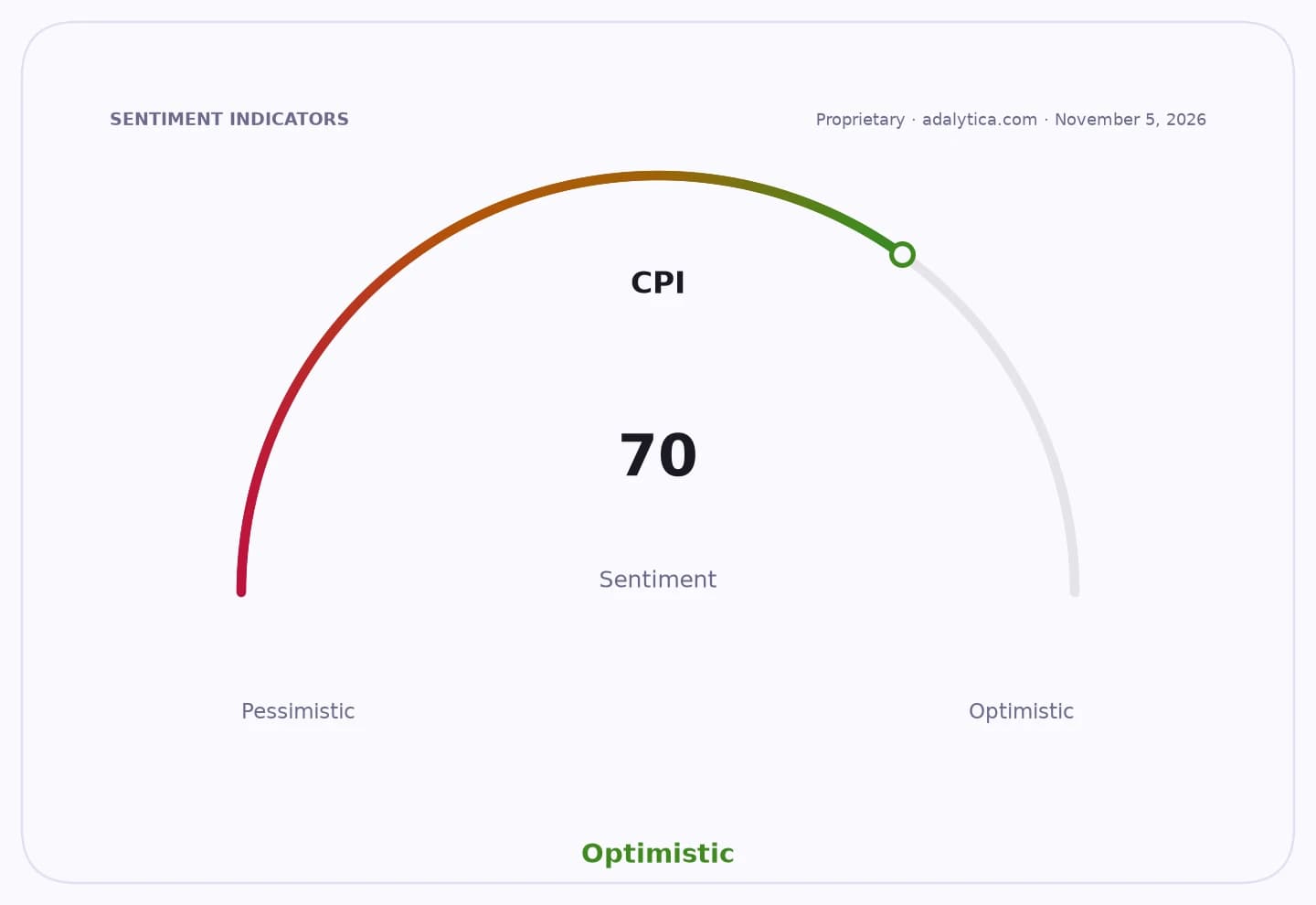
Sentiment Indicators
CPI
The decision also reflects a broader cost shock that Sri Lanka cannot fully control. The central bank pointed to the prolonged conflict in the Middle East and the resulting pressure on global energy prices as a key reason for the renewed tightening. Even though oil and other energy prices have eased recently, earlier increases are still feeding through the economy, keeping transport, food and other essentials expensive for households.
For investors, the policy shift is a reminder that Sri Lanka’s stabilization story is not yet complete. Higher rates and a one-point increase in the statutory reserve requirement to 3.00% should help drain liquidity and restrain lending, but they also risk slowing private-sector activity and delaying a fuller growth recovery. That trade-off is especially relevant for local banks, borrowers and companies dependent on working-capital financing, while savers and holders of rupee assets may benefit from firmer policy credibility.
The central bank’s message is that the external position is no longer the immediate pressure point. Gross official reserves have risen to about $7.1 billion, supported by foreign-exchange purchases, and the rupee has stayed broadly stable. That gives policymakers more room to focus on inflation, but it also suggests they can keep buying reserves only if domestic conditions do not deteriorate sharply.
The risk for markets is that tight policy arrives just as credit and prices remain sticky. The central bank said private-sector credit growth has slowed but is still relatively high, implying demand remains strong enough to keep inflation above target for longer. For bond investors, that raises the prospect of a more persistent higher-rate environment; for equity investors, it argues for caution on rate-sensitive sectors and debt-heavy businesses.
The next test will be whether inflation decelerates fast enough to let the central bank pause after this round of tightening, or whether another rate increase becomes necessary if food and energy prices stay elevated. Much will also depend on global commodity markets and the pace of domestic demand, which will determine whether Sri Lanka can restore price stability without choking off its fragile recovery.
| Entity | Gains | Losses |
|---|---|---|
| Central Bank of Sri Lanka | ▲Anti-inflation credibility | ▼Short-term growth momentum |
| Households with savings | ▲Higher deposit returns | ▼Higher borrowing and living costs |
| Borrowers and rate-sensitive firms | ▲— | ▼Tighter credit conditions |
| Sri Lankan rupee and bondholders | ▲Policy support, stability | ▼Risk of slower economic growth |