Indian government bond yields edged lower on Friday as a rally in US Treasuries fed into local debt, but the move was capped by caution ahead of a 330 billion rupee auction that could determine whether the market can extend its recovery.
India bond yields edge lower before 330 billion rupee auction
The benchmark 6.94% 2036 bond yielded 7.2439% in early trade, down from 7.2543% on Thursday. That is a modest move, but it highlights the market’s current fault line: global duration is helping Indian bonds, yet domestic supply and inflation risks are preventing a fuller rally.
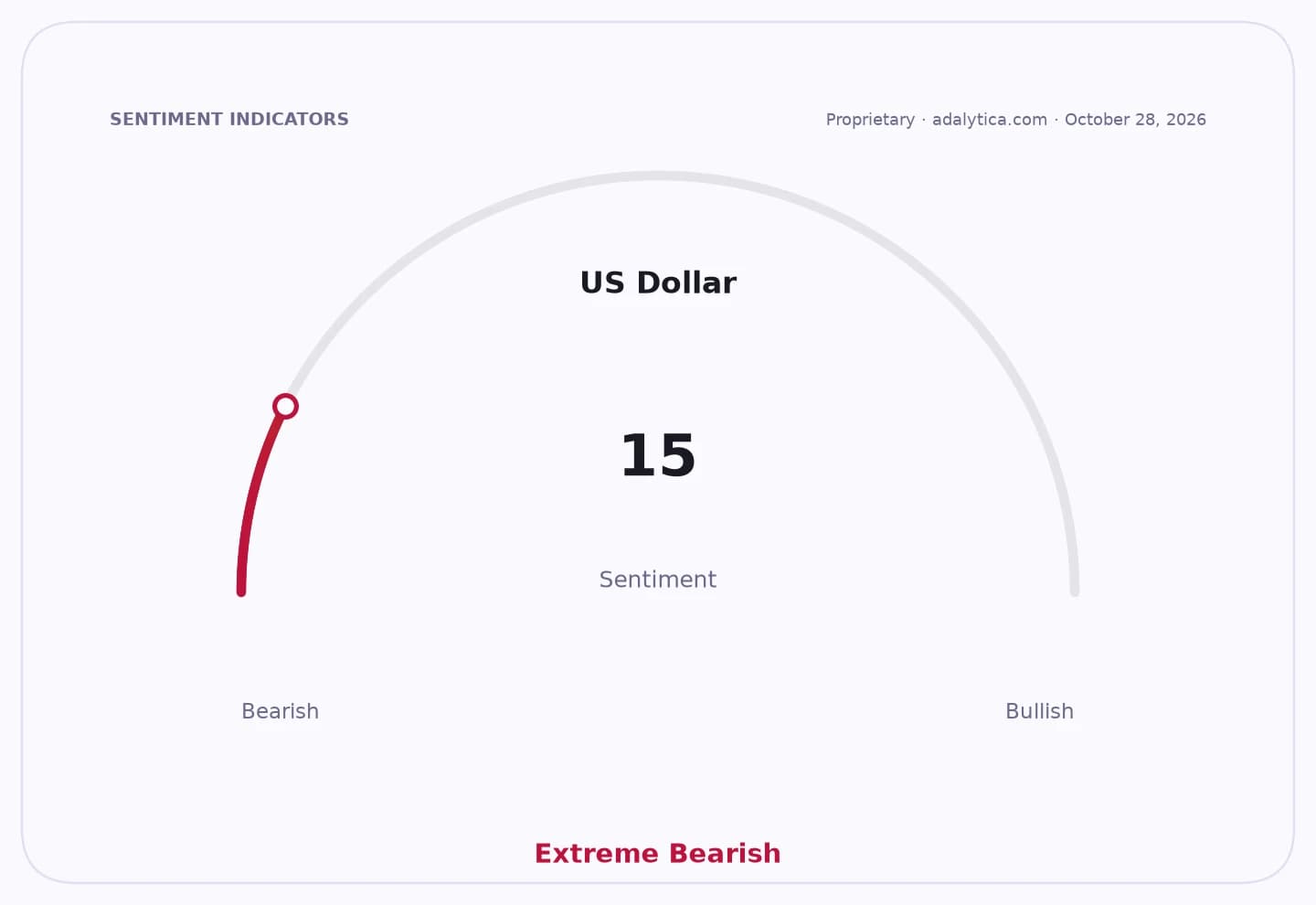
Sentiment Indicators
The immediate catalyst was a fall in US Treasury yields after a sharp selloff in equities drew investors into sovereign debt. That safe-haven bid has eased pressure on emerging-market rates more broadly, and Indian government securities have been quick to track the move. But traders said the real test would come from the weekly debt sale, which includes liquid five-year paper and is likely to shape the next leg in yields through cutoff levels.
For India, the auction matters because government borrowing is entering a phase where execution risk, not just macro direction, can dominate price action. A strong cutoff would reinforce demand and support the recent rebound in bonds; a weak one would remind investors that supply remains heavy and that the market is still vulnerable to profit-taking after the latest move higher.
The macro backdrop remains mixed. Oil prices around $92 a barrel are still close enough to keep inflation concerns alive, especially with the Strait of Hormuz a persistent geopolitical risk. Higher crude would worsen India’s current-account balance, pressure the rupee and complicate the inflation outlook, all of which feed directly into bond valuations.
That is why markets continue to price the Reserve Bank of India as leaning toward another rate increase in early December after retail inflation moved above the 6% upper tolerance band for the first time in two years. Even with US yields easing, local investors are not assuming the RBI can afford to stay on hold if energy costs stay elevated.
The combination leaves Indian bonds in a narrow window. Bulls can point to softer global rates, a steadier risk backdrop and the fact that the benchmark yield has already eased from recent highs. Bears can argue that inflation, oil and supply will keep limiting downside in yields, especially if the auction absorbs less demand than expected.
For investors, that means the near-term trade is less about outright conviction and more about whether the auction confirms the rally or exposes how fragile it is. A strong result would extend the case for duration exposure in Indian debt; a poor one would keep the market pinned between global support and domestic policy risk.
| Entity | Gains | Losses |
|---|---|---|
| Indian bond bulls | ▲Lower yields | ▼Less room if auction disappoints |
| Government debt sellers | ▲Better pricing if demand holds | ▼Higher borrowing costs if bids weaken |
| RBI | ▲More market stability if auction clears well | ▼More pressure if inflation keeps rising |
| Bond investors | ▲Potential capital gains | ▼Exposure to oil and supply risks |