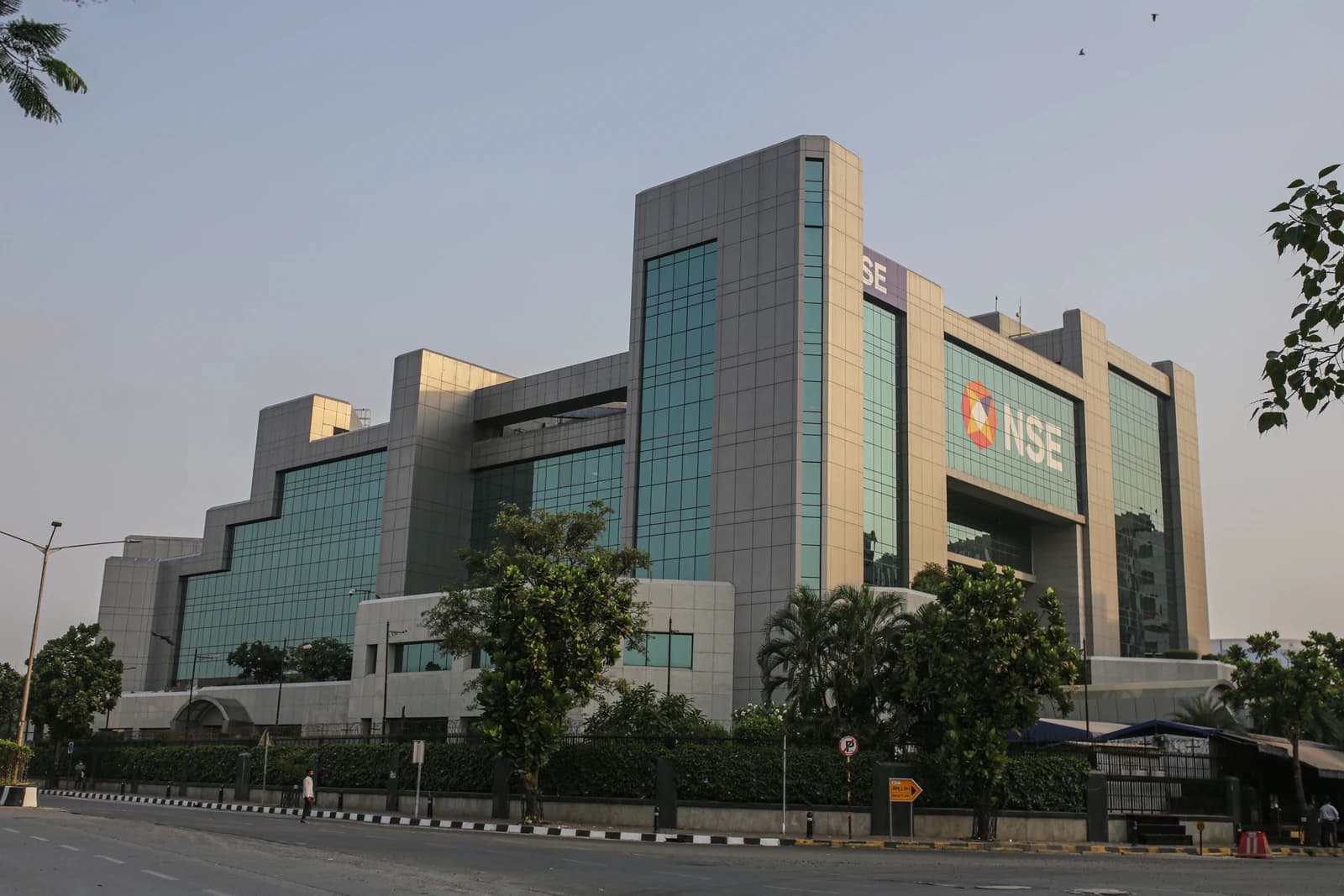
Indian shares are set to open sharply lower on Friday as a heavy overnight selloff on Wall Street, led by technology stocks and renewed fears over artificial intelligence valuations, ripples through Asia and knocks risk appetite across global markets.
Indian shares set to open lower after Wall Street selloff
The most immediate market signal is the 0.85% slide in Gift Nifty to 25,332.5, a drop of 217.5 points that points to a gap-down start for the Sensex and Nifty. That matters because Indian equities have recently been trading near record territory and a weaker opening could test how much of the rally was built on domestic momentum versus global liquidity and risk-on sentiment.
Sentiment Indicators
S&P 500
The catalyst is not India-specific. The S&P 500 and Nasdaq both fell more than 2% overnight as investors sold growth stocks and reassessed richly valued AI names. That matters economically because a valuation-led pullback in the U.S. can quickly tighten global financial conditions, reducing the willingness of foreign portfolio investors to add risk in emerging markets and forcing local buyers to absorb more of the market.
The weakness is broad-based across Asia. Japan’s Nikkei 225 and South Korea’s KOSPI both dropped more than 4%, underscoring that this is a regional de-risking rather than an isolated reaction to India. When global equity benchmarks fall in sync, investors typically pare exposure to higher-beta markets first, and India is no exception even after its recent roughly 15% rebound from lows.

Gold’s slide and the steadiness in crude around $83 to $84 a barrel suggest the move is being driven more by portfolio rotation than by a fresh macro shock in energy. Treasury yields remain high, with the U.S. 10-year near 5.1% and the Fed funds rate forecast around 3.89%, leaving little room for long-duration growth assets to re-rate higher without stronger earnings support.
For Indian investors, the key question is whether domestic demand can cushion the blow. The Nifty and Sensex have shown resilience in recent weeks, helped by sector rotation and buying in autos, but the market is now facing a stress test from global tech volatility and a more cautious risk backdrop. If foreign flows weaken, leadership may shift toward defensives and sectors less dependent on global risk appetite.
The technical picture also argues for caution. The iShares MSCI India ETF, a proxy for Indian equities, has recovered above its 50-day moving average and is trading just above its 200-day average, but it is still vulnerable if global selling deepens. By contrast, U.S. equities are showing more obvious strain, with the SPY ETF below its 50-day average and Adalytica’s S&P 500 Trade Signals flagging “Extreme Fear,” a sign that U.S. sentiment is already damaged.
What happens next will depend on whether the Wall Street selloff extends into the next session or stabilizes after a valuation reset. If U.S. tech stocks keep falling, Indian equities are likely to remain hostage to global risk aversion. If buyers step in and bond markets calm, the domestic rally may resume — but Friday’s open suggests investors are being forced to pay up for safety, not growth.
| Entity | Gains | Losses |
|---|---|---|
| U.S. tech bears | ▲Lower valuation risk | ▼Momentum longs |
| Indian exporters | ▲Weaker domestic equity sentiment offsets risk appetite | ▼Foreign inflow-sensitive sectors |
| Domestic defensives | ▲Relative safety bid | ▼High-beta growth stocks |
| Global risk assets | ▲None | ▼Broad equity exposure |