A fresh regulatory sweep of India’s quick-commerce dark stores has turned a fast-growing retail model into a food-safety risk for Amazon, BigBasket and Swiggy Instamart, raising the odds of tighter oversight just as instant delivery becomes a bigger part of urban consumption.
India quick-commerce dark stores face food-safety raids
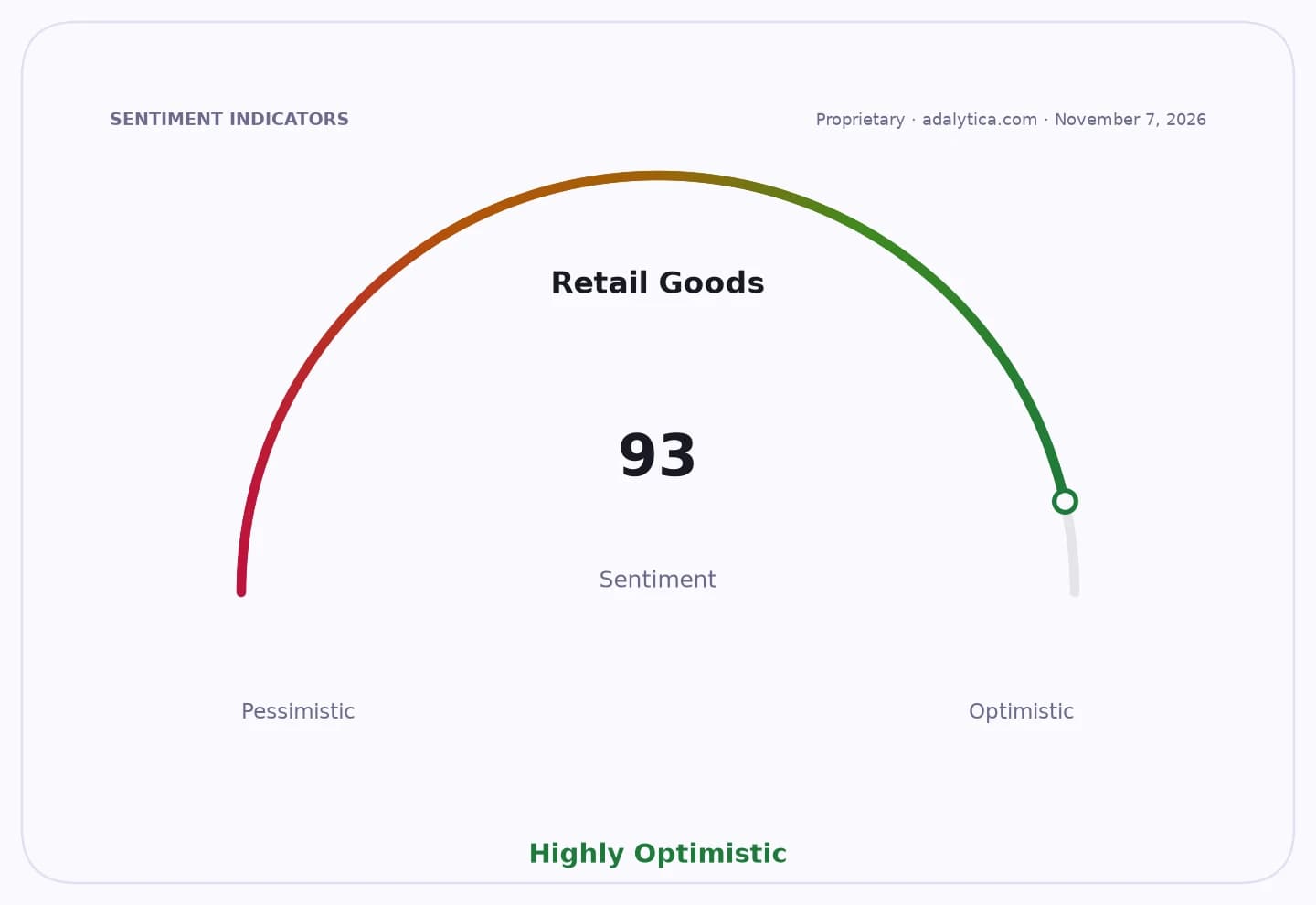
Retail Goods
That matters because dark stores are the physical backbone of 10-minute delivery, the model that has been driving growth across India’s online grocery and convenience market. If regulators start treating these facilities like food-manufacturing or storage sites rather than simple fulfillment points, compliance costs rise, operating flexibility shrinks and the economics of ultra-fast delivery get harder to defend.
Sentiment Indicators
In Pune, the food and drug administration suspended the food licences of Amazon and BigBasket dark stores after inspectors said they found expired sweets, mouldy food items and products stored with soap. Officials said Amazon’s unit, operated by Gajanan Inventories, had expired laddoos and peda, dusty containers and leaking ghee, while BigBasket’s facility, run by Innovative Retail Concept, allegedly held expired cakes, bread, milk rusk and chutney, with food items found on the floor.
The action is not isolated. The same regulators have previously moved against quick-commerce warehouses in Bengaluru, Telangana and Rajasthan, where expired, mislabelled or otherwise non-compliant food products were found at facilities linked to Amazon, Swiggy Instamart, Flipkart, Zepto and Blinkit. That pattern shows this is no one-off hygiene failure; it is becoming a sector-wide compliance problem in a business model built on speed, inventory turnover and dense local storage.
For investors, the key issue is margin pressure. Quick commerce already burns cash to buy customers, keep inventory fresh and run a hyperlocal fulfillment network. Any sustained crackdown means more spending on audits, temperature control, packaging, traceability and staffing, while also increasing the risk of store suspensions and supply disruptions. The market often prices these platforms for growth, but not always for the regulatory burden that comes with scaling a perishable-goods network across hundreds of micro-warehouses.
Amazon is also exposed in a broader strategic sense. The company’s India retail push has long faced scrutiny around marketplace rules and consumer protection, and this episode adds another layer of operational risk to a market that remains strategically important but structurally difficult. For BigBasket and Swiggy Instamart, the pressure is even more direct because quick commerce is core to the investment case. Any move by state regulators or India’s food authority to standardize inspections, licensing and storage rules would hit the entire sector, not just the facilities named in the latest raids.
The investment takeaway is clear: the winners are likely to be operators that can prove compliance at scale and absorb higher governance costs, while weaker players face a steeper path to profitability. The market underestimates how quickly a food-safety headline can turn into a structural cost issue for instant commerce. If enforcement tightens further, the best-positioned beneficiaries may be logistics, cold-chain and packaging firms that sell the picks-and-shovels of a safer delivery network, while the most exposed names are the dark-store operators themselves.
| Entity | Gains | Losses |
|---|---|---|
| Compliant quick-commerce operators | ▲Stronger trust, fewer shutdowns | ▼Higher near-term costs |
| Amazon, BigBasket, Swiggy Instamart | ▲Long-term market share if they fix controls | ▼Licences, margins, reputation |
| Cold-chain, audit and packaging suppliers | ▲More compliance spending | ▼N/A |
| Smaller non-compliant rivals | ▲N/A | ▼Regulatory penalties, suspensions |