India and Russia are underscoring their bilateral partnership at a time when Moscow is seeking to shore up strategic, economic and cultural ties with New Delhi despite Western pressure over the war in Ukraine.
India and Russia deepen ties amid Western pressure
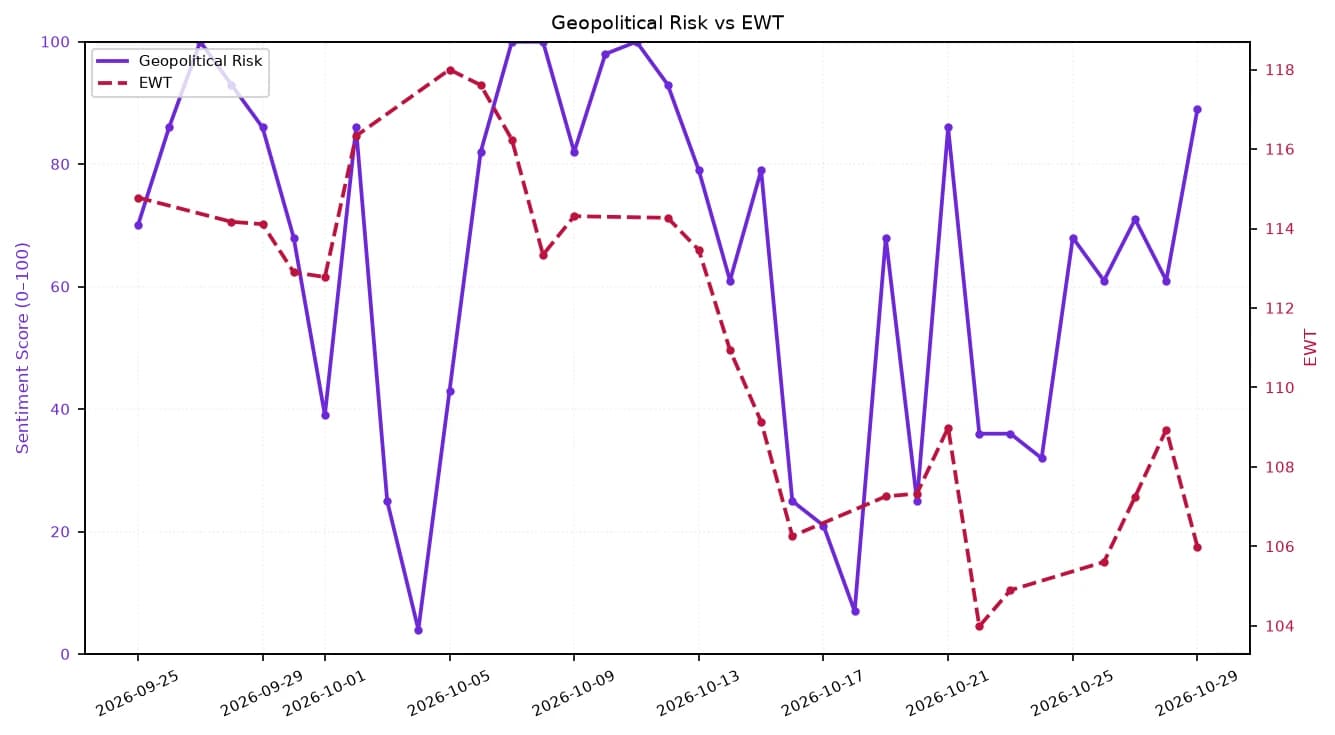
Geopolitical Risk
Petr Sizov, spokesman for the Russian Embassy in India, said on Nov. 2 that Indo-Russian relations “cannot be changed by anyone from the outside” and have “stood the test of time,” according to The Economic Times. The comments, delivered at a cultural event in New Delhi, reinforce Moscow’s effort to present the relationship as durable and insulated from shifting geopolitics.
Sentiment Indicators
The timing matters because India remains one of Russia’s most important partners as sanctions reshape Russian trade flows and defense supply chains. New Delhi has kept buying Russian oil, even as its companies increase ammunition sales to Ukraine’s allies, showing how India is balancing commercial interests, energy security and its long-standing ties with Moscow.
Russia is also broadening the relationship beyond state-to-state diplomacy. Sizov said Moscow plans a series of music, art and other cultural events in India ahead of the 80th anniversary of diplomatic relations, while the embassy’s outreach has leaned heavily on cultural diplomacy to keep public sentiment warm. His remarks came as a Russian choir performed at the India Habitat Center, part of a broader push to deepen people-to-people links.
That soft-power effort sits alongside a more material strategic agenda. India and Russia have been expanding defense cooperation into joint development, local production and training, while a labor migration pact ratified by Russia is designed to ease temporary work flows and support Russian industry. The relationship also remains anchored by big-ticket military hardware, even as some deliveries, including a fifth S-400 missile system, face delays.
For investors and policymakers, the message is that India-Russia ties are not fading under geopolitical strain; they are adapting. That raises the stakes for energy markets, defense suppliers and companies exposed to India’s trade and procurement decisions, especially if New Delhi continues to resist external pressure to pull back from Moscow.
| Entity | Gains | Losses |
|---|---|---|
| Russia | ▲diplomatic cover; trade and defense access | ▼isolation from the West |
| India | ▲energy security; defense continuity | ▼higher geopolitical pressure |
| Defense suppliers | ▲joint production demand | ▼delays and sanctions risk |
| Western policymakers | ▲limited leverage over India | ▼pressure campaign traction |