India’s decision to brand the Pakistan-backed Shahzad Bhatti Network as a terrorist organisation formalises a wider crackdown on a cross-border criminal syndicate that authorities say has blended arms trafficking, narcotics, extortion and digital radicalisation into a national security threat.
India Designates Shahzad Bhatti Network Under UAPA
The designation matters because it gives the government a stronger legal basis to freeze assets, expand arrests and prosecute alleged associates under the Unlawful Activities (Prevention) Act, while signalling that New Delhi is treating organised crime with terrorist links as a broader internal security risk rather than a conventional policing issue.
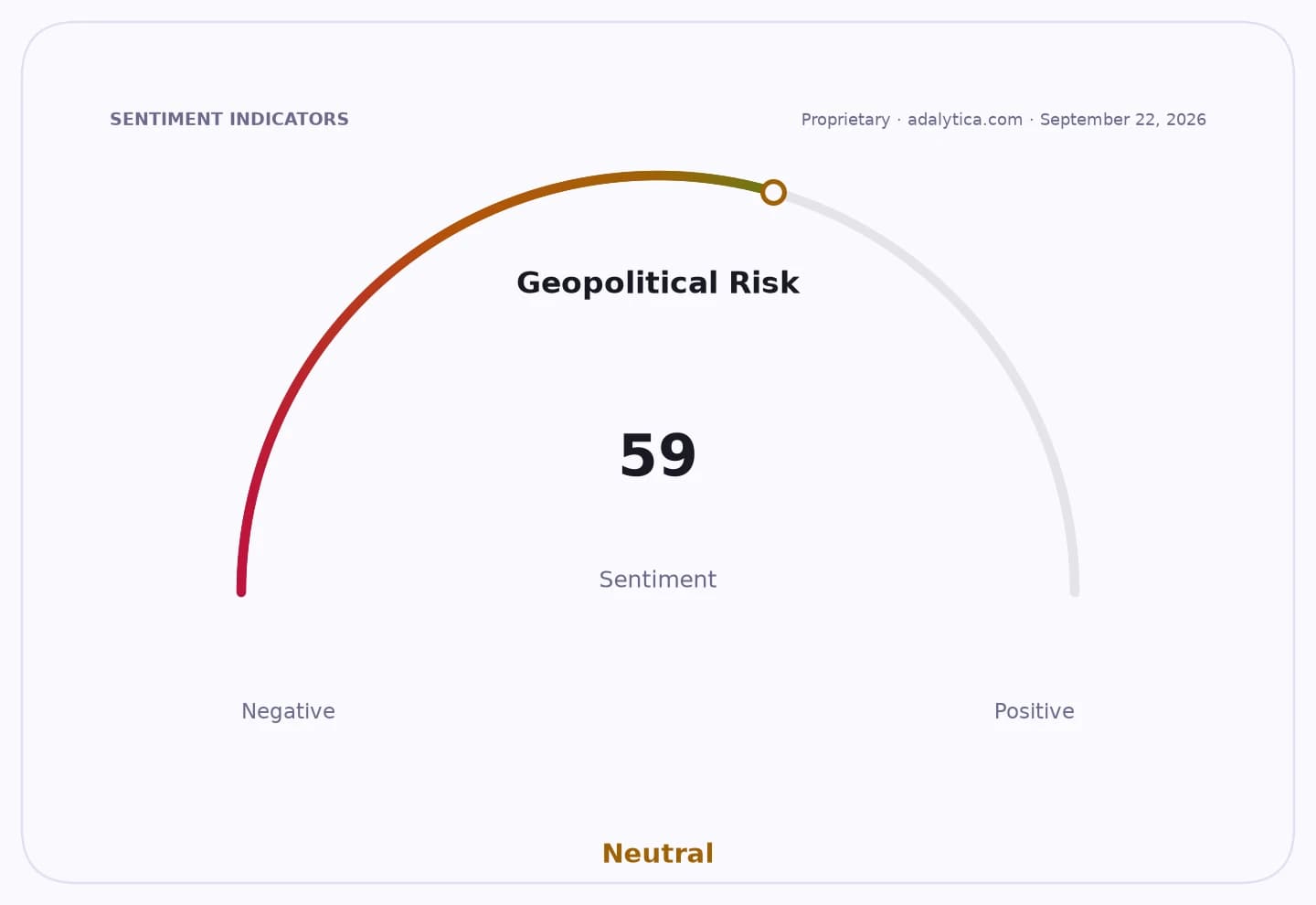
Sentiment IndicatorsⓘProprietary · adalytica.com · September 17, 2026
This is a snapshot — live sentiment, awareness and momentum for 130+ markets update continuously in the dashboard.Open AlphaPulse
The Union home ministry said the network was involved in smuggling arms, explosives and narcotics, recruiting Indian youth and petty criminals, and circulating hateful content online. By adding the group to the First Schedule of the UAPA, the Centre made it the 46th organisation on India’s terror list, a move that can tighten surveillance and improve coordination across investigative agencies.
The action also reflects how India is adapting its counterterrorism approach to hybrid networks that straddle the line between gang activity and militancy. Officials have alleged that the network, led by Lahore-based gangster-turned-terror suspect Shahzad Bhatti, operated with backing from Pakistan’s Inter-Services Intelligence and used social media to lure young Indians with offers of money or jobs before pushing them into threats, extortion, arson and petrol-bomb attacks.
For investors, the immediate financial read-through is limited, but the broader implications are not. Security-driven policy moves can weigh on sentiment in northern India, where concerns over public order, border security and digital crime already feed into risk perception. They also raise the odds of sustained spending on policing, intelligence, surveillance technology and cyber monitoring, areas that can benefit vendors tied to domestic security infrastructure.
The crackdown follows a nationwide investigation that, according to officials, led to 253 detentions across 14 states in August and more than 80 FIRs and 200 arrests in cases linked to SBN members and associates. Authorities have tied alleged Bhatti associates to high-profile killings and attacks, including the murder of Punjabi singer Sidhu Moosewala and the assassination of NCP leader Baba Siddique, although the allegations have not been legally established.
Economically, the story sits at the intersection of crime, borders and youth employment: officials say the network targeted vulnerable recruits and used narcotics and weapons routes that can deepen shadow-economy activity along India’s western frontier. That makes the issue relevant beyond counterterrorism, because such networks can distort local business activity, undermine consumer confidence and complicate law-and-order conditions for logistics, retail and smaller enterprises in affected regions.
The key question now is whether the designation remains a symbolic escalation or translates into sustained disruption of financing, communications and recruitment. If enforcement follows through, the network’s reach could be reduced materially; if not, India is likely to keep widening its use of terror laws against criminal structures it believes are being repurposed for asymmetric attacks.
| Entity | Gains | Losses |
|---|---|---|
| Indian government | ▲Stronger legal powers | ▼Higher security burden |
| Security tech and surveillance vendors | ▲More procurement demand | ▼— |
| Shahzad Bhatti Network | ▲— | ▼Asset freezes, arrests |
| Local communities in affected states | ▲Potentially safer streets | ▼Ongoing disruption during raids |