India’s finance ministry has joined Prime Minister Narendra Modi in pressing companies to raise salaries, a rare public nudge that puts wage growth at the center of the government’s effort to revive household spending and broader economic momentum.
India urges companies to raise salaries
The message matters because private-sector pay has lagged inflation and productivity gains in many parts of corporate India, limiting disposable income even as consumer prices have risen. By openly urging higher wages, New Delhi is effectively acknowledging that consumption — the economy’s largest growth engine — needs help from corporate payrolls, not just from tax cuts or monetary easing.
Sentiment Indicators
Modi first framed the issue at a FICCI event on Nov. 19, asking why companies had not passed on the benefits of corporate tax relief and the new tax regime that exempts income up to ₹12 lakh to employees through higher hiring or pay. Finance secretary Anuradha Thakur then reinforced that message, saying wage stagnation in the private sector was worrying and that companies should address it so workers have more money to spend.
The policy logic is straightforward. Higher salaries would feed directly into disposable income, which should support consumption of goods and services, lift factory output and create more jobs. That is particularly relevant at a time when private investment remains uneven and policymakers are looking for demand-side support without resorting to more fiscal stimulus.
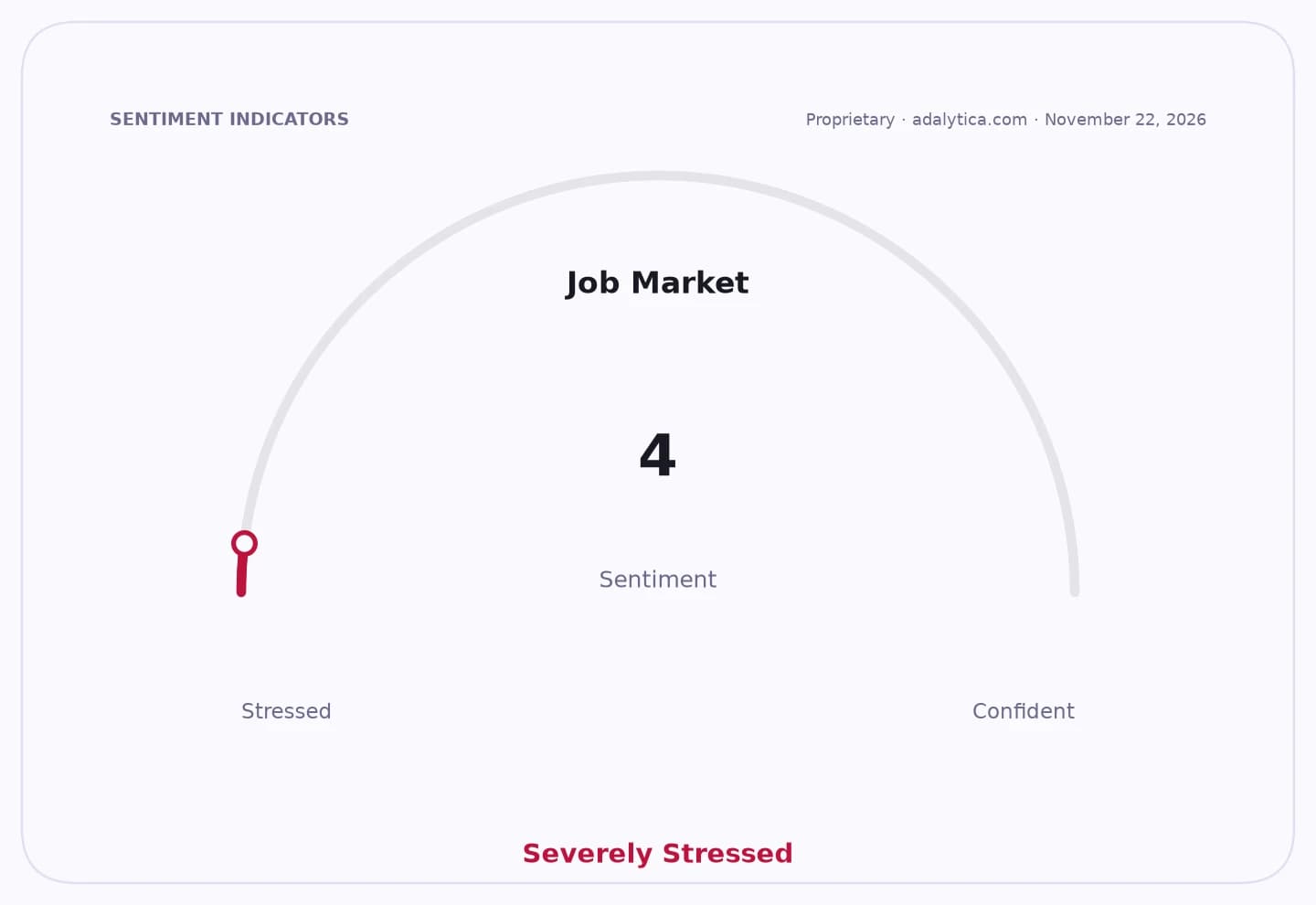
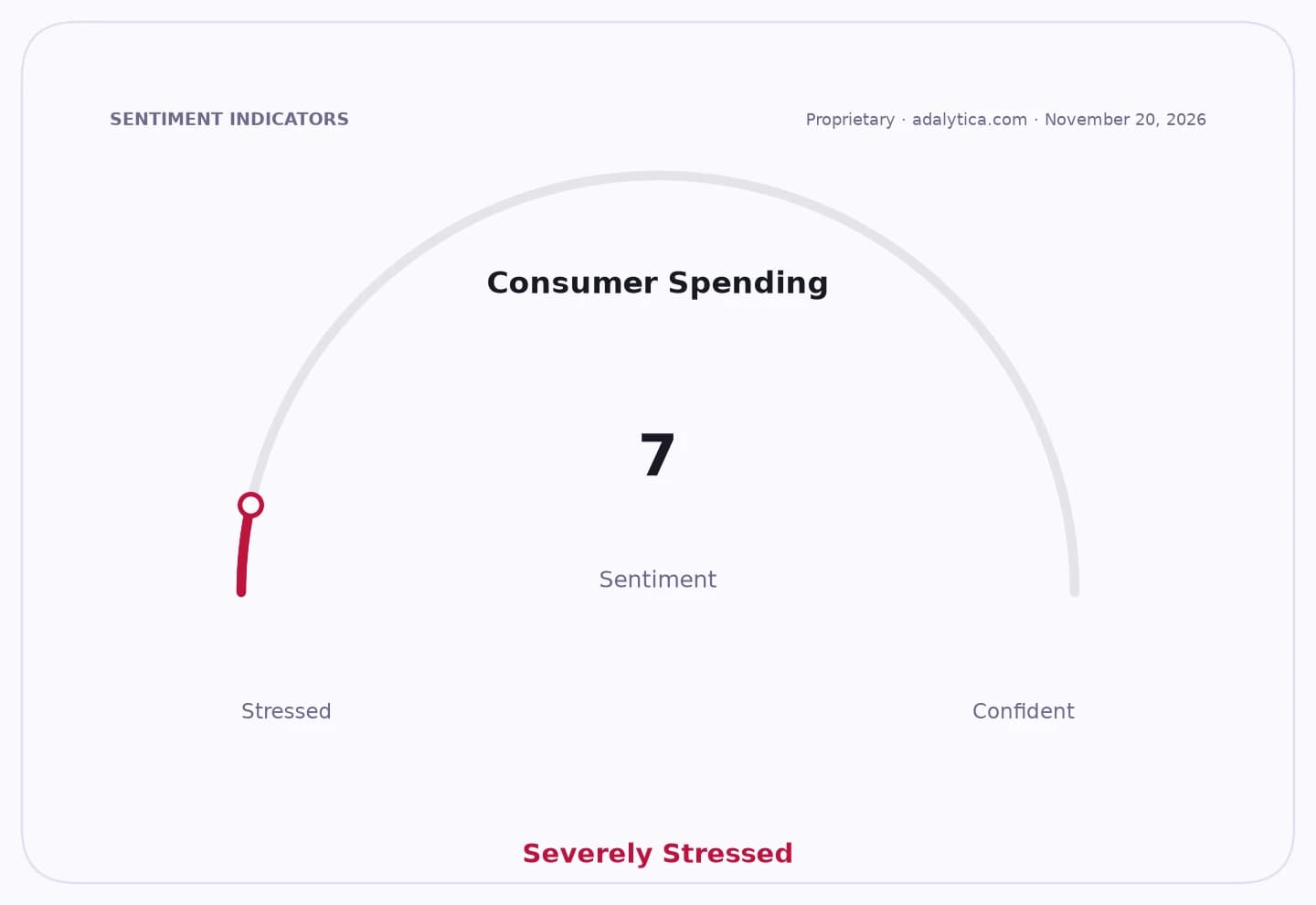
The backdrop is a labor market that, while not distressed by global standards, is still not generating strong wage-led demand. Adalytica’s Job Market Sentiment gauge shows “Extreme Fear” at 4, underscoring how fragile expectations remain around hiring and pay even as firms report pockets of resilience. Consumer confidence, meanwhile, is also weak, with the Adalytica consumer gauge in “Fear” territory at 21, suggesting households are still reluctant to spend freely.
For investors, the signal is two-sided. Consumer-facing companies, from discretionary retailers to food service and travel names, could benefit if pay growth translates into stronger spending. Labor-intensive businesses, especially staffing firms and service providers, may also see steadier demand if companies widen payrolls rather than simply squeezing margins. But the trade-off is that higher wages could pressure margins for employers that do not have pricing power, especially if demand does not improve quickly enough to offset the cost.
The public campaign also highlights a broader policy preference: India wants growth to be led by private consumption and private-sector employment, not just by public spending. That makes wage trends an important indicator to watch in the months ahead, alongside hiring data and consumer demand. If companies respond, the benefits could extend beyond workers’ paychecks to profits, revenues and a more durable economic expansion. If they do not, the government may have to lean more heavily on tax and spending policy to do the same job.
| Entity | Gains | Losses |
|---|---|---|
| Employees | ▲Higher disposable income | ▼Stagnant real wages |
| Consumer companies | ▲Stronger demand | ▼Weak household spending |
| Employers with thin margins | ▲Potentially better retention | ▼Higher labor costs |
| Indian economy | ▲Faster consumption growth | ▼Persistent demand softness |