The U.S. labor market kept surprising to the upside in October, adding 186,000 jobs in what is being described as the strongest October on record and reinforcing the case that America’s economy is still running hotter than many expected.
U.S. Labor Market Adds 186,000 Jobs in October
That matters because payroll growth is the clearest sign that households still have income to spend, businesses still have demand to meet and the economy still has momentum even after a long stretch of higher interest rates. For investors, it means the soft-landing story is still alive: growth is slowing from the post-pandemic rush, but it is not breaking.
Sentiment Indicators
The unemployment rate held at 4.1% in October, close to the tight levels that have characterized the current expansion. Payrolls now stand at 159.293 million, continuing a steady climb and suggesting employers are still reluctant to shed workers even as borrowing costs bite into housing, manufacturing and other rate-sensitive sectors.
Job openings also remain elevated. The latest reading of 7.523 million vacancies points to a labor market that is still tight by historical standards, even if it is less overheated than it was in 2021 and 2022. In practical terms, that means wage pressure has not vanished, and the Federal Reserve is unlikely to declare victory over inflation just because headline price gains have eased.
That is the central market implication here: strong employment keeps the Fed cautious. If hiring stays resilient, policymakers have more room — and more reason — to hold rates higher for longer rather than pivoting quickly to cuts. That can keep pressure on bonds and on rate-sensitive equities, while supporting sectors tied to consumer spending, travel, leisure and payroll-heavy service industries.
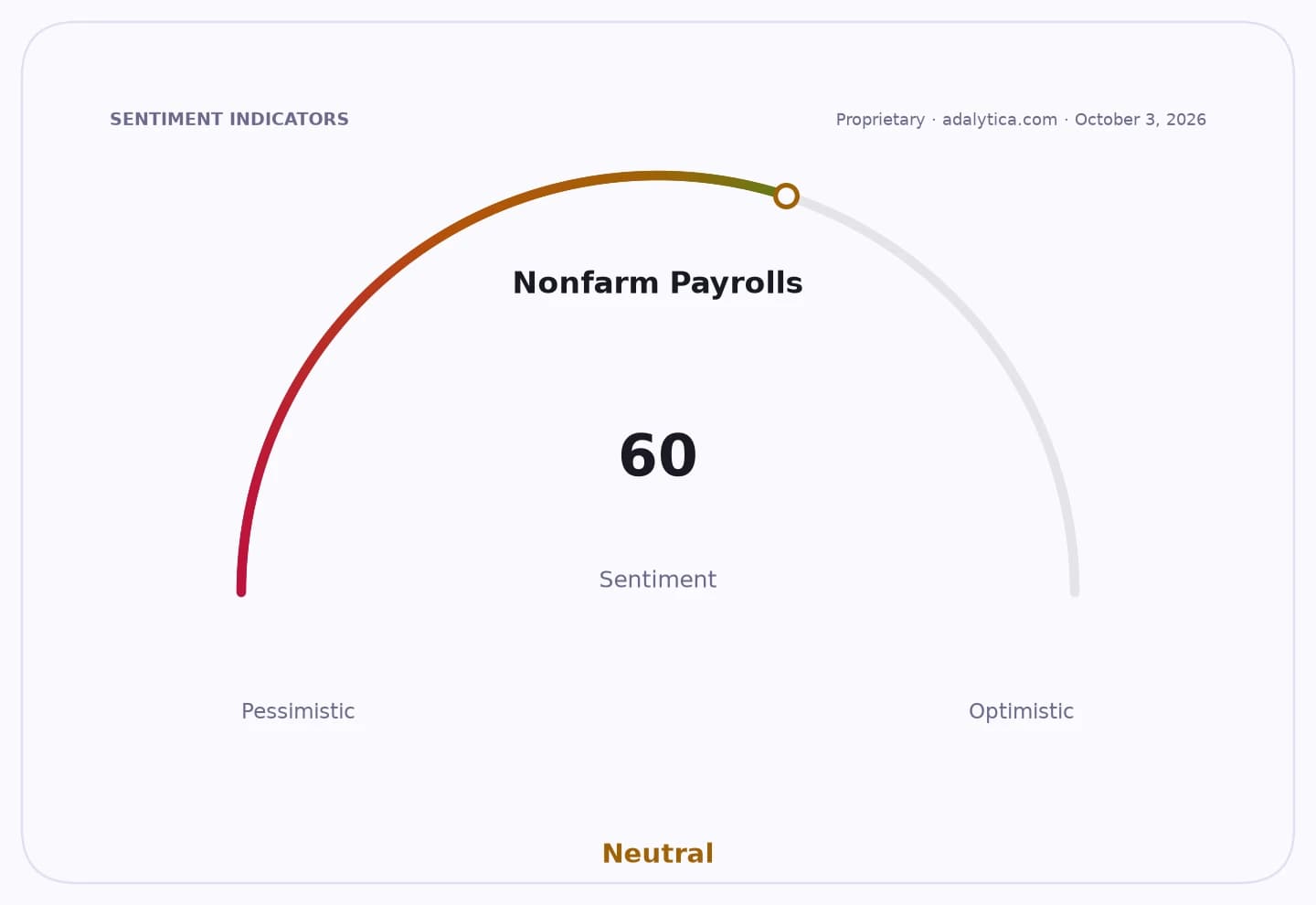
It also helps explain the current mood in the market. Adalytica’s payroll sentiment gauge shows extreme fear even as awareness remains high, a reminder that investors are bracing for a labor market report that could either validate the economy’s resilience or revive rate anxiety. Consumer confidence, meanwhile, is still stuck in extreme fear territory, showing how disconnected sentiment remains from the underlying employment data.
For long-term investors, the bigger lesson is simpler: a sturdy labor market is the backbone of corporate earnings. As long as Americans are working, spending and earning, the economy has a better chance of avoiding a hard landing. That supports a broad, diversified portfolio over the long run, even if it makes near-term rate cuts less likely.
The next question is whether this strength can persist without reigniting inflation. If it can, the economy may be entering the kind of slow-growth, high-employment period that rewards patient investors. If not, the Fed will stay on guard. Either way, October’s jobs report says the U.S. consumer is still standing, and that is worth keeping on your watchlist.
| Entity | Gains | Losses |
|---|---|---|
| U.S. workers | ▲More hiring | ▼Less leverage on wages |
| Consumers | ▲Steady income growth | ▼Higher-rate pressure |
| Federal Reserve | ▲Stronger economy data | ▼Less room to cut rates |
| Bond investors | ▲Clearer growth picture | ▼Higher-for-longer yields |