The U.S. jobs market is still expanding, but the mix of hiring is changing in ways that matter for wages, consumer demand and payroll processors.
ADP, Paychex, Manpower Track October Jobs Data

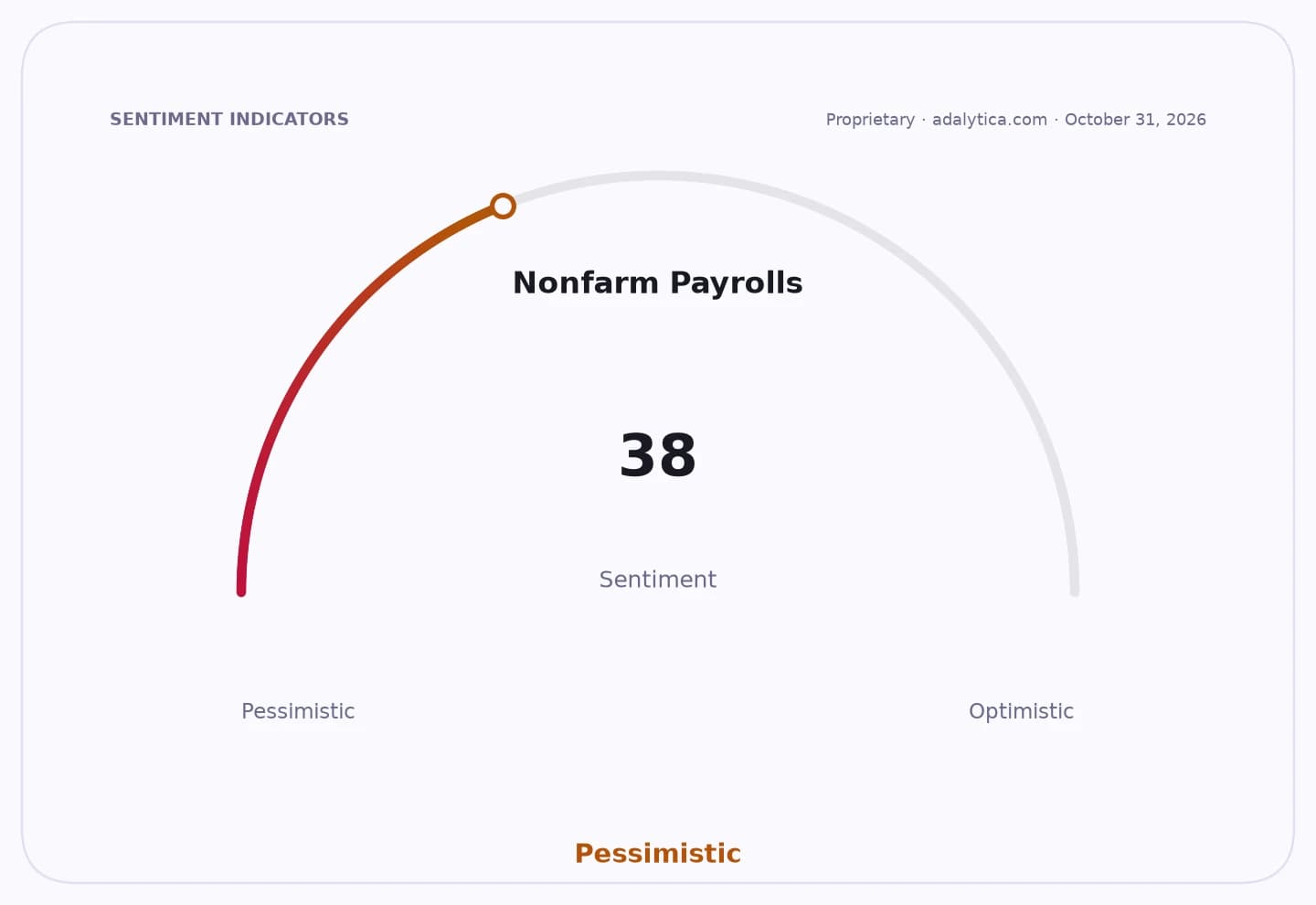
Nonfarm payrolls are forecast to rise by 159,085 in October, while the unemployment rate is expected to edge down to 4.09% from 4.2% in September, according to the data context. That points to a labor market that is cooling from the post-pandemic rush, not breaking, even as job openings remain elevated and companies keep hiring selectively.
Sentiment Indicators
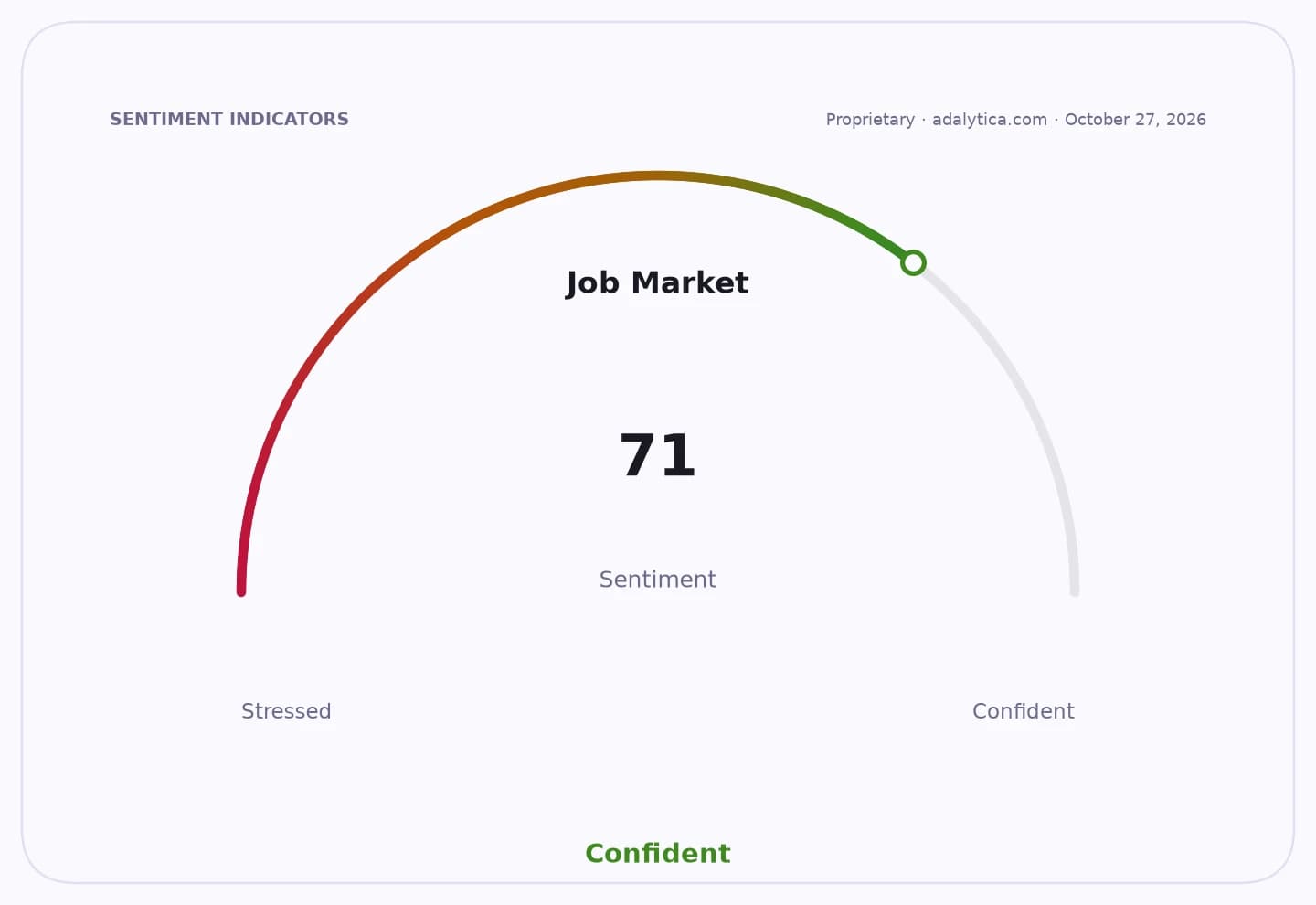
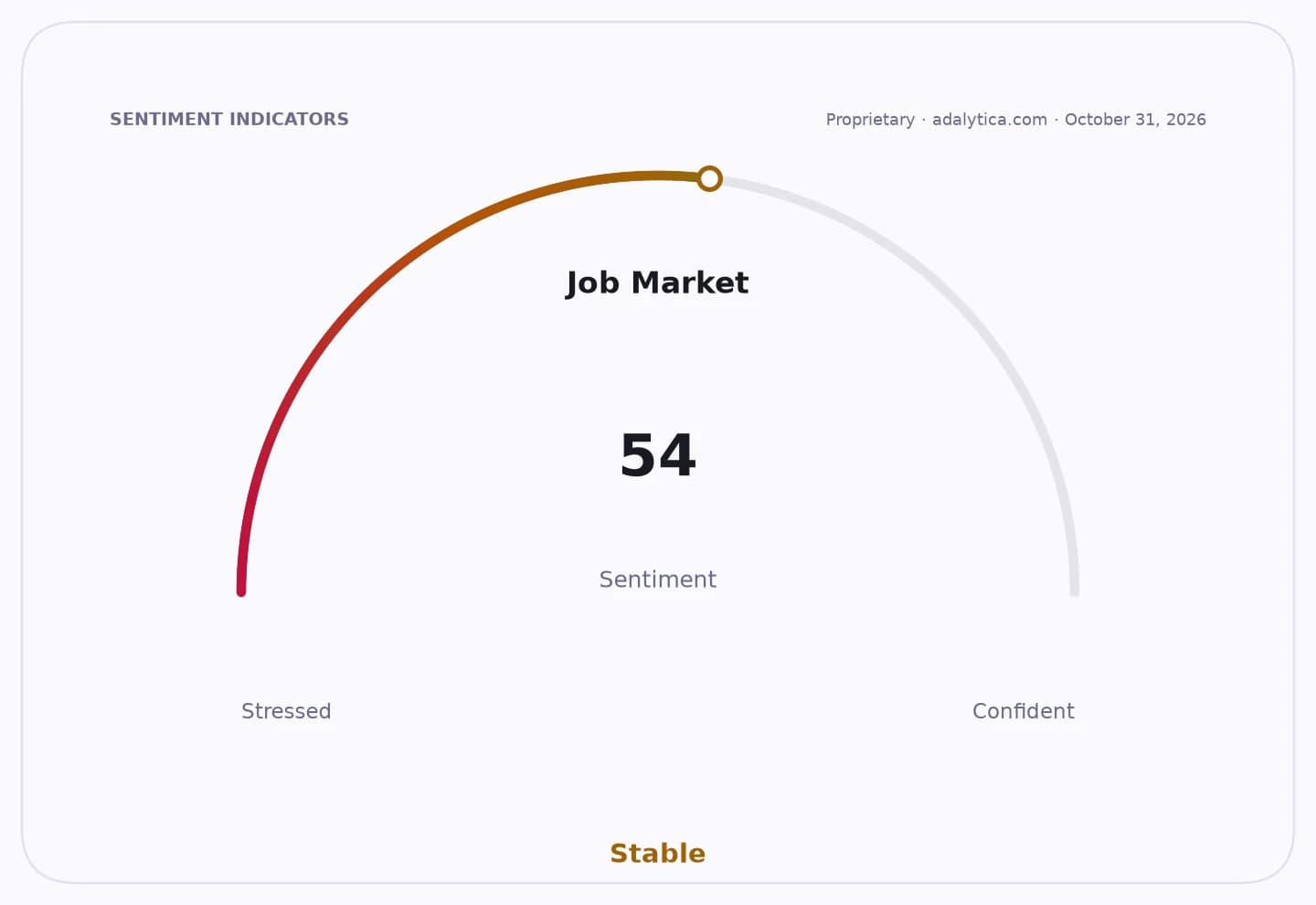
Job Market
For investors, that shift is central to the earnings outlook for companies tied to employment, staffing and payroll. ADP, Paychex and Manpower all trade on how many workers employers are hiring, how much they pay them and how much outsourcing demand businesses create when they are reluctant to add permanent staff.
ADP has been the strongest stock in the group, rising to $304.16 on Oct. 23 from $247.34 at the start of January, after briefly touching $307.94. The move has left the shares far above both the 50-day moving average and the 200-day moving average, while the RSI has climbed to overbought territory, suggesting traders are paying up for the company’s exposure to payroll volumes and recurring service revenue.
Job Market — 30-day sentimentadalytica.com
Explore this data interactively — full history, time series and cross-market comparisons.
Consumer Confidence
Paychex has also rebounded sharply from a low of $83.61 in April to $118.04 on Oct. 23, after a volatile stretch that sent the stock below $101 earlier this month. Manpower, by contrast, remains under pressure: shares were at $47.53 on Oct. 23, well below their June and July levels and still trading under the 50-day average, reflecting weaker demand for temporary staffing and a slower hiring cycle.
The broader labor backdrop is more mixed than the headline unemployment rate suggests. Job openings have fallen from a peak of 12,301,000 in March 2022 to 7,079,000 in August, indicating employers are still hiring but with less urgency. That matters because payroll and staffing firms tend to benefit when employment is stable and businesses keep paying workers, but staffing volumes often weaken when companies freeze headcount or rely on temporary labor.
Adalytica’s job market sentiment gauge is neutral at 32, but awareness remains at “Extreme Fear,” underscoring how sensitive the market is to any sign of labor deterioration. Consumer confidence tied to recession fears has also slumped sharply, which could eventually weigh on hiring if households pull back.
The next catalyst is the monthly labor report, which will help determine whether the economy is settling into a soft landing or drifting toward slower hiring. If payroll growth stays positive and unemployment holds near current levels, payroll processors should keep benefiting from steady employment; if openings and hiring ease further, staffing and temporary labor names will remain the most vulnerable.
| Entity | Gains | Losses |
|---|---|---|
| ADP | ▲steady payroll volumes | ▼hiring slowdown risk |
| Paychex | ▲recurring HR demand | ▼lower employment growth |
| ManpowerGroup | ▲labor-market stabilization | ▼weaker temp-staffing demand |
| Job seekers / workers | ▲more stable unemployment | ▼less wage pressure upside |