A growing number of graduates in India are running into a job market that is being redrawn by artificial intelligence, with employers demanding more specialised skills even as entry-level openings soften in sectors most exposed to automation.
India Graduates Face AI-Shifted Job Market
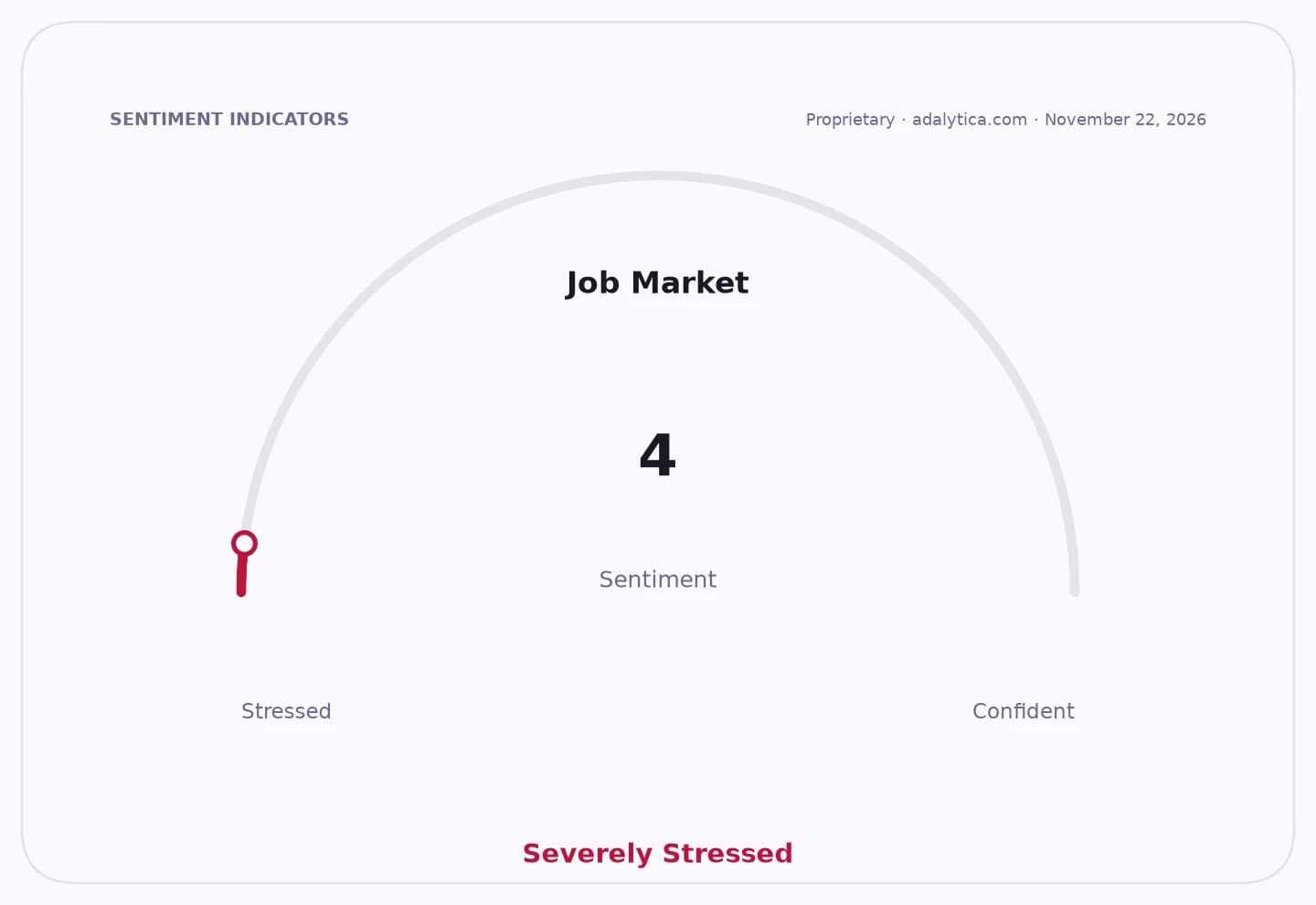
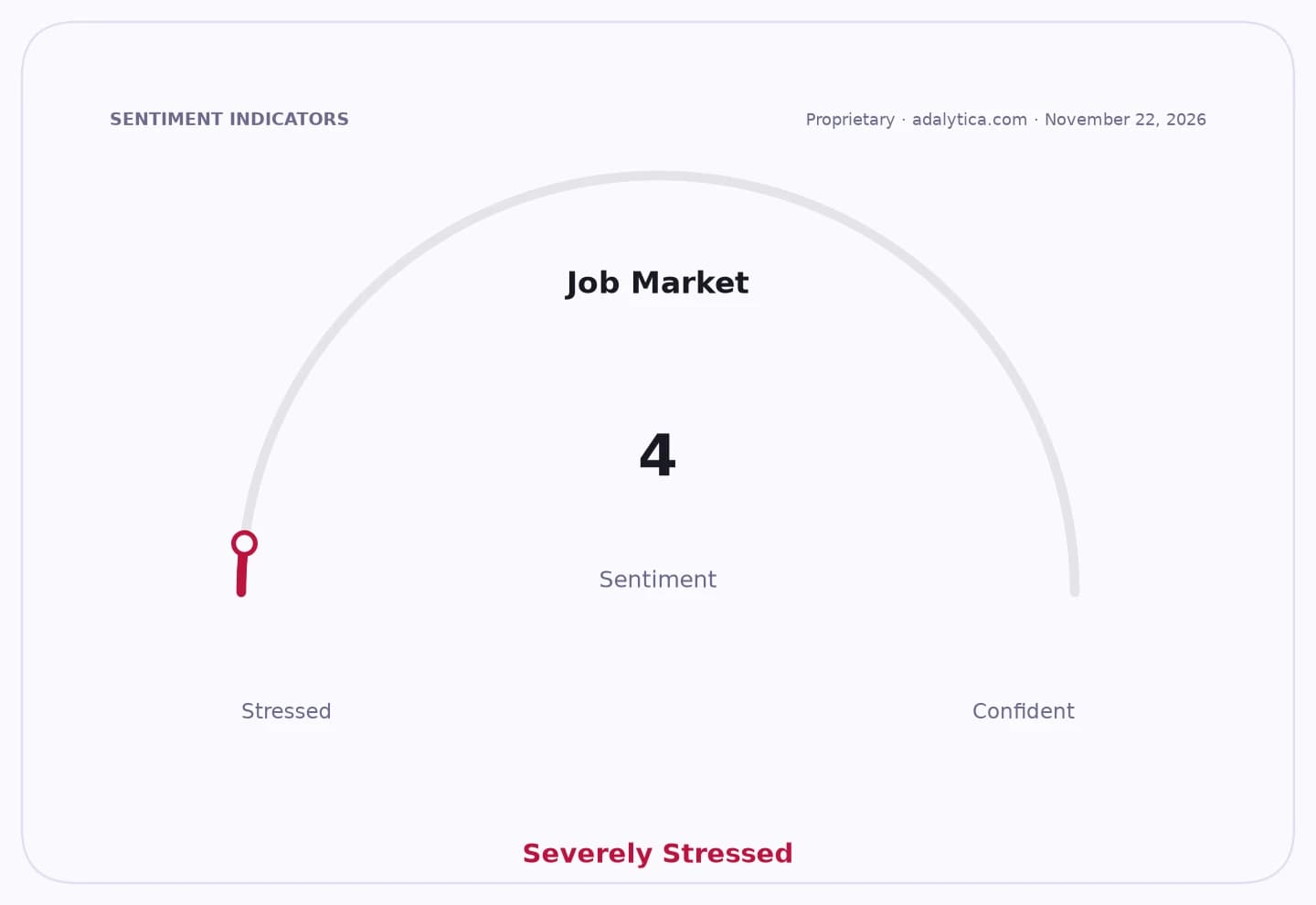
Job Market
That shift matters because it is changing the transition from education to work at the exact point where India needs to absorb a large cohort of new workers. If fresh graduates cannot move smoothly into jobs, wage growth weakens, household spending slows and the broader economic dividend from a young labour force becomes harder to capture.
Sentiment Indicators
Job Market
The problem is not simply that AI is destroying jobs. It is that it is changing which jobs get created, and what employers are willing to pay for them. Roles in accounting, human resources and other routine white-collar functions are already seeing fewer openings as software takes over repetitive tasks, while companies are raising the bar for digital fluency, data skills and the ability to work alongside AI tools.
That leaves many graduates caught between qualifications that look good on paper and the narrower set of skills employers now want. The result is a tougher market for first-time job seekers, particularly in a country where the labour force is still expanding and where universities and employers have long relied on large-scale hiring into service and back-office roles.
For investors, the story cuts beyond the labour market. AI-driven productivity gains can support margins for corporations, especially in technology and business services, but they also pressure wage pools and reduce demand for some categories of labour. That creates a split-screen effect: listed companies may benefit from higher efficiency, while the broader economy absorbs the adjustment through weaker hiring at the lower end of the market.
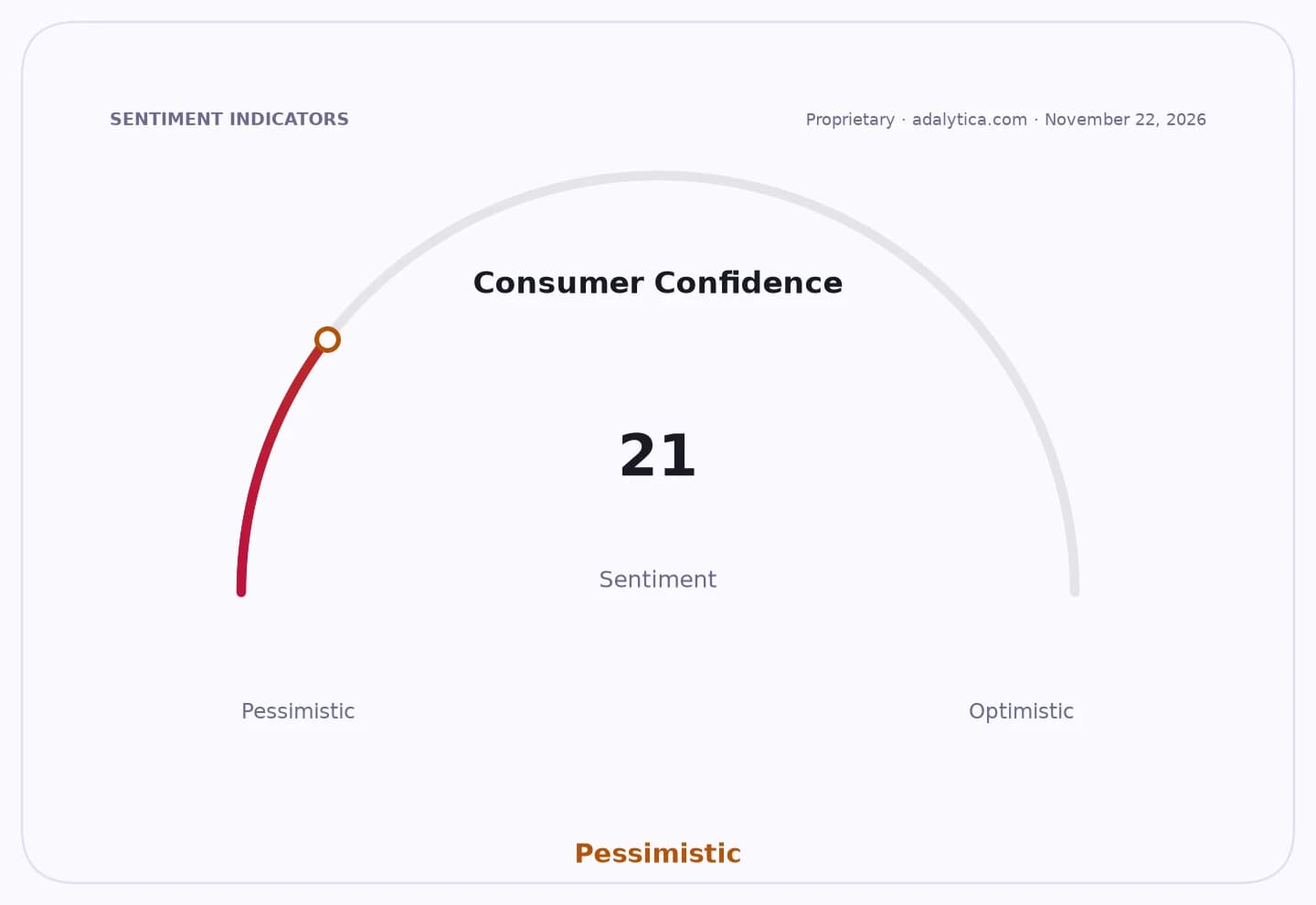
The market backdrop also points to a changing distribution of gains. Adalytica’s job-market sentiment gauge is in “Extreme Fear,” while its payrolls indicator shows continued caution, underscoring how sharply perceptions have deteriorated around employment prospects. That dovetails with recent evidence that labour demand is cooling in parts of the white-collar economy even as firms invest more heavily in AI.
There is a bullish case. If India’s graduates can rapidly retrain, the economy could convert AI from a job threat into a productivity accelerator, lifting output per worker and eventually creating new roles in implementation, oversight and AI-enabled services. Governments and employers are already pushing skills programmes and training initiatives, reflecting a recognition that the adjustment cannot be left to the market alone.
The bear case is more immediate. If the pace of automation outruns reskilling, joblessness among new entrants could rise, undercutting consumption and increasing pressure on policymakers to support employment creation. For companies, that may mean lower hiring costs; for workers, it means a harder fight for stable, well-paid entry-level jobs.
The next test is whether firms translate AI-led productivity gains into broader job creation or keep most of the upside as margin expansion. For India’s graduates, and for the investors watching one of the world’s largest labour markets, that balance will determine whether AI becomes a ladder into higher-value work or a barrier at the front door.
| Entity | Gains | Losses |
|---|---|---|
| Employers | ▲Higher productivity | ▼Larger training burden |
| Graduates | ▲New AI-skilled roles | ▼Fewer entry-level openings |
| AI adopters | ▲Lower labour costs | ▼Reskilling pressure |
| Universities | ▲Greater demand for skills courses | ▼Weaker placement outcomes |