Railway employees have put the 8th Pay Commission on notice with demands that would sharply raise government wage costs, centering on a minimum basic salary of 69,000 rupees, a 3.833 fitment factor and a doubling of the annual increment rate to 6%.
India Rail Employees Seek Higher Pay Commission Hike
The request matters because the commission is the main channel through which India resets pay for central government workers, and any increase of this scale would flow directly into the fiscal bill for the Centre while also lifting disposable income for a large, stable workforce. The National Federation of Indian Railwemen’s proposal goes well beyond take-home pay: it seeks at least five promotions over a career, merger of dearness allowance into basic pay once DA reaches 25%, and more generous retirement benefits.
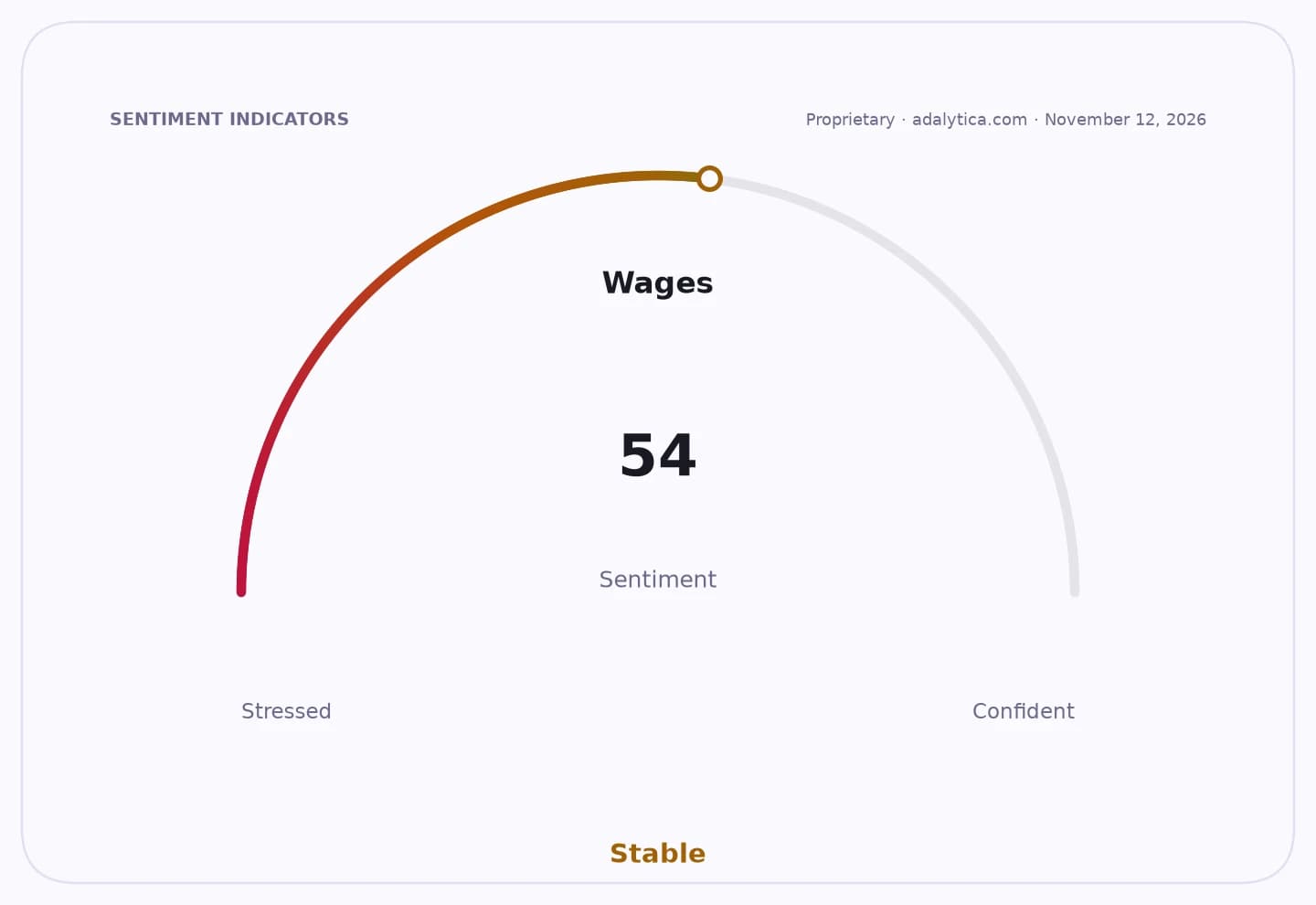
Sentiment Indicators
At the core of the wage demand is the fitment factor, the multiplier used to convert current basic pay into the new pay structure. On the federation’s proposal, the existing minimum basic salary of 18,000 rupees under the 7th Pay Commission would rise to about 69,000 rupees. That would represent a substantial jump in fixed pay, before allowances, and would likely reverberate through pensions and family pensions as well.
For the government, the issue is not just political but budgetary. Higher basic pay raises the cost of salary, pension and retirement obligations across the railways and wider central workforce, and the demand to increase annual increments from 3% to 6% would compound that burden over time. Adding promotion guarantees and earlier pension restoration would further deepen the long-term liability. For employees, however, the package is aimed at restoring wage growth that has lagged inflation and career progression, especially for workers who remain in the same grade for years.
Job Market
Investors do not have a direct listed-company read-through from the proposal, but the broader implications matter for India’s macro backdrop. A more generous pay settlement would support consumption through higher household income, while also testing the government’s tolerance for higher recurring expenditure. If the final award leans toward the unions’ ask, markets may price a modestly stronger demand impulse but also greater fiscal pressure and less room for spending elsewhere.
The demands are still only proposals, and the final call rests with the government. The market will be watching whether the commission opts for a restrained settlement that protects the budget or a larger increase that sets a new benchmark for public-sector pay.
| Entity | Gains | Losses |
|---|---|---|
| Railway employees | ▲Higher basic pay and increments | ▼Current pay structure |
| Indian government | ▲Potential labor peace if demands are moderated | ▼Higher wage and pension bill |
| Consumers | ▲Stronger household spending power | ▼None directly |
| Bondholders / fiscal hawks | ▲Predictable settlement if capped | ▼Larger recurring fiscal burden |