Women’s rights in India are increasingly being framed not as a standalone social cause but as a test of whether the country can build a broader, more equal economy and political order.
India women rights and economic growth
That matters because the argument is shifting from outrage over individual crimes to the structural conditions that determine women’s mobility, work and security: access to education, public space, digital platforms, housing, wages and climate resilience. In a country where roughly half the population is female, those constraints are not marginal; they shape labor-force participation, consumer demand and the depth of India’s growth model.
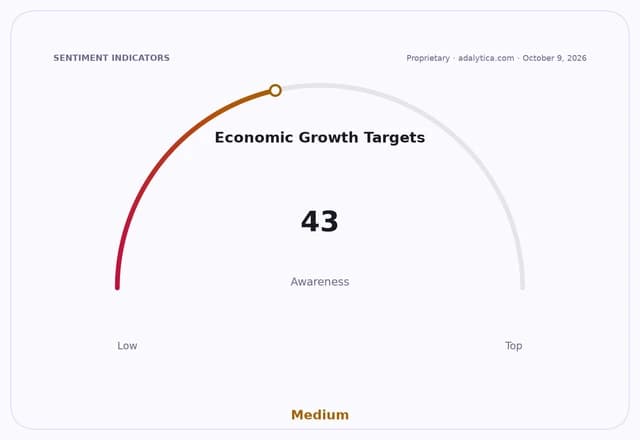
Sentiment IndicatorsⓘProprietary · adalytica.com · October 9, 2026
This is a snapshot — live sentiment, awareness and momentum for 130+ markets update continuously in the dashboard.Open AlphaPulse
The immediate political backdrop is a season of student protest and widening alliance-building across class, caste, gender and sexuality. The case being made by activists is that violence against women cannot be treated as a “separate” issue from national renewal. Instead, it sits at the center of the same struggle over who gets to participate in public life, who bears economic insecurity and who is left out of the benefits of growth.
That has direct economic implications. Women’s ability to move safely through cities, use public transport, work late hours and participate online affects the supply of labor and the efficiency of urban economies. The more women withdraw from public life because of fear, harassment or reputational violence such as doxxing and deepfakes, the more the economy loses potential output. India’s growth story depends on expanding participation, not just expanding headline GDP.
The piece also links gender equality to climate and cost-of-living pressures, which is economically significant because these stresses fall hardest on low-income households and tend to deepen inequality. Heat stress, resource scarcity and rising prices can increase household conflict and make paid work harder to sustain, especially for women with fewer protections. The argument is that feminist politics cannot be confined to legal redress after violence; it has to engage with the material conditions that make women more vulnerable in the first place.
That broader framing is relevant for investors because India’s market premium increasingly rests on the durability of its domestic-demand story. If women’s economic participation rises, the country gains not just social legitimacy but a larger labor pool, stronger household formation and deeper consumption growth. If it stalls, the upside to growth, productivity and urban expansion is capped. For companies selling into India, equality is not only a governance issue but a demand-side issue.
The article also captures a more volatile digital risk. The growth of misogynistic networks online, along with fights over anonymity, complainants’ identities and deepfake abuse, suggests that reputational and legal risks around gender-based harm are moving into the mainstream. That raises the stakes for platforms, employers and institutions that rely on trust and participation. A culture that normalizes harassment or disclosure of victims can chill reporting, weaken workplace confidence and ultimately raise compliance and legal costs.
There is a political thesis here too: women’s rights are becoming a wedge issue that can either widen or fracture reform coalitions. The strongest reading is that cross-movement solidarity — among students, feminists, Dalits, queer groups and other reform constituencies — could create a more durable reform bloc than narrow identity politics. The bearish reading is that backlash, online polarization and right-wing machismo could reverse hard-won gains, especially if institutions fail to enforce safety and anonymity protections.
For investors, the practical takeaway is that India’s equality debate is not peripheral to growth. It sits at the intersection of labor supply, consumer power, social stability and digital governance. The next catalysts will be whether protest coalitions translate into institutional change, whether the courts and regulators strengthen protections against harassment and deepfakes, and whether employers and platforms adapt to a more demanding standard of safety.
| Entity | Gains | Losses |
|---|---|---|
| Indian women | ▲Wider mobility and voice | ▼Safety and access if backlash grows |
| Reform coalitions | ▲Broader alliances across caste and gender | ▼Fragmentation if issues stay siloed |
| Employers and investors | ▲Bigger labor pool and demand base | ▼Higher legal, reputational risk if abuse persists |
| Misogynist networks | ▲Short-term influence online | ▼Institutional pushback and tighter norms |