Borrowers tied to floating-rate home loans are facing higher EMIs again as Punjab National Bank, Bank of India, Bank of Baroda and Indian Bank lifted their repo-linked lending rates after the Reserve Bank of India’s latest policy move.
Indian banks raise repo-linked lending rates
That matters because even a modest increase in lending benchmarks can ripple through household budgets, especially in India’s large market for home loans and other retail credit. When banks reprice loans linked to the repo rate, customers either pay more each month or extend the tenor of the loan and end up paying more interest over time.
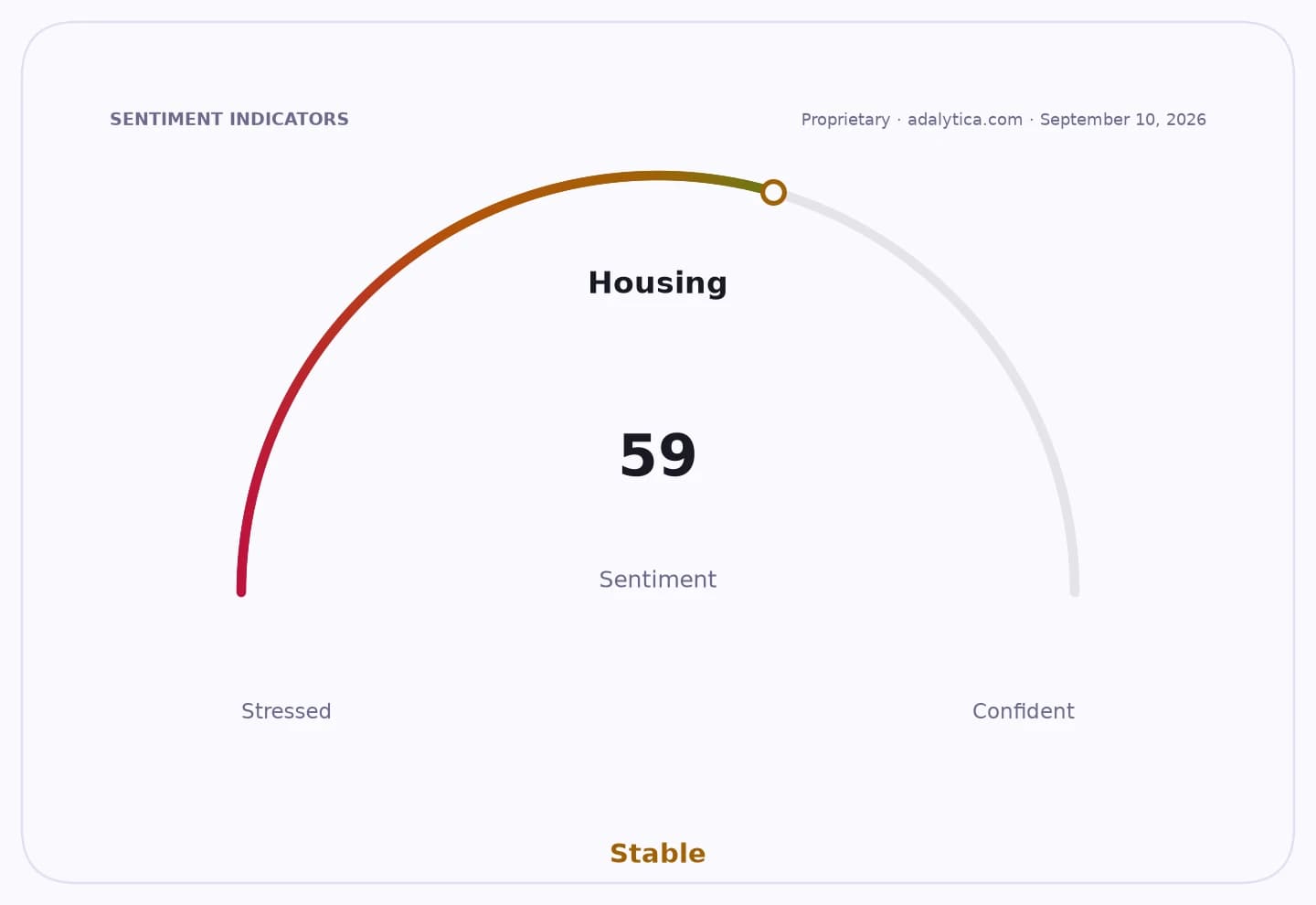
Sentiment IndicatorsⓘProprietary · adalytica.com · October 9, 2026
This is a snapshot — live sentiment, awareness and momentum for 130+ markets update continuously in the dashboard.Open AlphaPulse
PNB raised its repo rate-linked lending rate to 8.35% from 8.10%, effective Oct. 8. Bank of India made the same move, taking its repo rate-based lending rate to 8.35% from 8.10% effective Oct. 7. Indian Bank increased its rate to 8.20% from 7.95%, while Bank of Baroda set its retail benchmark at 8.15% effective Oct. 8.
The move shows how quickly monetary policy gets passed through to borrowers once the RBI changes the repo rate. For households, that means less relief from falling borrowing costs and a bigger squeeze on disposable income. For banks, it helps protect margins on loans tied to the central bank benchmark, though it can also weigh on demand if higher EMIs start to discourage fresh borrowing.
For investors, the immediate takeaway is not just that EMIs are rising, but that the interest-rate cycle is still working its way through the economy. Higher lending rates can support bank spreads in the near term, but they also raise the risk of slower credit growth if consumers and businesses pull back. In a market where borrowing costs matter for everything from housing demand to auto sales, these changes are worth watching closely.
The other important signal is behavioral: borrowers should not assume cheaper loans are around the corner. If EMIs rise, some lenders may lengthen the repayment period to keep monthly payments steady, but that usually means a larger total interest bill. Small prepayments can help offset the hit, and borrowers with floating-rate loans should ask exactly how their bank is applying the revision.
For long-term investors, this is a reminder that the best portfolios are built with patience and diversification, not by betting on the next rate move. Banks are likely to keep adjusting lending rates as policy evolves, and more lenders may follow PNB, Bank of India, Bank of Baroda and Indian Bank in the coming days. That makes this a useful moment to review debt loads, stay selective on rate-sensitive stocks and keep focusing on businesses that can compound through different interest-rate environments.
| Entity | Gains | Losses |
|---|---|---|
| Banks | ▲Better loan spreads | ▼Slower credit demand |
| Borrowers | ▲None from this move | ▼Higher EMIs |
| Bank shareholders | ▲Near-term margin support | ▼Weaker loan growth risk |
| Housing sector | ▲None immediately | ▼Softer affordability |