Sberbank’s decision to stop offering short-term subsidized mortgages from Oct. 1 matters because it removes one of the main tools keeping Russia’s strained housing market moving and signals that banks are no longer willing to absorb the cost of cheap lending in a high-rate environment.
Sberbank Ends Short-Term Subsidized Mortgages
The country’s largest lender said it will no longer issue subsidized home loans for one, two, three or five years, a structure that let developers compensate the bank for part of the interest rate in the opening years of the loan. Buyers will still be able to access longer-dated subsidized deals, but the most popular low-payment, near-term format is being cut off.
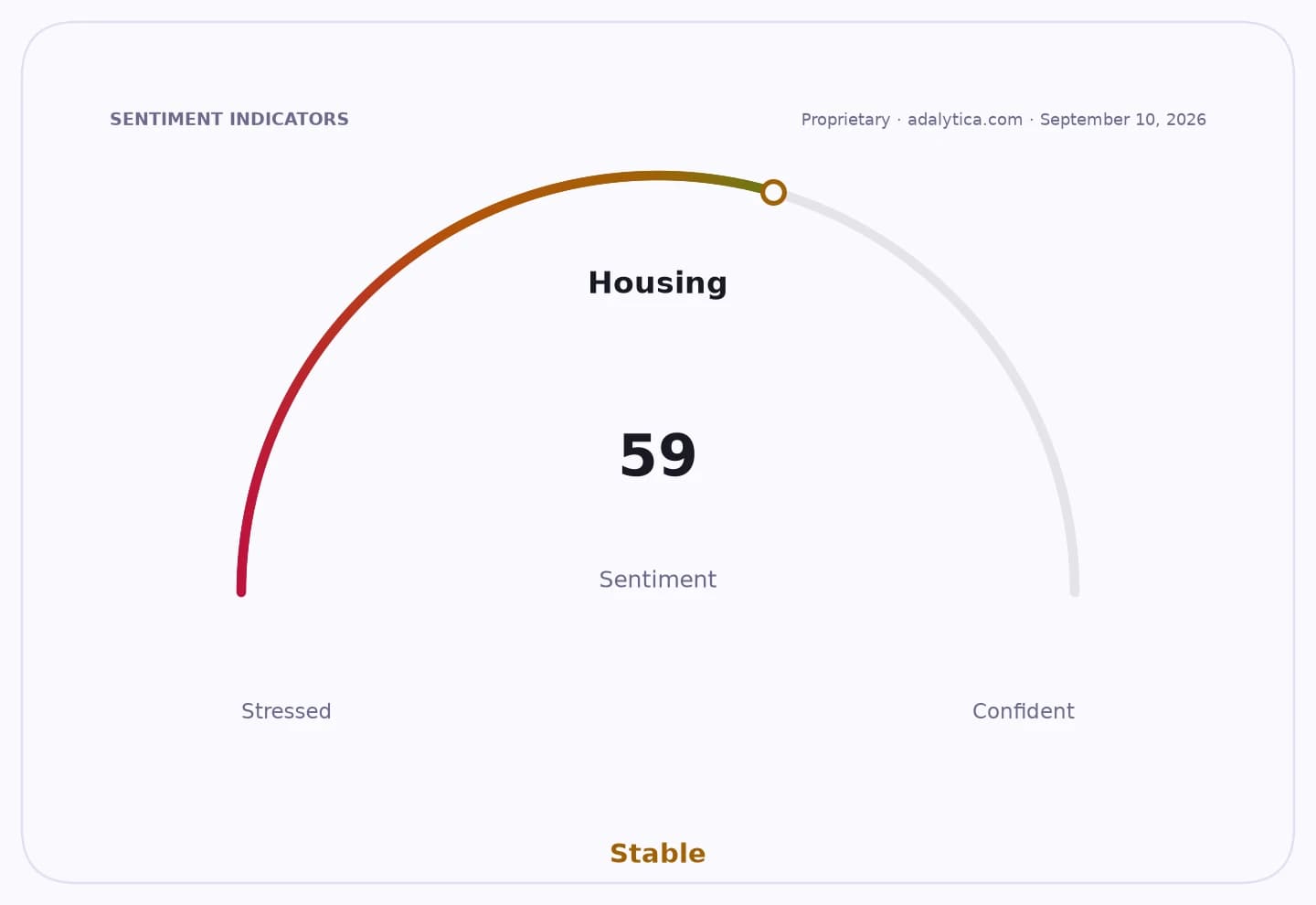
Sentiment IndicatorsⓘProprietary · adalytica.com · September 10, 2026
This is a snapshot — live sentiment, awareness and momentum for 130+ markets update continuously in the dashboard.Open AlphaPulse
Economically, the move is a tell. When the biggest bank in the system steps back from short-term rate subsidies, it usually means the math on mortgage lending has deteriorated. Russia has been operating with elevated borrowing costs, and banks are increasingly focused on products that better cover funding costs and protect margins. That shifts the burden back onto developers and borrowers at the very moment the market is already under pressure from weak affordability and a large stock of unsold completed apartments.
Investors should read this as a margin and volume story for the entire housing-finance chain. If Sberbank is exiting these deals, competitors are likely to follow, just as several peers — including MKB, Sovcombank and Alfa — have already done. That raises the probability of a broader repricing of mortgage incentives across the sector, with short-term subsidies giving way to tranche-based lending, deferred-payment structures or outright payment plans. For builders, that means fewer easy sales and more pressure to move inventory. For banks, it means less volume, but potentially better loan economics.
The timing is especially important because potential buyers are already waiting for clarity on family-mortgage terms. If that policy remains unchanged, the disappearance of short-term subsidies could still slow demand by making the first few years of ownership more expensive. And those are the years that matter most for households stretching to buy, as lower introductory payments had effectively bridged the gap between market rates and affordability.
The deeper market narrative is that Russia’s housing boom is moving from state-supported demand to a more selective, balance-sheet-driven phase. That is usually bad for developers with heavy inventory and good for lenders that can reprice risk rather than chase loan growth. The stock market has already been telling the same story: property-sensitive names are weaker, while banks with stronger pricing power are better positioned.
For investors, the takeaway is simple: favor lenders and financing models that can survive a higher-rate regime, and be cautious on developers reliant on subsidized take-up to clear inventory. The next catalyst will be whether the rest of the banking sector formally follows Sberbank and whether housing incentives are replaced by longer-tranche loans or new state support.
| Entity | Gains | Losses |
|---|---|---|
| Sberbank | ▲Better loan economics | ▼Mortgage volume growth |
| Rival banks | ▲Pricing discipline | ▼Subsidized lending share |
| Developers | ▲None | ▼Faster apartment sales |
| Homebuyers | ▲Longer-term options remain | ▼Cheap short-term payments |