Rising bond yields have cut deep into banks’ treasury earnings, turning what is usually a reliable cushion into a quarter of mark-to-market losses and sharply lower trading gains. That matters because treasury income can offset slower loan growth and softer fee lines, and with yields still elevated, lenders may be forced to lean harder on lending spreads and other noninterest income to protect profitability.
Indian banks face treasury losses as bond yields rise
The hit was broad-based across Indian banks in the September quarter. Aggregate treasury income at scheduled commercial banks fell 62% from a year earlier, with the decline sharper at private lenders, where it dropped 66%, versus 59% at public sector banks, according to CareEdge Ratings. The pressure came as the benchmark 10-year government bond yield climbed about 40 basis points during the quarter to 7.19% before easing to around 7.12% now.
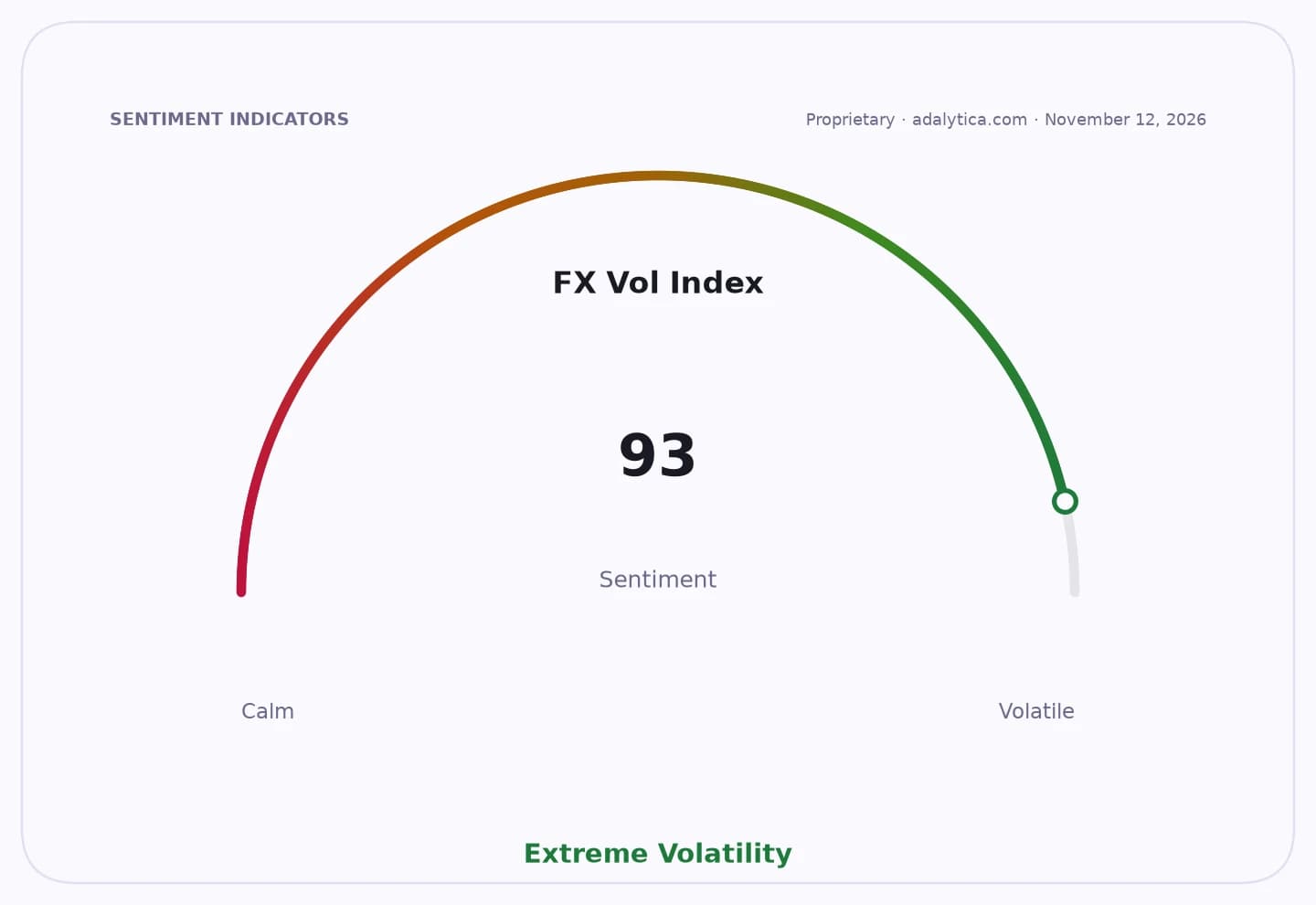
Sentiment Indicators
That rise translated directly into valuation losses on banks’ investment books. Because bond prices move inversely to yields, lenders saw the market value of their portfolios decline even when they did not sell the securities. The result was weaker treasury profits and fewer chances to book gains from bond sales, leaving banks with one of their least supportive quarters in recent periods.
State Bank of India said treasury income fell to ₹6,011 crore from ₹7,470 crore a year earlier, while Punjab National Bank’s treasury income slumped 57% to ₹753 crore. Canara Bank reported a 69% drop to ₹499 crore and Union Bank of India saw a 35% decline to ₹701 crore. HDFC Bank’s treasury income fell 67% to ₹780 crore, while ICICI Bank swung to a ₹230 crore loss from a ₹220 crore profit a year earlier.
There were a few outliers. Bank of Baroda reported treasury income of ₹4,093 crore, nearly four times the year-earlier level, helped by a sharp increase in trading gains from sales of investments and revaluation gains. But that looked more like an exception than a turning point in the sector.
The macro backdrop explains why the squeeze is so widespread. Indian yields were pushed higher by expectations of a repo rate hike, firmer crude prices and stronger US Treasury yields during the quarter. The Reserve Bank of India then raised the repo rate by 25 basis points to 5.50% last month, the first increase in nearly four years, tightening the pressure on fixed-income portfolios just as banks were losing the benefit of falling yields.
That is why this story matters to investors: treasury income is not a core loan engine, but it can be a meaningful swing factor in quarterly earnings, especially for banks with large securities portfolios. When that cushion disappears, earnings quality depends more heavily on loan growth, deposit pricing and fee income. For banks with weaker balance-sheet management or limited alternative income streams, the margin for error narrows quickly.
The next quarter may still be soft, but the setup is improving. Some market participants now expect treasury income to remain subdued in the December quarter, though a bond rally in recent days has eased some of the damage. SBI has said it expects similar treasury income in the current quarter before improvement in the March quarter if yields soften further. Lower US Treasury yields and falling oil prices are helping Indian government bonds stabilize, which could gradually restore some portfolio gains.
For investors, the message is straightforward: the banks best positioned for the next leg higher are not necessarily the ones with the biggest trading books, but the ones that can absorb rate volatility without missing a beat in lending, fees and deposit costs. In a market still underestimating how long yields can stay sticky, the safer trade is quality banks with diversified income, while lenders that leaned too heavily on treasury gains may continue to disappoint until the bond market turns decisively lower.
| Entity | Gains | Losses |
|---|---|---|
| Banks with strong fee and lending income | ▲Earnings resilience | ▼Treasury gains volatility |
| Banks with large bond portfolios | ▲Potential rebound if yields fall | ▼MTM losses from higher yields |
| SBI, PNB, Canara, Union Bank | ▲None in Q2 treasury | ▼Lower treasury income |
| Bank of Baroda | ▲Trading and revaluation gains | ▼Sector-wide rate pressure |