The Indian rupee strengthened to 95.71 per dollar on Aug. 22, extending a rally that has taken it to its strongest level in the data provided and pushed it ahead of moves in other major currency proxies as the dollar comes under pressure from a softer US rate backdrop.
Indian rupee rises to 95.71 per dollar
That matters because currency moves are now being driven less by India-specific surprises than by a broad re-pricing of the dollar itself. US 10-year yields have drifted back to 4.71% from levels above 4.7% earlier this week, while the federal funds rate sits at 3.63%, with markets also looking for 3.625% next month. The shift leaves the greenback more vulnerable, and that has helped emerging-market currencies including the rupee, even as India continues to run its own macro balancing act.
Sentiment IndicatorsⓘProprietary · adalytica.com · August 22, 2026
This is a snapshot — live sentiment, awareness and momentum for 130+ markets update continuously in the dashboard.Open AlphaPulse
For investors, the rupee’s gain is a double-edged move. A firmer currency reduces imported inflation pressures, especially for energy and industrial inputs, and can give the Reserve Bank of India more room to focus on growth rather than defending the exchange rate. But it also squeezes exporters, particularly information technology and other dollar earners, whose translated revenues and margins weaken when the rupee rises.
The price action suggests the move is not just a one-day squeeze. INR=X has held above both its 50-day and 200-day moving averages, while RSI readings near 60 point to firm momentum without yet flashing the kind of extreme overbought conditions that often precede a sharp reversal. FXY, a proxy for the yen, has also recovered from earlier weakness, while FXE has stayed resilient, underscoring that the dollar’s retreat is broad rather than rupee-specific.
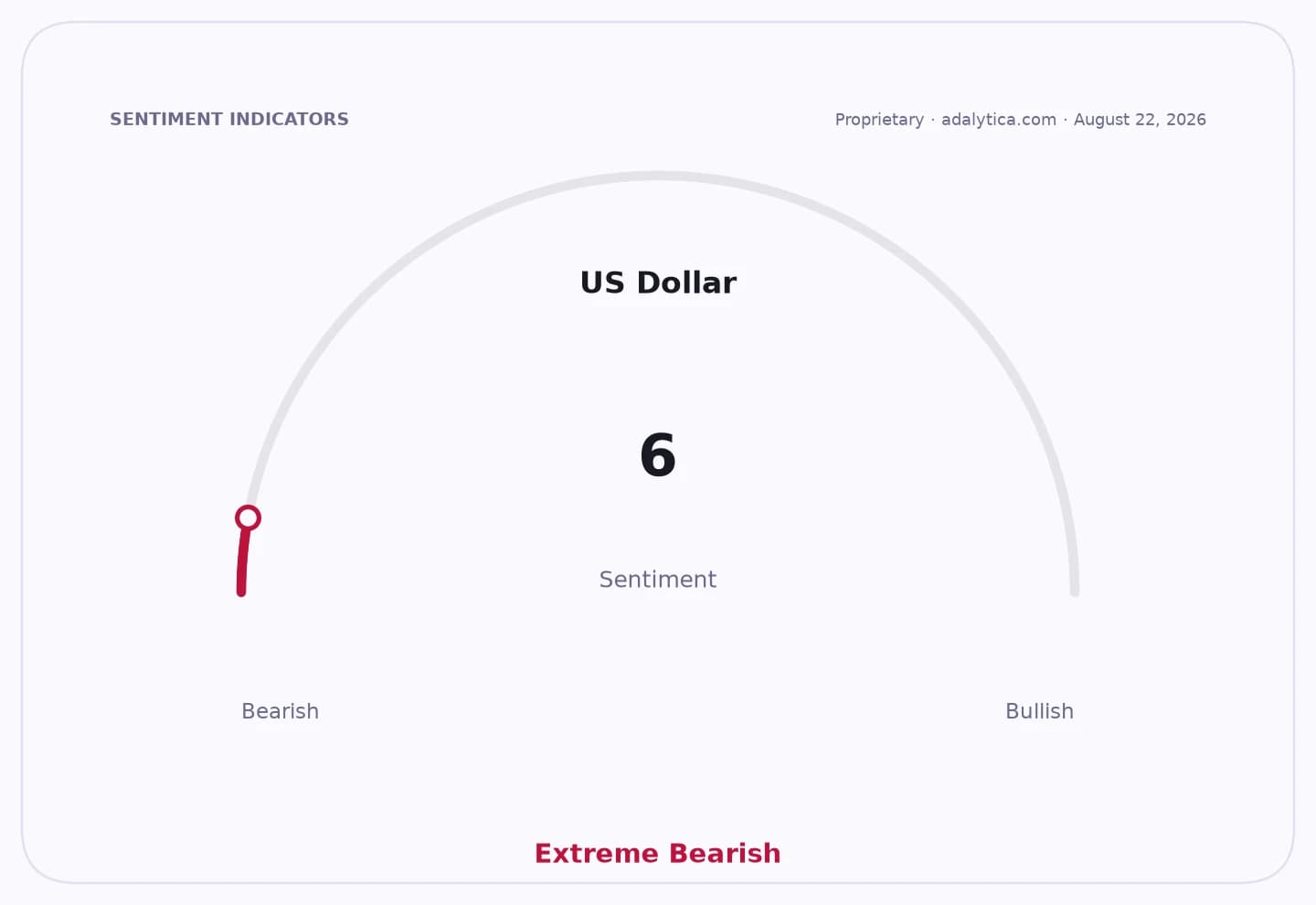
Adalytica’s US dollar trade signals show sentiment at 6, or “Extreme Fear,” with awareness at 99, reflecting how aggressively positioning has swung against the currency over the past month. The same gauge for FX volatility also shows “Extreme Fear,” which implies traders are not pricing a disorderly move, but rather a measured adjustment in rates and positioning. That combination is usually supportive for higher-beta currencies such as the rupee, at least until US yields stabilize.
The bull case for the rupee is that lower US rates, softer dollar demand and easier volatility can keep capital flowing toward emerging markets. The bear case is that the rally depends heavily on external conditions; if Treasury yields rise again or the Fed turns more cautious than expected, the dollar could rebound quickly and pull the rupee back with it.
For now, the key story is that the rupee’s outperformance reflects a global FX regime shift, not just a domestic India trade. If US easing expectations deepen, the rupee could stay bid; if not, the move may prove more a repricing than a new trend.
| Entity | Gains | Losses |
|---|---|---|
| Indian importers | ▲Cheaper dollar costs | ▼— |
| Indian exporters | ▲— | ▼Lower rupee revenues |
| RBI | ▲Less FX defense pressure | ▼Less room to resist strength |
| US dollar longs | ▲— | ▼Positioning losses |
| Emerging-market currencies | ▲Dollar-driven support | ▼Volatility if yields rebound |