Consumer lending in Indonesia is losing momentum even as overall bank credit accelerates, forcing lenders to lean on distribution-heavy sales tactics while keeping underwriting tight to avoid a slide in asset quality.
Indonesia Banks Lean on Payroll-Linked Consumer Loans
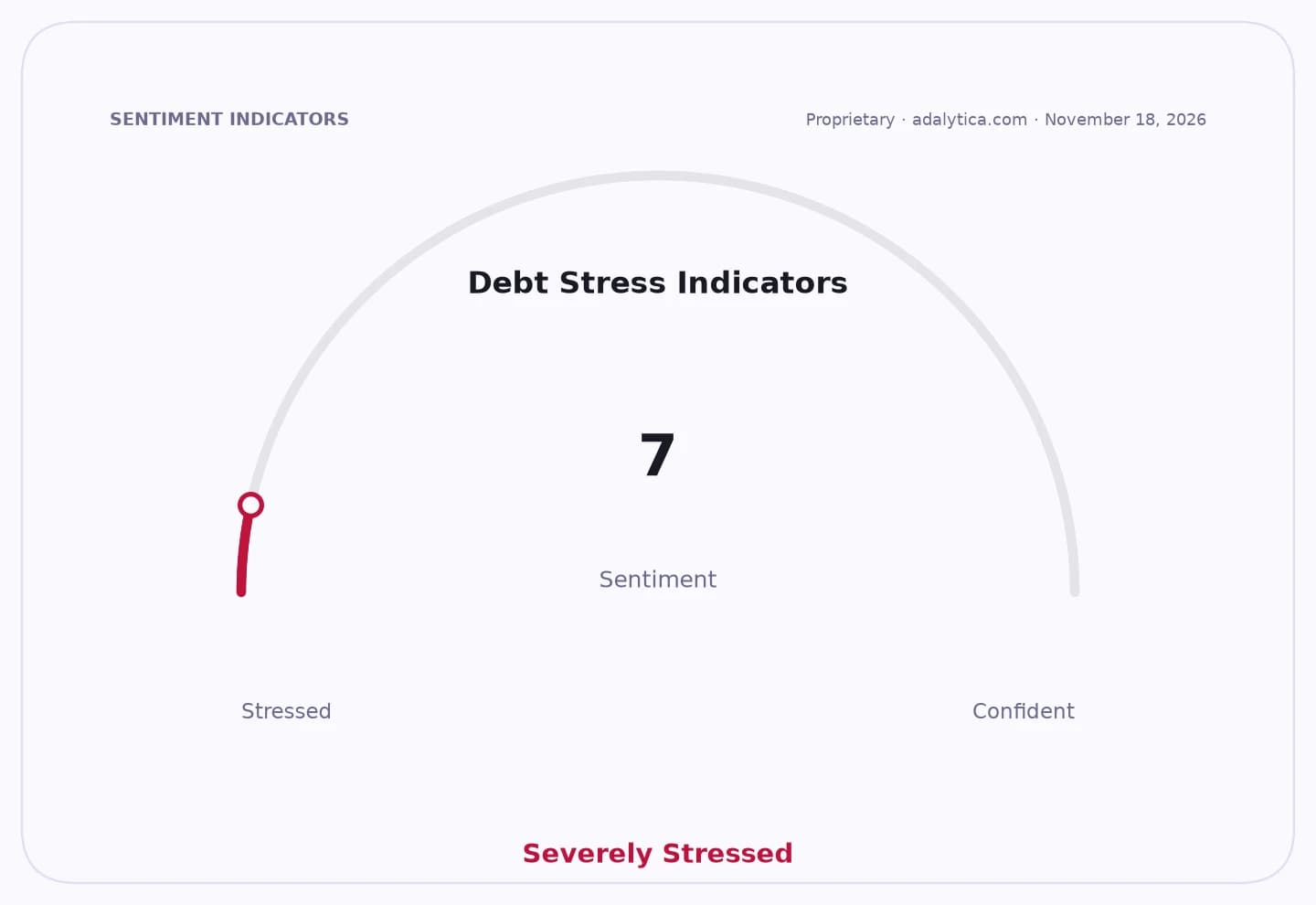
Debt Stress Indicators
The Financial Services Authority said consumer credit grew 4.86% year on year in September, slowing from 5.07% in August and 7.42% a year earlier, even as total industry lending expanded 13.26%. The gap underscores a household sector that is still cautious despite positive GDP growth, with weaker purchasing power, soft income expectations and high sensitivity to new debt weighing on demand.
Sentiment Indicators
Regulator Dian Ediana Rae said banks need to expand credit “in balance” and align loan growth with real financing needs and borrowers’ repayment capacity. For investors, that matters because consumer lending typically offers higher yields than corporate loans, but it can also become a faster route to delinquencies if banks loosen standards to chase volume.
The data and bank commentary point to a sector that is not retreating from consumer finance, but changing how it competes. Danamon said its consumer portfolio rose 5% to Rp 23.6 trillion by the third quarter, helped by its Employee Banking Solution strategy that targets staff at corporate clients with bundled offers on credit cards, mortgages, unsecured loans and pilgrimage financing. The bank said the ecosystem using the program has grown 15% year on year, suggesting distribution via payroll-linked relationships is becoming a more efficient way to originate loans with better visibility on borrower profiles.
That approach is attractive in a sluggish demand environment because it can lower credit risk without forcing banks to sacrifice pricing discipline entirely. Danamon said access to employer-linked data improves credit assessment, while cross-selling through subsidiaries such as Adira Finance and Home Credit broadens the product set. In effect, banks are trying to trade lower headline rates for cleaner books and steadier customer acquisition.
BCA, by contrast, showed how uneven the segment remains. Its consumer book fell 2.2% to Rp 218.7 trillion, dragged by a 20.6% drop in vehicle loans to Rp 48.7 trillion, while mortgages rose only 3.6% to Rp 143.7 trillion. Even so, consumer non-performing loans declined to Rp 4.86 trillion from Rp 5.01 trillion, reinforcing the argument that conservative underwriting is preserving quality even as growth stalls.
For BCA and other lenders, the nearer-term growth engine still sits elsewhere. Management said corporate lending remains the main driver, with businesses beginning to borrow ahead of the year-end shopping season and into Lunar New Year and Eid-related procurement cycles. That leaves consumer credit as a supporting line, not the primary catalyst, until household demand strengthens.
The narrative for investors is straightforward: Indonesia’s banks are entering a phase where distribution matters more than broad-based loan appetite, and where the winners will be those that can grow through embedded customer ecosystems without stretching balance sheets. If household demand improves, consumer lending can reaccelerate quickly. If not, banks are likely to keep prioritizing selectivity, fee-based cross-selling and asset-quality protection over aggressive balance-sheet expansion.
| Entity | Gains | Losses |
|---|---|---|
| Banks with payroll-linked distribution | ▲Lower-risk origination | ▼Slower headline growth |
| Prudent lenders | ▲Better asset quality | ▼Less volume upside |
| Household borrowers | ▲Targeted offers and softer rates | ▼Tighter credit access |
| Pure consumer lenders | ▲Cross-sell opportunities | ▼Weak demand and margin pressure |