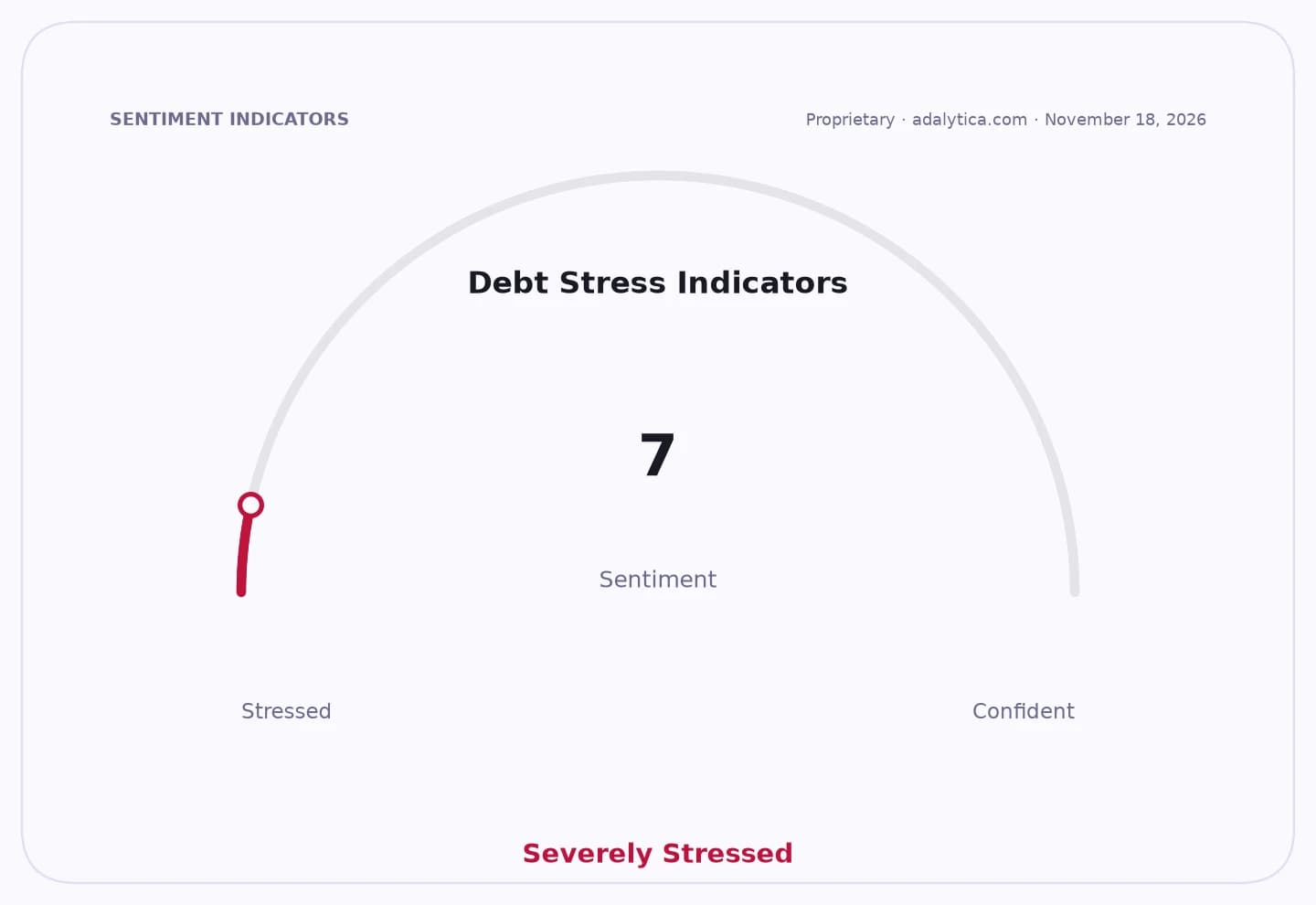
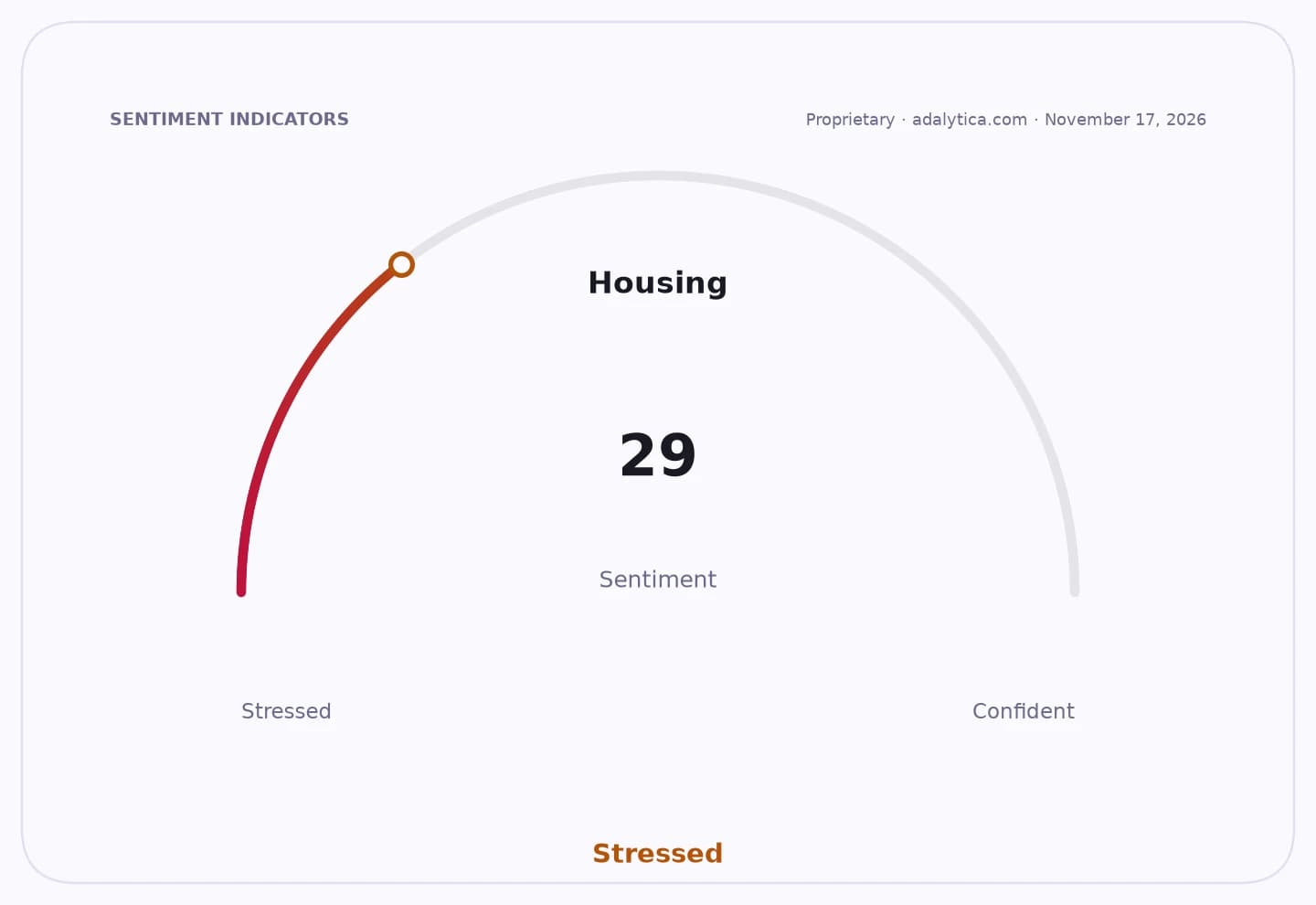
Banks in Russia are turning away an increasingly large share of consumer loan applicants, with the rejection rate rising to 79.5% in October from 78.8% in September, a sign that credit is becoming harder to obtain just as households still rely on borrowing to finance big-ticket purchases.
Russia banks reject 79.5% of consumer loan apps

That matters because consumer lending has been one of the main engines of household demand in Russia, and a sharp tightening can cool spending on appliances, cars and other durable goods even if nominal wages are still rising. For the banking system, the shift also shows lenders trying to protect balance sheets as regulators force a tougher assessment of risk and the central bank keeps pressure on the credit market.
Sentiment Indicators
The important point for investors is that this is not simply a story about fewer approvals. It is a story about the price of risk rising across the economy. When banks become more selective, the immediate winners are lenders that preserve capital and avoid a late-cycle surge in bad debt. The losers are retailers, consumer-discretionary businesses and borrowers who were counting on easy credit to bridge the gap between income and spending.
The data show how severe the squeeze has become: nearly four out of five consumer loan applications are now denied. Even borrowers with clean credit histories are not guaranteed approval, and those who are accepted may receive less than they asked for or face delays. That is exactly the kind of tightening that tends to hit consumption with a lag, because households adjust first through smaller purchases, then through deferred spending.
The broader narrative is that Moscow is trying to balance financial stability against consumer demand. The central bank’s tighter rules are clearly meant to prevent excessive household leverage, especially after a long period in which banks encouraged borrowing as a normal way to pay for everyday life and large purchases. But if rates eventually come down, lenders can reopen the tap quickly, and consumer credit could rebound from a much tighter base.
For now, the message is straightforward: Russia’s credit cycle is moving from expansion to restraint, and that will reshape who benefits from household spending. Investors should expect pressure on consumption-linked businesses and a relative advantage for banks that can defend credit quality without sacrificing profitability. The next leg will depend on how fast policy eases and whether household incomes can keep up without borrowed money.
| Entity | Gains | Losses |
|---|---|---|
| Conservative banks | ▲Lower credit risk | ▼Slower loan growth |
| Household savers | ▲Less debt stress | ▼Less easy access to loans |
| Retailers / durables sellers | ▲Stronger customers only | ▼Fewer financed purchases |
| Borrowers | ▲Tighter screening | ▼Higher rejection rates |