Mortgage lending is becoming a tighter gatekeeper for home ownership, with rejection rates reaching 70% and borrowers without clean credit histories bearing the brunt of the squeeze.
Mortgage lending tightens as rejection rates hit 70%
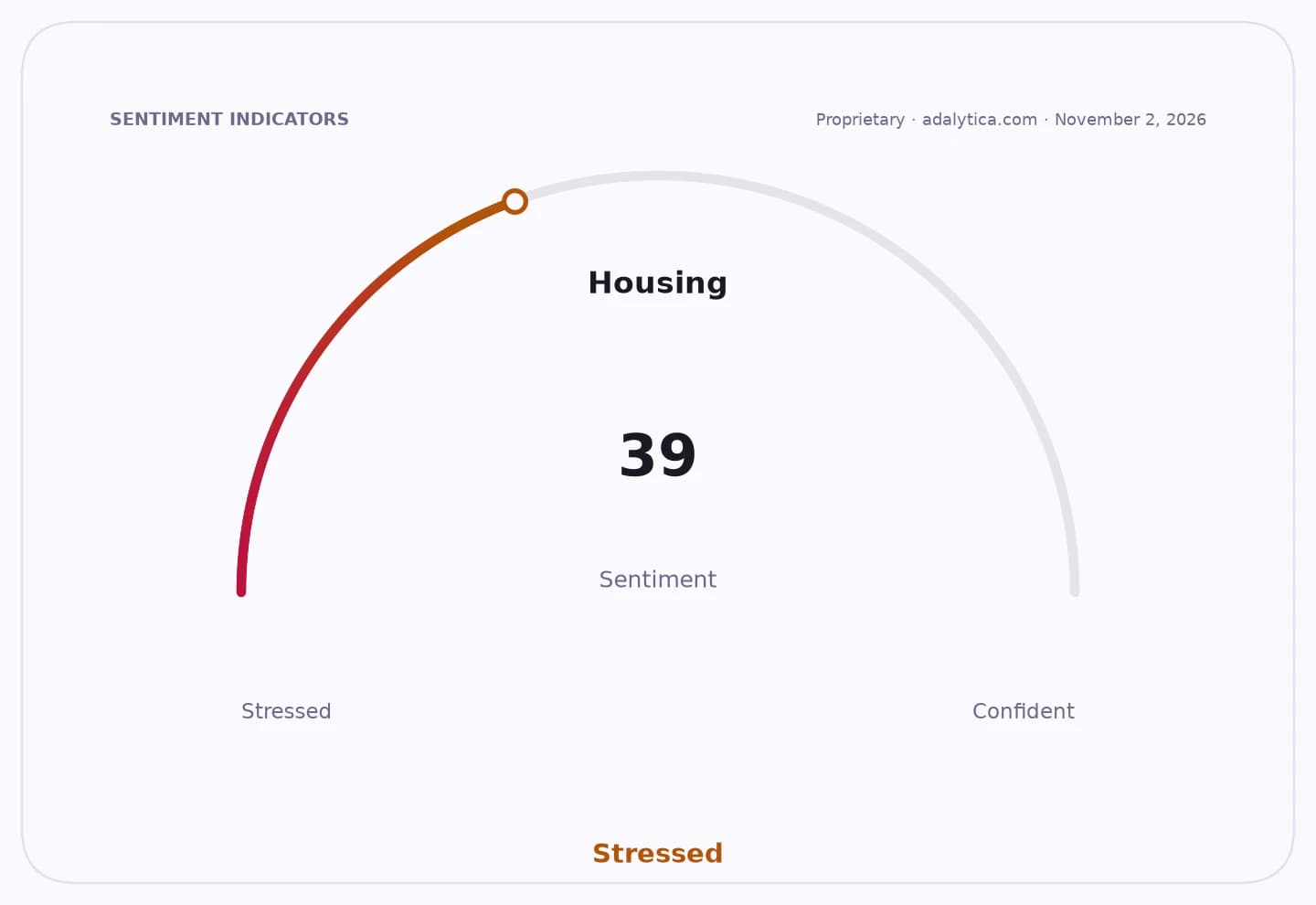
Housing
That matters because housing finance is one of the clearest channels through which high interest rates slow the economy. When lenders tighten underwriting and rates stay elevated, fewer households can qualify for mortgages, demand for homes weakens and turnover in the property market slows. The effect is especially sharp for informal workers, whose incomes are often harder to document and whose credit histories are thinner or patchier, leaving them outside the mainstream mortgage system.
Sentiment Indicators
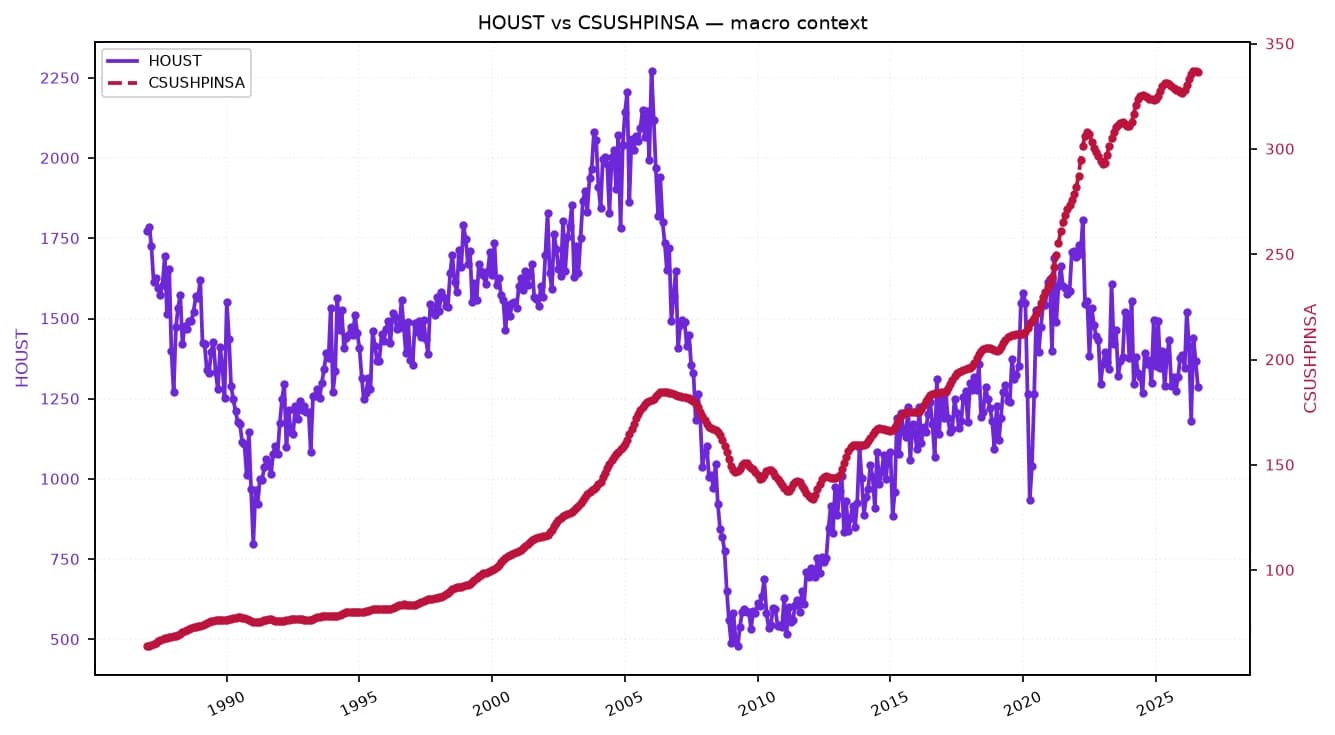
The latest numbers point to a housing market under stress rather than a simple cyclical slowdown. The 10-year Treasury yield has climbed to about 5.23%, keeping mortgage pricing elevated and reinforcing lenders’ caution. Even as the S&P Case-Shiller national home-price index remains near record highs at 336.9, affordability is deteriorating: home values have stayed lofty while borrowing costs have risen, making debt-service burdens harder to absorb.
Mortgage activity is already reflecting that strain. The housing transactions series is forecast to edge up to 1,277.9 in October after recent weakness, but the broader trend remains soft, with the latest reading at 1,221 in September. That suggests the market is not recovering fast enough to offset tighter credit conditions. In practical terms, fewer approved loans mean fewer closings, lower fee income for lenders and less mobility for households trying to trade up or buy their first home.
The pressure is showing up in mortgage-linked equities. Zillow, a smaller player in mortgage origination than the big lenders, has seen its shares slide to around $29.76 from the mid-$30s in August and well below their 200-day average, while Rocket Companies and United Wholesale Mortgage have also weakened sharply over the year. That reflects investor concern that origination volumes will remain subdued if high rates and credit filters continue to choke demand.
For lenders, the near-term bull case is that stricter underwriting protects credit quality in a tougher rate environment. The bear case is that the market is excluding too much demand, especially from self-employed and informal earners who may be creditworthy but lack conventional documentation. If rates remain near current levels, the pool of qualified borrowers is likely to stay narrow, limiting both housing turnover and the recovery in mortgage revenue.
The bigger implication is that housing finance is becoming more divided: prime borrowers can still access credit, but households outside the formal payroll economy are being pushed further to the margins. Until borrowing costs fall or lenders adapt underwriting to better capture non-traditional income, the mortgage market is likely to remain a constraint on broader housing activity rather than a source of growth.
| Entity | Gains | Losses |
|---|---|---|
| Prime borrowers | ▲Easier approval | ▼Informal workers |
| Mortgage lenders | ▲Lower credit risk | ▼Origination volume |
| Home sellers | ▲Fewer bad loans | ▼Lower buyer pool |
| Housing market | ▲Better loan quality | ▼Faster turnover |