Home sales are weakening again just as election politics turn housing into a campaign issue, underscoring how uncertainty around taxes, regulation and future policy can freeze demand even when the broader labor market remains relatively stable.
US Home Sales Weaken as Election Uncertainty Grows
The pattern matters because housing is one of the most rate-sensitive parts of the economy and one of the most politically exposed. When households expect policy changes, they often delay buying decisions rather than risk locking into a mortgage before the rules are clearer. That hesitation can ripple through builders, mortgage lenders, brokers and home-related retailers, while also dampening turnover in the wider economy.
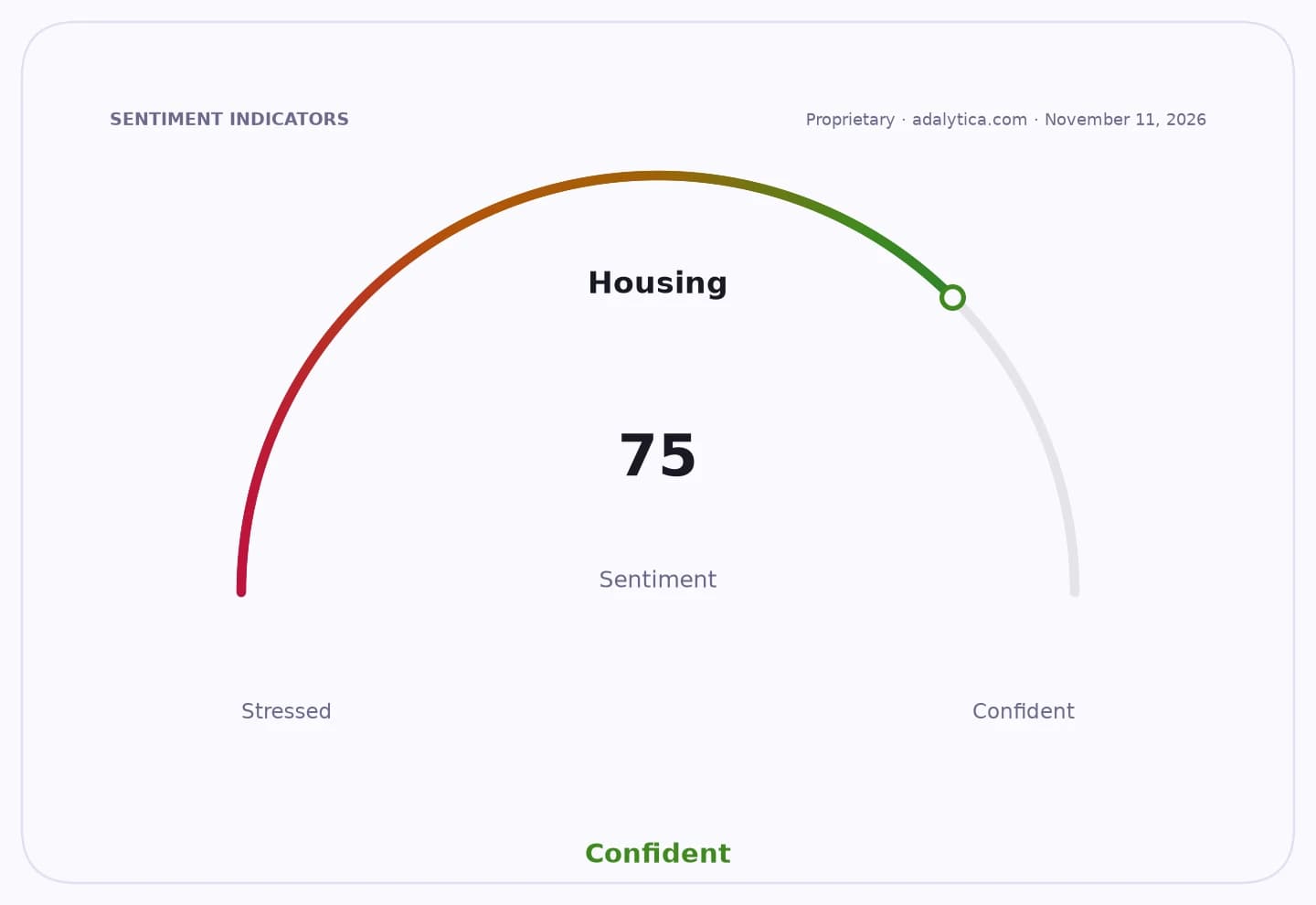
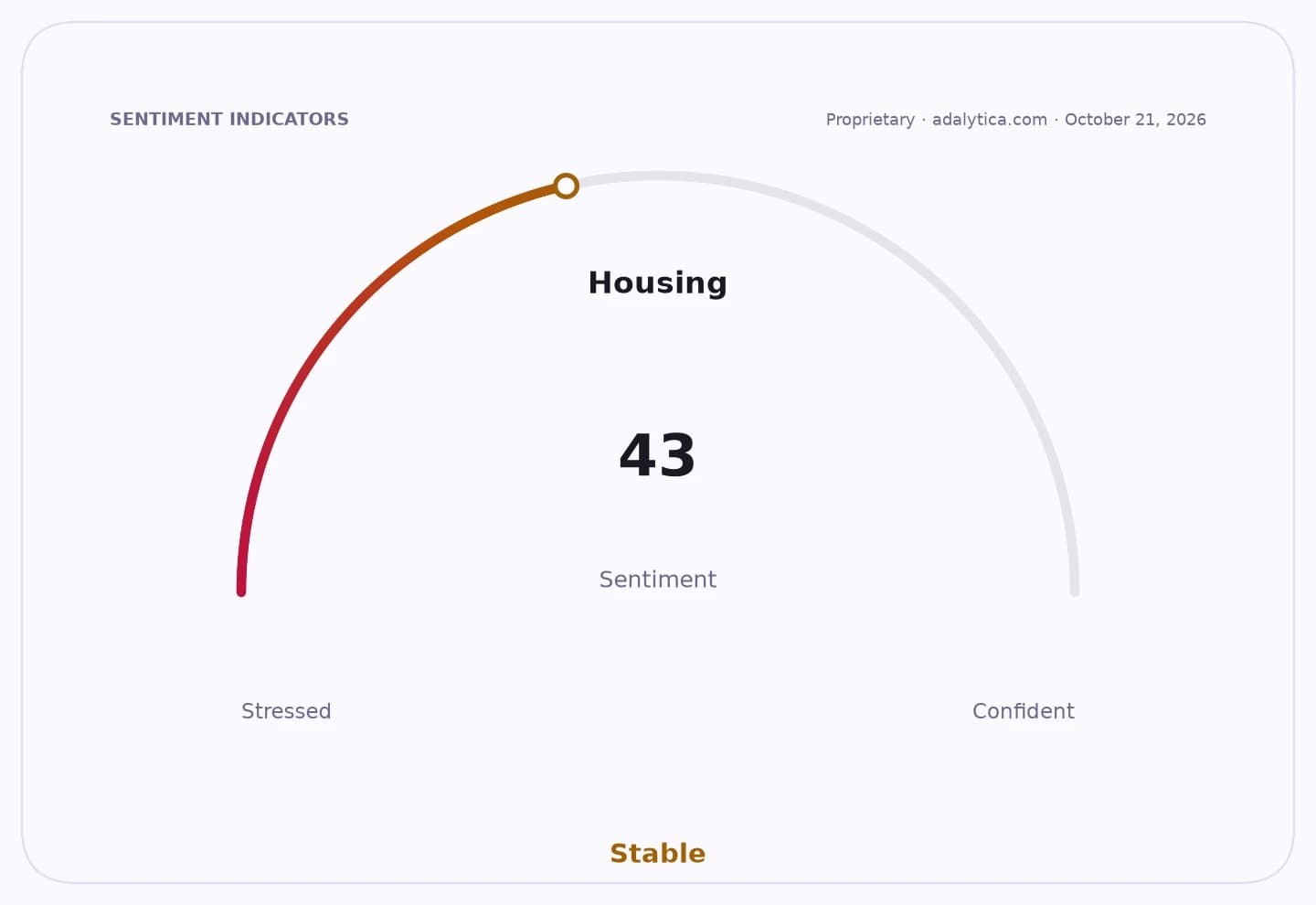
Sentiment Indicators
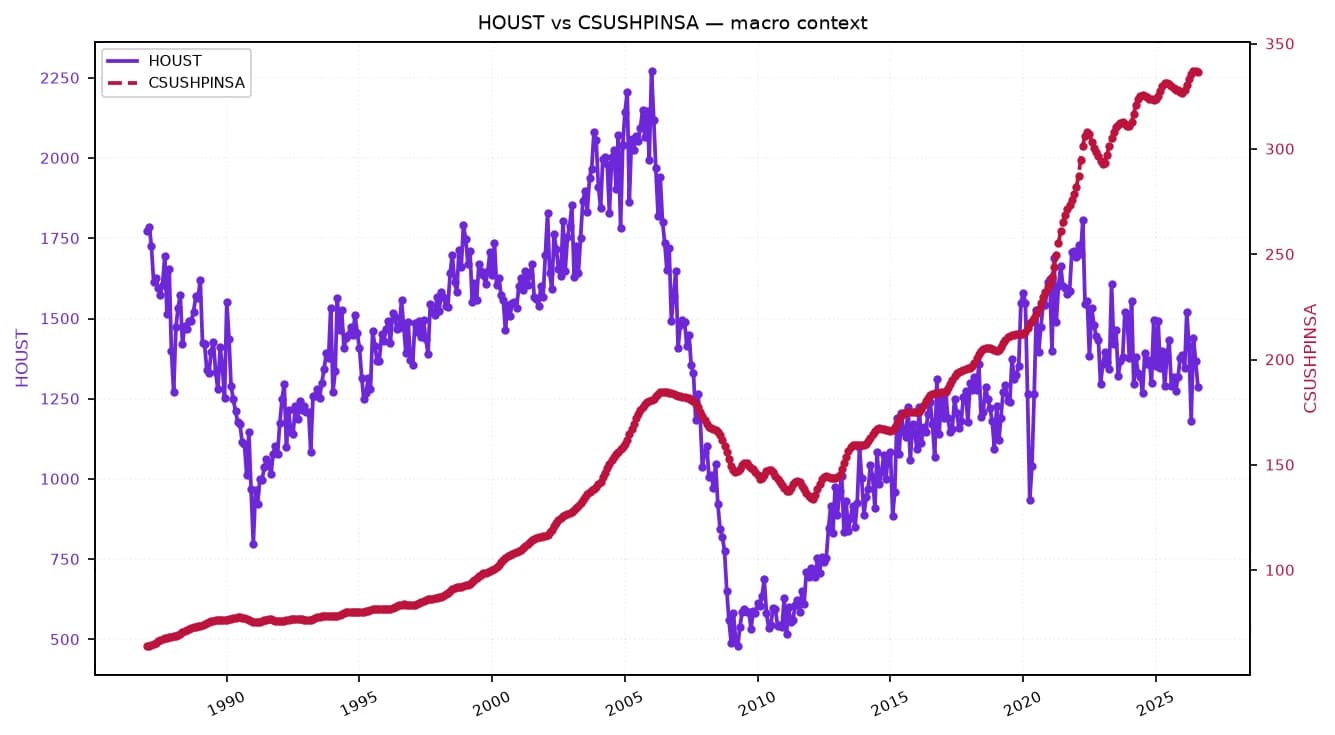
The latest data show that the U.S. housing market is still fragile. The seasonally adjusted pace of home sales fell to 1,221 in September from 1,288 in August, after a sharp drop to 1,182 in May and only a partial rebound to 1,369 in July. The forecast for October points to a modest recovery to 1,277.9, but that would still leave sales well below the mid-year bounce and consistent with a market struggling to regain momentum.
Prices have not collapsed, which is part of the problem. The S&P CoreLogic Case-Shiller national home price index stood at 336.741 in August, near record levels and up from 326.764 in January, suggesting affordability remains stretched even as demand cools. That combination — elevated prices and hesitant buyers — tends to lengthen selling times and keep would-be homeowners on the sidelines.
The labor market is not providing a strong counterweight. The unemployment rate was 4.1% in August and 4.2% in September, forecast to ease back to 4.1% in October. That is historically low by recession standards, but not enough to offset the psychological effect of political and policy uncertainty when mortgage costs and home prices are already high.
Investors are already pricing in the tug-of-war. Homebuilder ETF ITB has rebounded to about $94, after falling as low as $87.39 in March and trading above its 50-day moving average in recent sessions, while remaining near its 200-day average around $94.91. That suggests traders see some stabilization, but not enough conviction to call a durable uptrend. Rival housing ETF XHB has also recovered, but it still sits only slightly above its 200-day moving average, a sign that sentiment is improving without fully resolving the demand question. Real-estate fund RWR has fared better, with the latest close above both its 50-day and 200-day moving averages, implying that investors are favoring income-producing property exposure over more cyclical housing plays.
The underlying narrative is straightforward: elections do not usually break the housing market, but they can delay it. Buyers, sellers and developers pause to see whether a new government will alter subsidies, zoning, taxation or mortgage support. In a market already constrained by affordability, even a short period of indecision can reduce transactions and pressure builders’ pricing power.
For investors, the key question is whether the post-election clarity unlocks delayed demand or simply exposes how weak affordability has become. If rates stay elevated and prices remain sticky, the political overhang may fade without bringing a meaningful rebound. If policy support arrives alongside lower borrowing costs, housing activity could recover quickly from a low base. The next few months of sales data will show whether this is a temporary election pause or another sign that the market has hit a structural ceiling.
| Entity | Gains | Losses |
|---|---|---|
| Buyers | ▲Potential policy clarity | ▼Decision paralysis |
| Homebuilders | ▲Stable prices if demand holds | ▼Lower sales volumes |
| Mortgage lenders | ▲Rebound if buyers return | ▼Fewer originations now |
| Incumbent sellers | ▲Higher prices on scarce supply | ▼Slower turnover and longer listings |