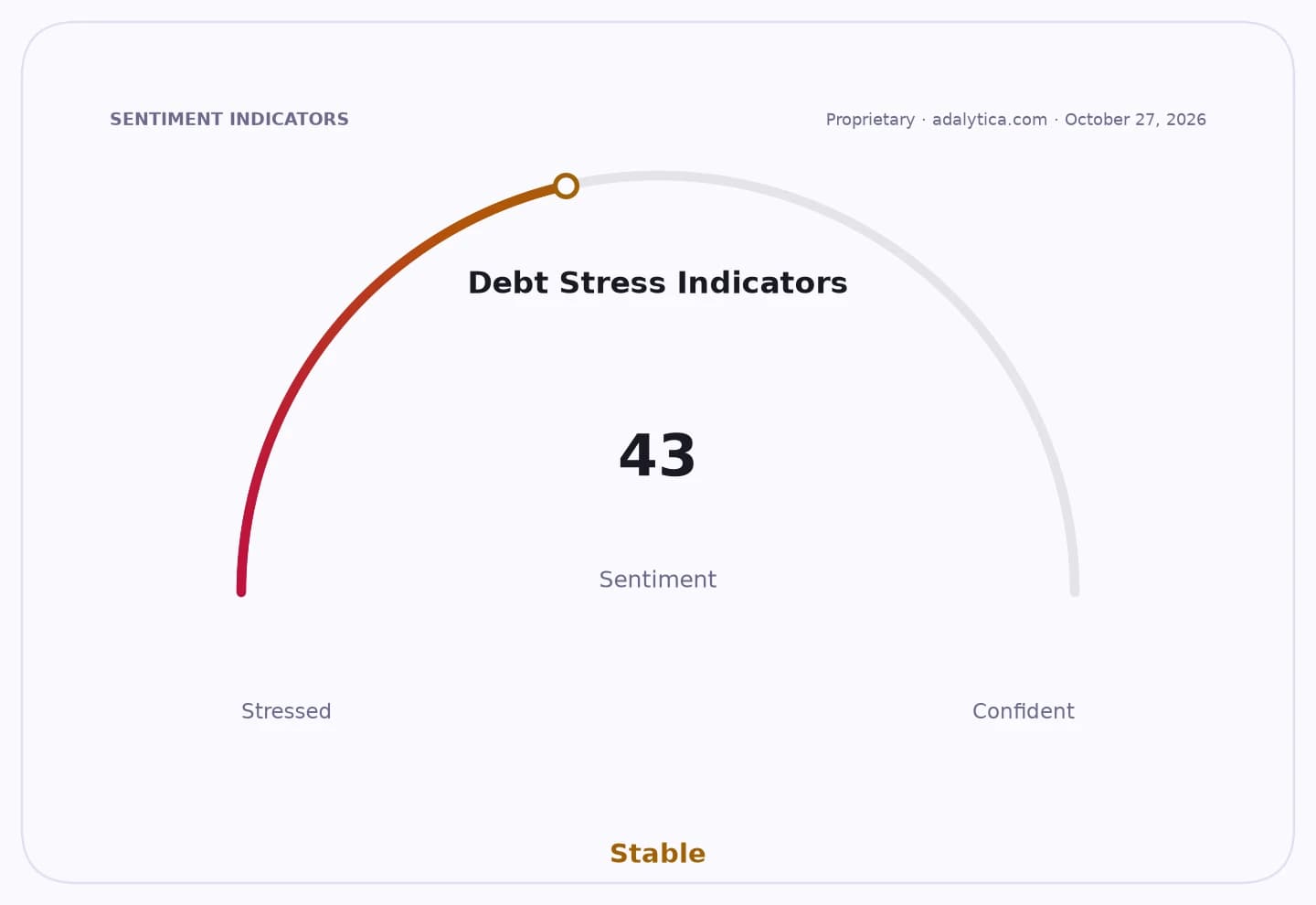
Turkey’s household borrowing problem is getting bigger, and that is what investors should pay attention to. CHP lawmaker Ömer Fethi Gürer said individual loans and credit-card debt have climbed to 7.053 trillion lira, a scale that points to persistent strain on consumers, bank balance sheets and domestic demand.
Turkey household debt rises to 7.053 trillion lira
That matters because consumer credit is often the first place economic pressure shows up. Gürer said overdraft balances reached 970 billion lira, while individual non-performing receivables jumped from 242 billion lira in January to 405 billion lira in October. In plain English, more people are not just borrowing more — they are struggling to pay it back. That is a warning sign for household spending, which supports everything from retail sales to service-sector growth.
Sentiment Indicators
The economics are straightforward. When wages lag inflation and borrowing costs stay high, families increasingly rely on revolving credit and overdrafts just to make it to month-end. That can temporarily support consumption, but it is not a healthy engine for long-term growth. It also raises funding and credit-risk concerns for lenders, especially if delinquency trends keep worsening.
For investors, the key question is whether Turkey’s banks can keep extending credit without a bigger hit to asset quality. Rising bad loans can pressure earnings, force higher provisions and eventually crimp loan growth. That is bad news for banks, but also for the broader economy, because a tighter credit cycle can slow activity further and deepen the burden on households.
Gürer blamed low purchasing power, high interest rates and inflationary pressure, and that is the narrative connecting the numbers. Turkey’s consumer is being squeezed from both sides: prices remain elevated while borrowing has become the fallback for day-to-day survival. Unless wages, inflation and rates move into a more sustainable balance, the debt problem is likely to keep feeding itself.
For long-term investors, that means caution on companies tied to discretionary consumer spending and a close watch on Turkish banks’ loan books. The sector can still offer opportunity, but only if credit quality stabilizes and household finances stop deteriorating. Worth watching closely.
| Entity | Gains | Losses |
|---|---|---|
| Borrowers using credit | ▲Short-term cash flow | ▼Rising debt burden |
| Turkish banks | ▲Higher loan volumes | ▼Worse asset quality |
| Retailers and consumer firms | ▲Borrowed spending support | ▼Weaker demand later |
| Savers and prudent households | ▲Less pressure to overborrow | ▼Lower purchasing power |