Indonesia is moving to toughen penalties on coal exporters that miss domestic supply obligations, a policy shift that could tighten discipline across the coal chain and ease a mounting risk to the country’s cement producers and other power-hungry industries.
Indonesia to tighten coal export penalties
The Energy and Mineral Resources Ministry said it is considering replacing fines for companies that divert domestic market obligation, or DMO, coal into exports with a far harsher sanction: blocking the issuance of next year’s RKAB mining work plan and budget approvals. In practice, that would hit producers where it matters most, because without RKAB renewal miners cannot legally plan and operate as usual.
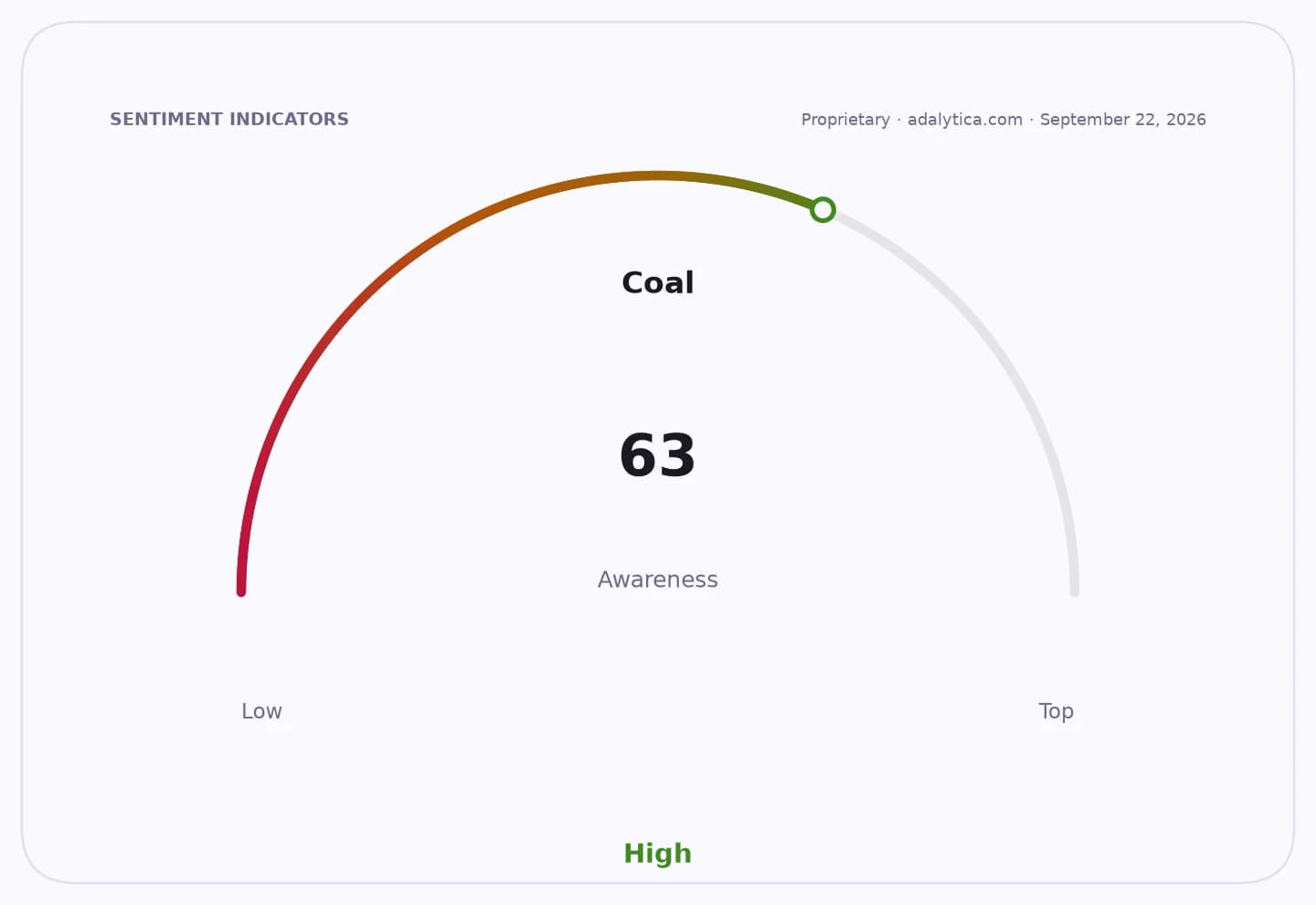
Sentiment IndicatorsⓘProprietary · adalytica.com · September 22, 2026
This is a snapshot — live sentiment, awareness and momentum for 130+ markets update continuously in the dashboard.Open AlphaPulse
That is economically significant because Indonesia’s DMO is the mechanism meant to keep coal flowing to local users before export demand takes priority. When compliance weakens, the first casualties are domestic industries that run on steady fuel access, especially cement makers, whose production lines are highly sensitive to supply interruptions. ASPEBINDO, the energy and mining suppliers group pushing for stricter oversight, wants DMO reviews every quarter to catch shortfalls before plants are forced to slow output or shut down.
For investors, the policy matters far beyond the cement sector. It raises the cost of noncompliance for miners at a time when global coal demand has been supported by geopolitical risk, higher gas prices and tighter stockpiles, making export barrels more valuable. A tougher enforcement regime could reduce the temptation to chase overseas prices and re-rank Indonesian coal as a more regulated, less flexible business. That is a positive for domestic end users, but it also introduces a new earnings and operating risk for producers that depend on export volumes and permissive licensing.
The market backdrop helps explain why the government is acting now. Coal pricing has been under renewed attention as the Middle East conflict and Strait of Hormuz tensions keep energy markets unsettled, while Indonesian coal remains strategically important to both domestic supply security and regional fuel flows. In that environment, every ton redirected abroad is more politically sensitive, and every compliance failure becomes a supply-chain issue rather than just a bureaucratic one.
Indonesia Energy Corp. shares, which trade in New York under the ticker INDO, are not the direct policy target here, but the stock sits inside the same broader coal-and-energy risk set and has been moving with the commodity’s volatile backdrop. The shares closed at $2.93 on Sept. 21, below their 200-day moving average of $3.36, with conventional momentum indicators showing a subdued setup rather than a breakout. Adalytica’s Coal Fear & Greed Index is neutral, but awareness has climbed sharply, underscoring how quickly the policy and geopolitical narratives are converging around the sector.
The key takeaway is that Indonesia is signaling it is willing to weaponize licensing power to enforce coal-to-domestic buyers first. That should improve supply security for cement and other industrial users, but it also reshapes the risk-reward for miners exposed to export incentives. The best-positioned investors will be those aligned with compliance, domestic demand stability and downstream beneficiaries of a more disciplined coal market.
| Entity | Gains | Losses |
|---|---|---|
| Cement producers | ▲More reliable coal supply | ▼Production disruptions |
| Compliant coal miners | ▲Clearer rules, license certainty | ▼Less room to divert supply |
| Noncompliant coal exporters | ▲Higher sanctions pressure | ▼RKAB blocking, lost output |
| Domestic industry users | ▲Better fuel security | ▼Less access if enforcement lags |