Indonesia’s tax office has collected Rp 2.23 trillion from crypto asset levies since the tax was introduced in 2022, underscoring how digital assets have become a durable source of state revenue even as Bitcoin trades deep in a bear phase and sentiment in the sector remains fragile.
Indonesia Crypto Tax Revenue Reaches Rp 2.23 Trillion
The numbers matter because they show crypto is no longer a side bet for regulators or investors — it is now part of the fiscal machinery. For the Directorate General of Taxes, the inflow helps broaden non-oil revenue from the digital economy at a time when governments are looking for sticky sources of income that can scale with online activity rather than with commodity cycles. For the market, it is another sign that the regulatory clampdown phase is over and the monetization phase has begun.
Sentiment Indicators
The tax haul has accelerated sharply since launch, rising from Rp 246.54 billion in 2022 to Rp 620.38 billion in 2024 and Rp 796.74 billion in 2025, before adding another Rp 341.61 billion in the first 10 months of 2026. That trajectory suggests crypto activity in Indonesia has matured enough to generate meaningful recurring receipts, even if trading volumes and prices are volatile. It also shows the government has effectively turned a speculative asset class into a steady stream of transaction-based revenue.
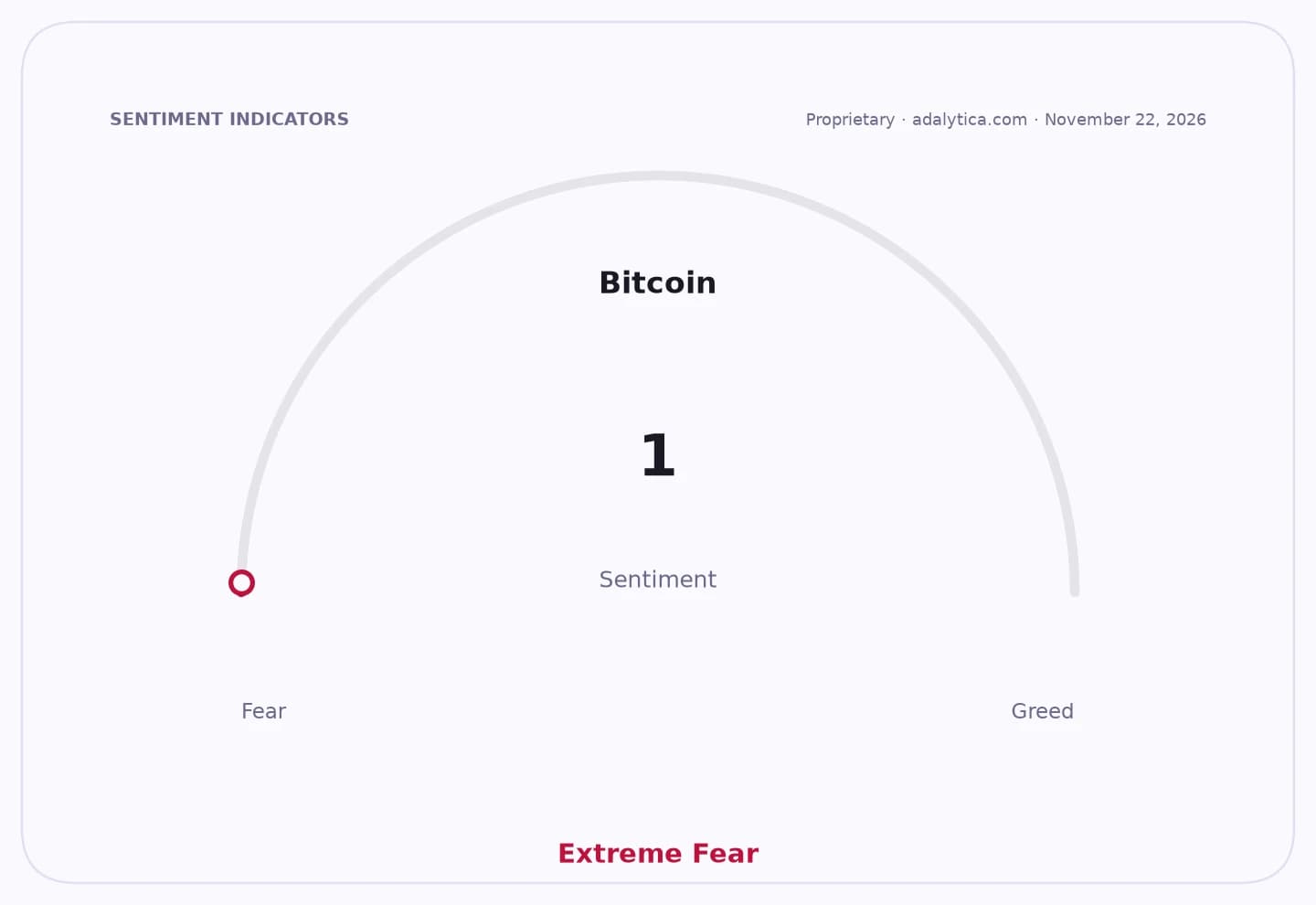
Bitcoin’s own price action reinforces the contrast between revenue durability and market weakness. The token was trading around $59,824 on Nov. 24, far below its recent highs and still well under its 50-day moving average of about $75,639 and the 200-day average near $72,130. Conventional technical indicators such as RSI readings near 18 and a deeply negative MACD point to an oversold market, but they also reflect how battered crypto risk appetite has become. Adalytica’s Bitcoin Fear & Greed Index sits at 17, or “Fear,” which fits the broader message: investors are cautious, even as the tax base keeps growing.
That tension matters for investors because it separates price momentum from structural adoption. A weaker Bitcoin market can crush exchange activity, crypto-linked equities and speculative flows in the short term, but it does not erase the long-term investment case for the picks-and-shovels around regulated trading, custody, compliance and payment infrastructure. In other words, the money still moves, even when token prices do not.
The biggest beneficiary is the state, which has collected Rp 60.1 trillion from digital-economy taxes overall, led by e-commerce at Rp 46.36 trillion and followed by fintech and other digital services. Crypto’s Rp 2.23 trillion contribution is smaller, but it is strategically important because it proves the model: once a digital market is large enough and traceable enough, governments will tax it, institutionalize it and eventually build it into the revenue base.
For investors, the takeaway is straightforward. The market continues to focus on Bitcoin’s price swings, hacks, fraud cases and regulatory noise, but the more durable trade is in the infrastructure that survives regulation. Any rebound in crypto adoption in Indonesia and across Asia is likely to be captured first by compliant exchanges, payment rails, custody providers and listed brokers — not by unregulated speculative venues.
If crypto stabilizes from here, the upside will not come from chasing the coin after the move; it will come from positioning early in the businesses that collect fees, handle compliance and monetize the next wave of digital finance. That is where the asymmetric opportunity sits.
| Entity | Gains | Losses |
|---|---|---|
| Indonesia’s tax office | ▲Higher digital revenue | ▼Reliance on volatile tax base |
| Regulated crypto platforms | ▲Fee growth, legitimacy | ▼Margin pressure from compliance |
| Bitcoin traders | ▲Potential oversold rebound | ▼Bear-market volatility |
| Unregulated exchanges | ▲None | ▼More scrutiny, weaker flows |