The US has finalised the first federal framework for payment stablecoins, a move that could redraw the economics of digital-dollar tokens by forcing issuers to hold reserves, strengthen redemption rights and harden risk controls.
US finalizes federal stablecoin rules
The rules matter because they move stablecoins from a largely fragmented state-level and offshore regime toward a more bank-like supervisory model in the world’s largest capital market. For the market, that could improve confidence in dollar-backed tokens used for trading, payments and settlement, but it also raises the cost of operating them and may accelerate consolidation toward large, regulated players with the balance-sheet and compliance scale to survive.
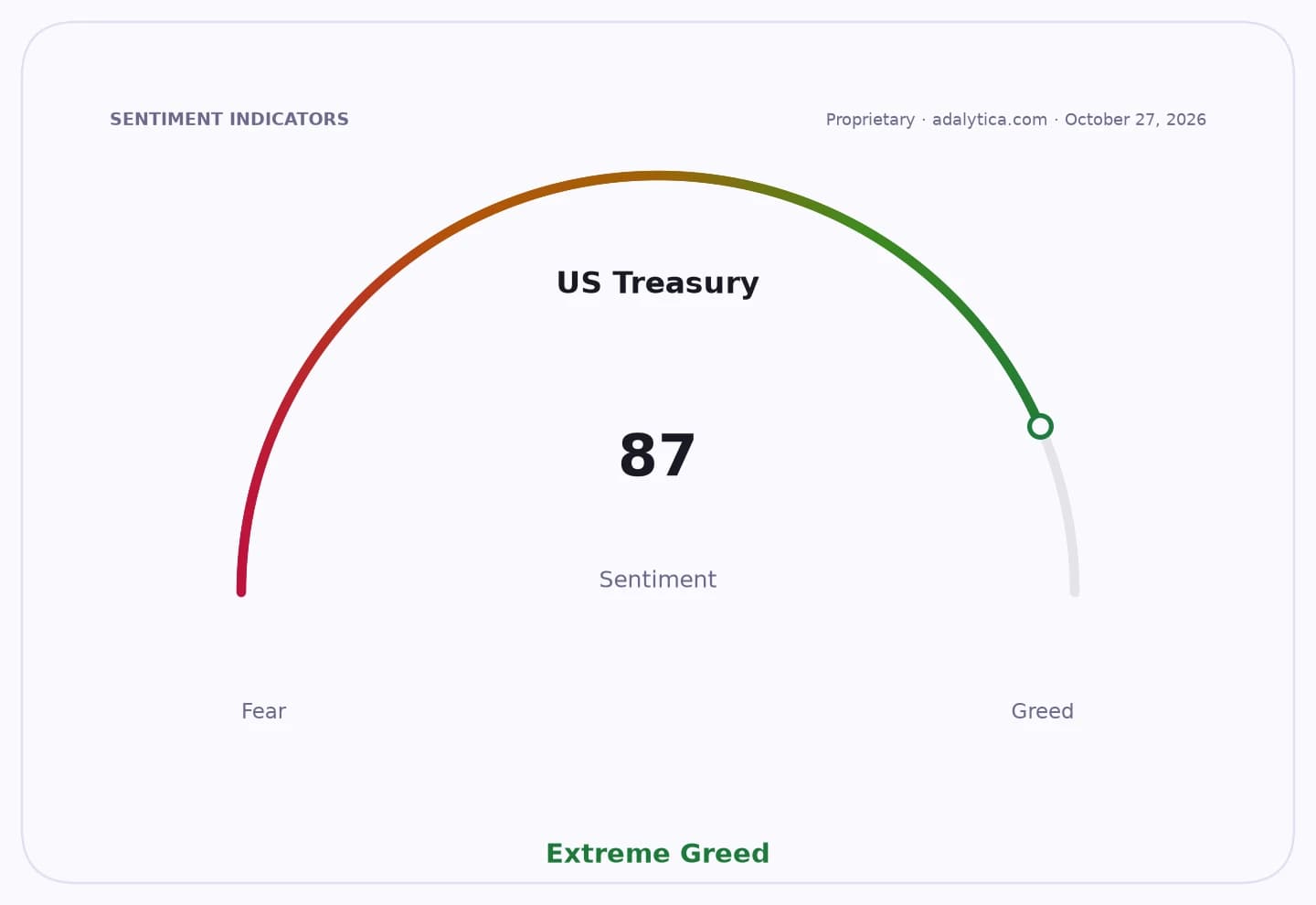
Sentiment Indicators

For Coinbase, which has become one of the most exposed listed beneficiaries of stablecoin adoption, the policy shift is important even if it is not immediately bullish. The stock closed at $161.19 on Oct. 28, down sharply from $183.81 on Oct. 15 and far below its 50-day moving average of $180.29, while its 14-day RSI at 42.6 and negative MACD point to a market that remains cautious despite recent stabilization. Stablecoin regulation could support long-term volume growth if it draws more mainstream users into digital dollars, but the near-term effect is likely to be tighter oversight on an industry whose economics depend on trust, liquidity and scale.
PayPal, which has been pushing deeper into crypto-linked payments, faces a similar but more nuanced test. Its shares ended at $56.22, slightly above the 50-day moving average of $55.51, with RSI at 57.8 and a mildly positive MACD, suggesting the market is more constructive than it is on Coinbase. Still, the company’s latest filing underscores that it operates in a “rapidly evolving regulatory environment” and that cryptocurrency offerings can trigger additional licensing and compliance obligations. Clear federal rules may reduce some legal uncertainty, but they also make it harder for payments firms to treat digital assets as an adjunct business without building out serious controls.
Investors have reason to see both upside and friction in the new framework. On the bullish side, regulated stablecoins could deepen the plumbing for crypto trading, tokenized cash management and cross-border payments, while reinforcing the dollar’s role in digital finance. On the bearish side, reserve, redemption and reporting requirements may squeeze smaller issuers, limit yield-like structures and curb the kind of regulatory arbitrage that has fuelled growth in the sector so far.
The backdrop also matters for the broader market. The US dollar has remained firm against emerging-market currencies even as it has been more mixed versus major peers, underscoring demand for dollar liquidity amid geopolitical uncertainty. That makes a safer, more standardized digital dollar potentially attractive, but it also means the new rules arrive in a market where investors are already discriminating sharply between compliant platforms and those exposed to regulatory drift.
For crypto and payments investors, the key question is no longer whether stablecoins will be regulated, but who can make money under the new regime. The winners are likely to be the largest issuers, exchanges and payment networks that can absorb compliance costs and distribution gains; the losers may be smaller token issuers, opaque offshore structures and firms that relied on light-touch oversight to scale.
| Entity | Gains | Losses |
|---|---|---|
| Large regulated stablecoin issuers | ▲Credibility and scale | ▼Higher compliance costs |
| Coinbase | ▲Clearer market rules | ▼Near-term margin pressure |
| PayPal | ▲Regulatory clarity | ▼More licensing burden |
| Smaller offshore issuers | ▲— | ▼Business model pressure |