Ethereum’s long-running identity debate moved from philosophy to the courtroom this week, after a federal judge acquitted two brothers in a landmark $25 million exploit case and found the government had not proved material misrepresentation. The ruling, together with fresh comments from Ethereum co-founder Vitalik Buterin and a push by a major crypto executive for stablecoins as a backstop during bank outages, underscores a more important question for investors: what, exactly, is crypto for?
Ethereum Court Ruling, Stablecoins, and ETH Weakness

The answer matters because Ethereum’s investment case depends not just on token price or speculative demand, but on whether the network can sustain durable economic functions that justify its valuation. If courts struggle to fit on-chain conduct into traditional fraud frameworks, that may broaden the argument for crypto as a parallel financial rail rather than a neatly regulated clone of Wall Street. But it also highlights how unfinished the asset class remains: powerful enough to move tens of billions of dollars, yet still searching for a clear legal and social role.
Sentiment Indicators
Ethereum
In the Southern District of New York, Judge Jessica G. L. Clarke acquitted Anton and James Peraire-Bueno over what prosecutors described as the first wire fraud case tied to an Ethereum exploit. The brothers had been accused of exploiting a bug in MEV-Boost relay software in April 2023 to see transactions sandwich traders believed were private, then proposing replacement transactions that allegedly generated roughly $25 million in losses within seconds. Clarke wrote that the question was not whether the conduct was right or moral, but whether the government had shown the brothers made a material misrepresentation. It had not.
For crypto markets, the decision is significant because it draws a line between unethical behavior and criminal fraud in a system built on code, mempools and transaction ordering. That distinction matters to traders, validators, developers and exchanges because Ethereum’s economic model relies on an ecosystem where profit-seeking strategies — including MEV, arbitrage and relay-based execution — are part of the architecture, even when controversial. A narrower fraud standard may reduce legal uncertainty around some forms of on-chain behavior, but it does not resolve the broader regulatory question of how decentralized networks should be policed.
Ethereum — 30-day sentimentadalytica.com
Explore this data interactively — full history, time series and cross-market comparisons.
The ruling came the same day Bitwise chief executive Hunter Horsley urged users to consider stablecoins or crypto “just in case” after reported outages hit customers at Chase, Bank of America and Wells Fargo. That message plays directly into one of crypto’s strongest bull cases: payments and settlement outside legacy banking rails, especially when conventional financial infrastructure is unavailable. Stablecoins, in particular, are increasingly marketed as a practical use case rather than a speculative one — a digital dollar that can move when bank apps fail.
Buterin’s comments cut in a different direction. He argued that younger investors have favored digital assets over real estate because housing comes with social norms and policy support that make it a “safe non-crazy thing” to hold, while modern digital platforms can encourage more irresponsible behavior. His point was less about discrediting crypto than about identifying what it still lacks: the institutional, cultural and regulatory guardrails that make an asset class broadly acceptable as a savings vehicle.
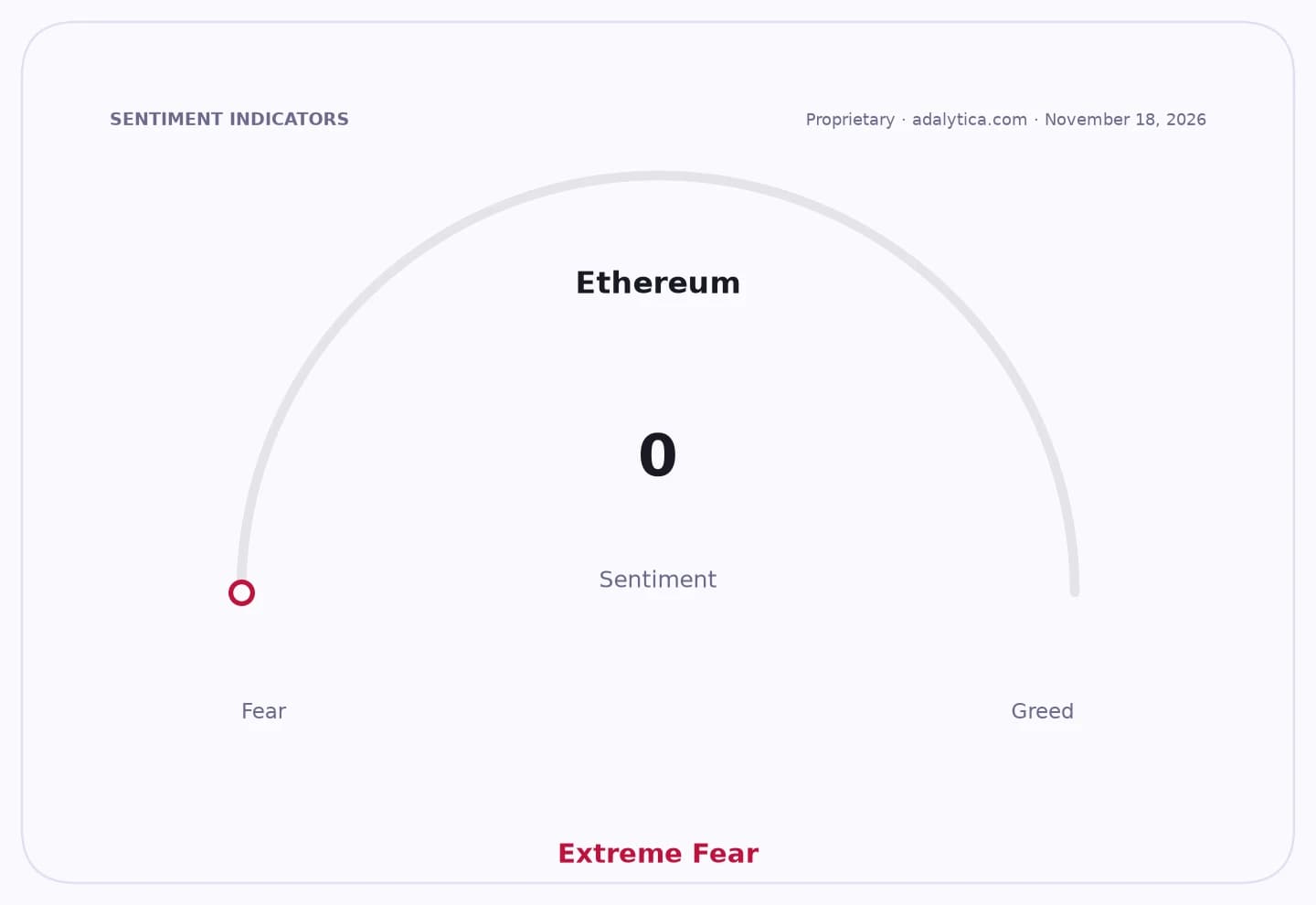
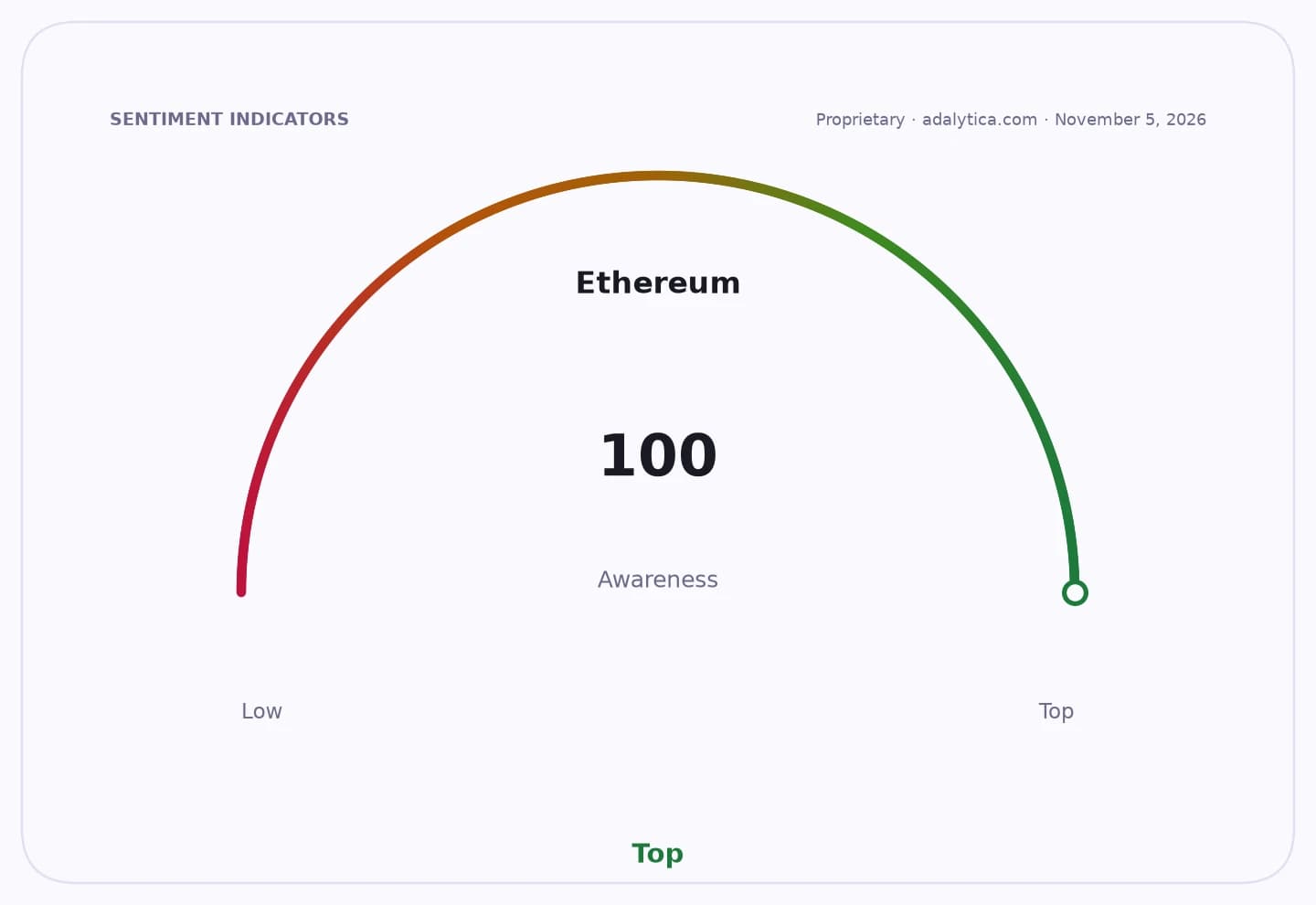
That tension helps explain why Ethereum and the wider market remain under pressure even as the network’s use cases diversify. ETH closed at $1,778.16 on Thursday, down from $3,191.57 on Dec. 3 and well below its 50-day moving average of $2,307.27. The token’s 14-day relative strength index sat at 14.3, deep in oversold territory, while MACD remained negative, signaling persistent downside momentum. Adalytica’s Ethereum Fear & Greed Index showed sentiment at zero — “Extreme Fear” — with awareness at 56, suggesting the debate is highly visible but deeply pessimistic.
The weakness has spilled into related equities. Coinbase fell to $112.16 from $146.12 on Feb. 5 and remains below both its 50-day and 200-day moving averages, while MicroStrategy slid to $89.24 from $106.99, also sitting far under its longer-term trend lines. That matters because these stocks are frequently treated as leveraged proxies for crypto risk appetite. When ETH weakens and the market questions the asset’s core purpose, the pressure extends beyond token holders to exchanges, treasury-linked companies and the broader digital-asset complex.
Still, the bear case is not that Ethereum is useless. It is that the market is still assigning it multiple competing identities — settlement layer, speculative asset, programmable money, infrastructure for DeFi and tokenization, and sometimes a refuge from bank failures — without any one use case yet dominant enough to anchor valuation. The bull case is that this plurality is the point: Ethereum may not need a single purpose if it can remain the base layer for several economically meaningful ones.
For investors, the next catalyst is less about one courtroom ruling than whether Ethereum can turn that ambiguity into adoption. Stablecoin flows, network usage, regulatory treatment and the market’s willingness to separate legitimate on-chain activity from criminal intent will determine whether this week’s developments are read as a step toward maturity or another reminder that crypto still has to prove what it is for.
| Entity | Gains | Losses |
|---|---|---|
| Ethereum ecosystem | ▲legal clarity on some on-chain conduct | ▼cleaner fraud boundaries remain unresolved |
| Stablecoins | ▲stronger case as payment fallback | ▼banks and card rails |
| Crypto traders/validators | ▲less regulatory fear around MEV-like behavior | ▼continued reputational risk |
| Coinbase and MSTR shareholders | ▲eventual ecosystem growth potential | ▼near-term price momentum and sentiment |