Bitcoin’s path to $1 million by 2027 depends less on technical indicators and more on whether governments and giant institutions actually start buying it as a reserve asset — a shift that looks impressive on paper but remains wildly detached from the market’s current tone.
Bitcoin Reserve-Asset Thesis Faces Weak Price Action
Bitcoin
A scenario attributed to Elon Musk’s Grok, and published by Crypto News, sees Bitcoin climbing to between $450,000 and $750,000 before early 2027, with a best-case run to more than $1 million. The logic is straightforward: if central banks, sovereign wealth funds and other large buyers begin holding Bitcoin alongside gold and Treasuries, the pool of demand could broaden enough to overwhelm supply. That is the kind of structural buying that changes a market’s ceiling.
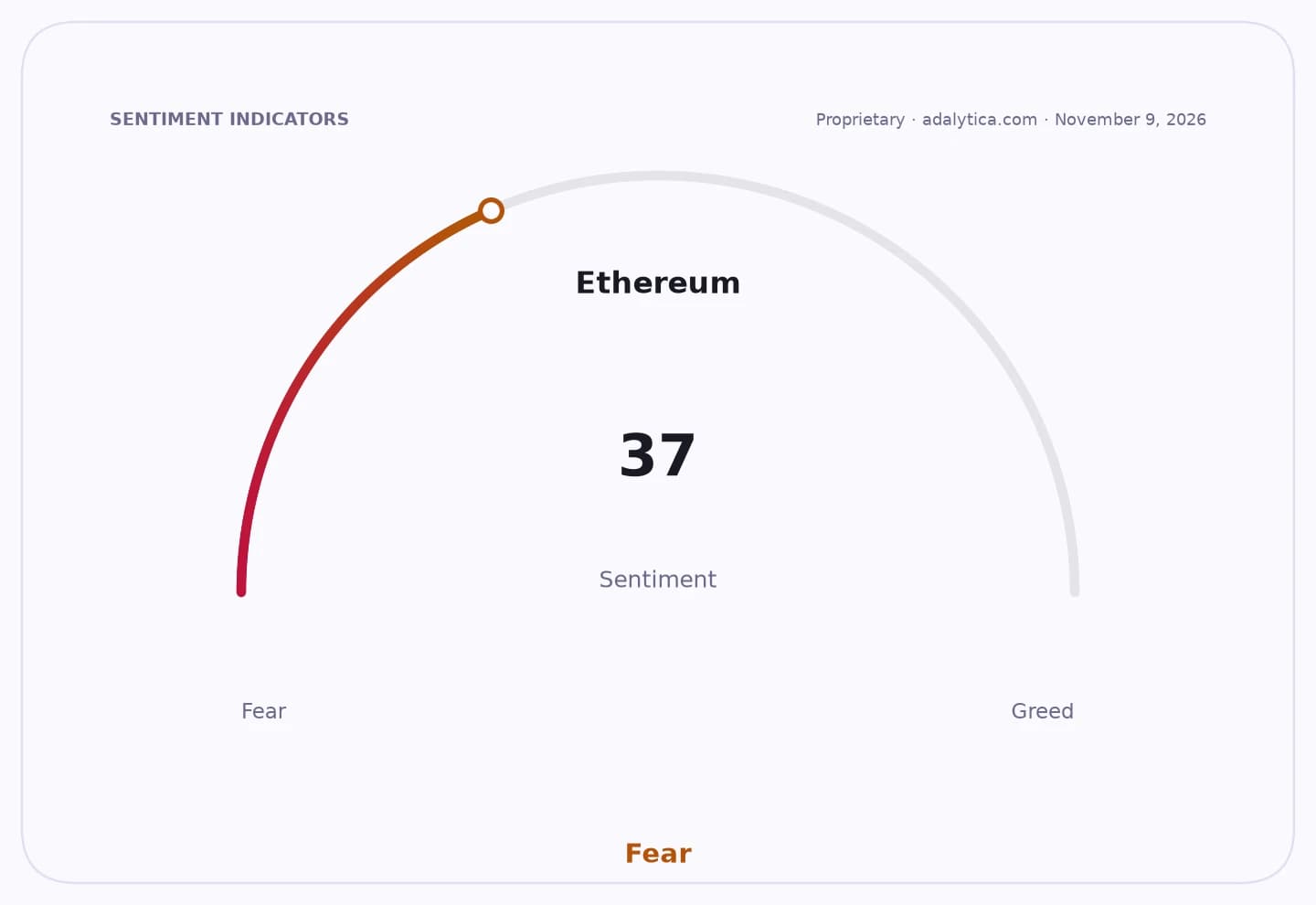
Sentiment Indicators

But the tape is telling a very different story. Bitcoin has slid to about $64,300, after failing to hold above $85,000 to $90,000 and breaking below $70,000 for the first time since August. It is now trading well under its 50-day moving average near $79,352 and its 200-day moving average around $72,862, while RSI readings near 24 point to deep oversold conditions rather than a clean bullish breakout. In other words, the market is pricing stress, not a moonshot.
That matters economically because Bitcoin has become a levered proxy for liquidity, risk appetite and speculation. A sustained move toward the kind of prices Grok describes would require more than optimism: it would likely need easier global monetary conditions, a weaker dollar, and above all, a policy shift that legitimizes Bitcoin as a reserve asset. Those are macro events, not meme-trade catalysts.
Bitcoin — 30-day sentimentadalytica.com
Explore this data interactively — full history, time series and cross-market comparisons.
The most important support for the bullish case is the growing institutionalization of crypto. Strategy chairman Michael Saylor says Bitcoin is entering a new bull market, citing a rebound from its 200-week moving average and renewed institutional and banking interest. U.S. digital asset reserves are also no longer a fringe discussion after the March 2025 executive order creating a Strategic Bitcoin Reserve and a U.S. Digital Asset Stockpile. If that framework expands, the price impact could be dramatic.
Still, investors should separate narrative from execution. CryptoQuant data show perpetual futures volume hit $61.7 trillion in 2025, up 29% from a year earlier, underscoring how much of the market is still driven by leverage rather than conviction. That cuts both ways: it can fuel violent rallies, but it can also accelerate liquidation cascades on the way down. Bitcoin’s recent break lower shows that the same market structure that can create parabolic upside can also punish late longs brutally.
For investors, the asymmetric trade is not a blind chase for $1 million. It is positioning for the second-order winners if sovereign adoption and institutional allocation deepen over the next two years. That means Bitcoin itself, but also the infrastructure names that monetize volume, custody and trading activity: Coinbase, MicroStrategy, and the miners and payment rails tied to a stronger crypto cycle. If the reserve-asset thesis gains traction, these stocks will likely move long before the headline target is even in sight.
The market underestimates how much policy and reserve management could matter if Bitcoin moves from speculative asset to strategic asset. But it also underestimates how far the current price still is from validating that thesis. Until Bitcoin reclaims the $85,000 to $90,000 zone and holds it, the million-dollar call remains a high-upside scenario, not a base case. The actionable takeaway: own the picks-and-shovels, not the fantasy.
| Entity | Gains | Losses |
|---|---|---|
| Bitcoin bulls | ▲Long-term upside optionality | ▼Near-term credibility |
| Governments/central banks | ▲Potential reserve diversification | ▼Fiat flexibility |
| Coinbase | ▲Trading volume, custody demand | ▼Lower market volumes |
| Strategy/MicroStrategy | ▲BTC thesis if adoption rises | ▼Balance-sheet volatility |