Indonesia’s foreign worker pipeline is being rewired around a simple but crucial idea: the country can no longer measure success by how many people it trains or how many vacancies it spots, but by how many of those openings turn into higher-value placements.
Indonesia foreign worker pipeline shifts to data-led model

That matters because the gap between demand and actual deployment is still vast. As of Sept. 20, Indonesia’s SIP2MI system showed 292,471 active overseas job vacancies, with 216,236 — or 73.93% — still unfilled. For policymakers, that is no longer just evidence of global appetite for Indonesian labor; it is a map of where the placement machine is breaking down, whether in recruiting, documents, destination-country rules or administrative bottlenecks.
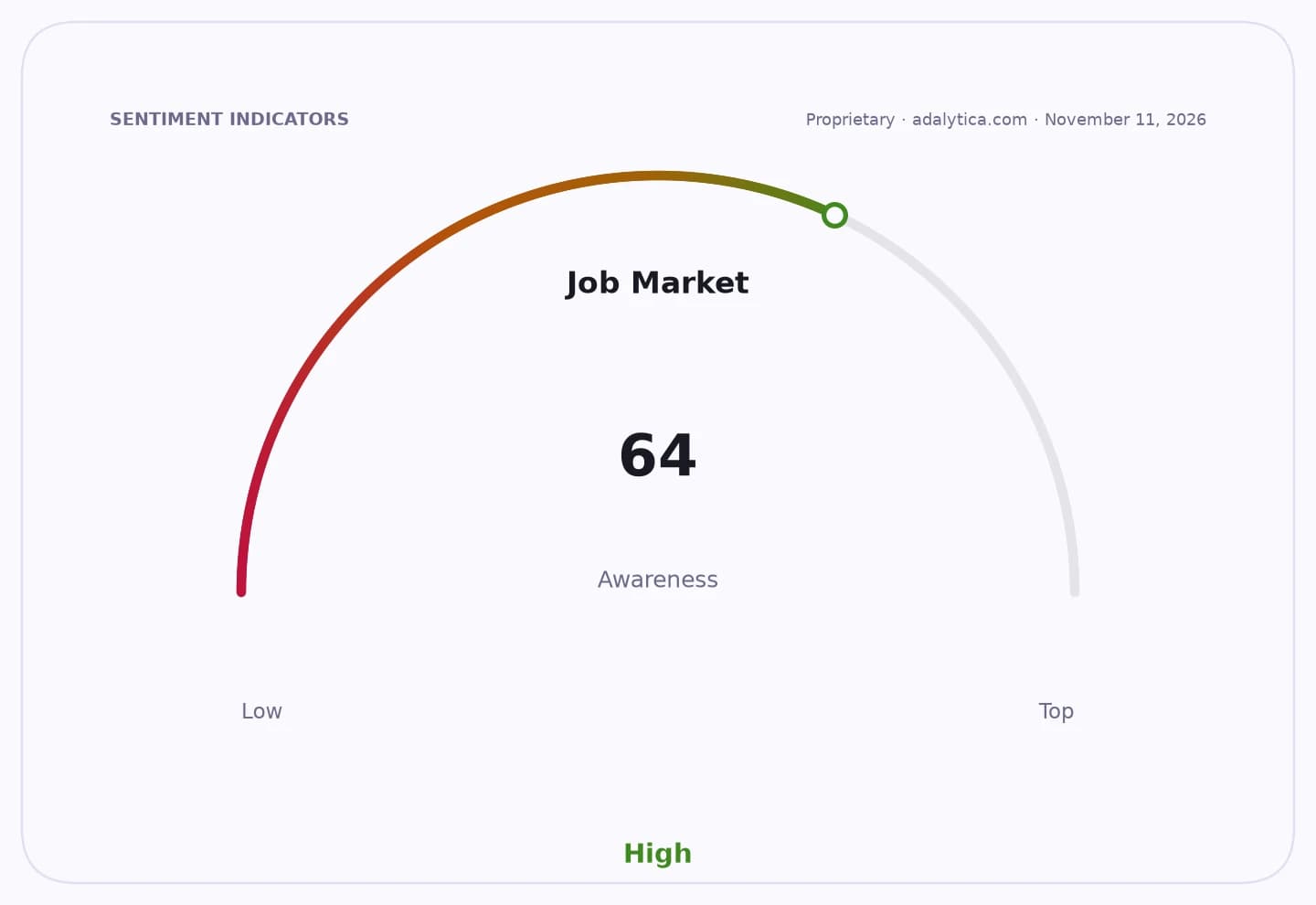
Sentiment Indicators
The economic stakes are bigger than labor mobility. If Indonesia can convert more of that demand into matched placements, it stands to lift remittance flows, improve household incomes and strengthen the country’s role in supplying skilled labor to markets short on workers. If it cannot, the country keeps leaving exportable labor value on the table while competitors capture the better-paying jobs.
That is why the government is moving toward a data-led model that links training directly to market needs. Under the “SMK Go Global” program, 18,110 participants had registered by Sept. 17, with 4,601 already in training and a target of 40,000 this year. The curriculum spans language, technical skills and certification, but the point is no longer training for training’s sake. Officials want the pipeline to start with verified demand — by sector, role, country, qualification and required competency — and then track how many candidates are prepared, certified and finally placed.
For investors, the shift is important because it points to a more scalable, measurable labor-export system, one that could support demand for education providers, certification services, recruitment platforms, digital identity systems and cross-border placement infrastructure. The market often misses how large the second-order opportunity is when a government starts treating labor matching as a data problem rather than a quota problem.
The Turkey example shows why execution matters. Roughly 30,000 verified labor requests there have not been fully filled, in part because visa-processing capacity is only about 12,000 to 15,000 a year. That is exactly the kind of constraint a better data model can expose — and where private and public infrastructure, from training to compliance to processing, can become investable.
The broader thesis is straightforward: Indonesia is trying to move from a vacancies-first mindset to a value-first labor strategy. If the system can identify where candidates stall — before training, after certification or at the border — it can finally turn a large pool of external demand into higher-quality, higher-conviction economic output. That is the kind of policy inflection point that can compound over years, not quarters. Investors should watch for beneficiaries in vocational training, worker placement and digital workflow infrastructure as Indonesia scales the model.
| Entity | Gains | Losses |
|---|---|---|
| Indonesian workers | ▲Higher-value placements | ▼Idle training pipeline |
| Indonesian government | ▲Better matching data | ▼Quota-based policy optics |
| Training and certification providers | ▲More demand for skills programs | ▼Generic classroom training |
| Recruiters / placement platforms | ▲Larger structured pipeline | ▼Bottlenecked manual processes |