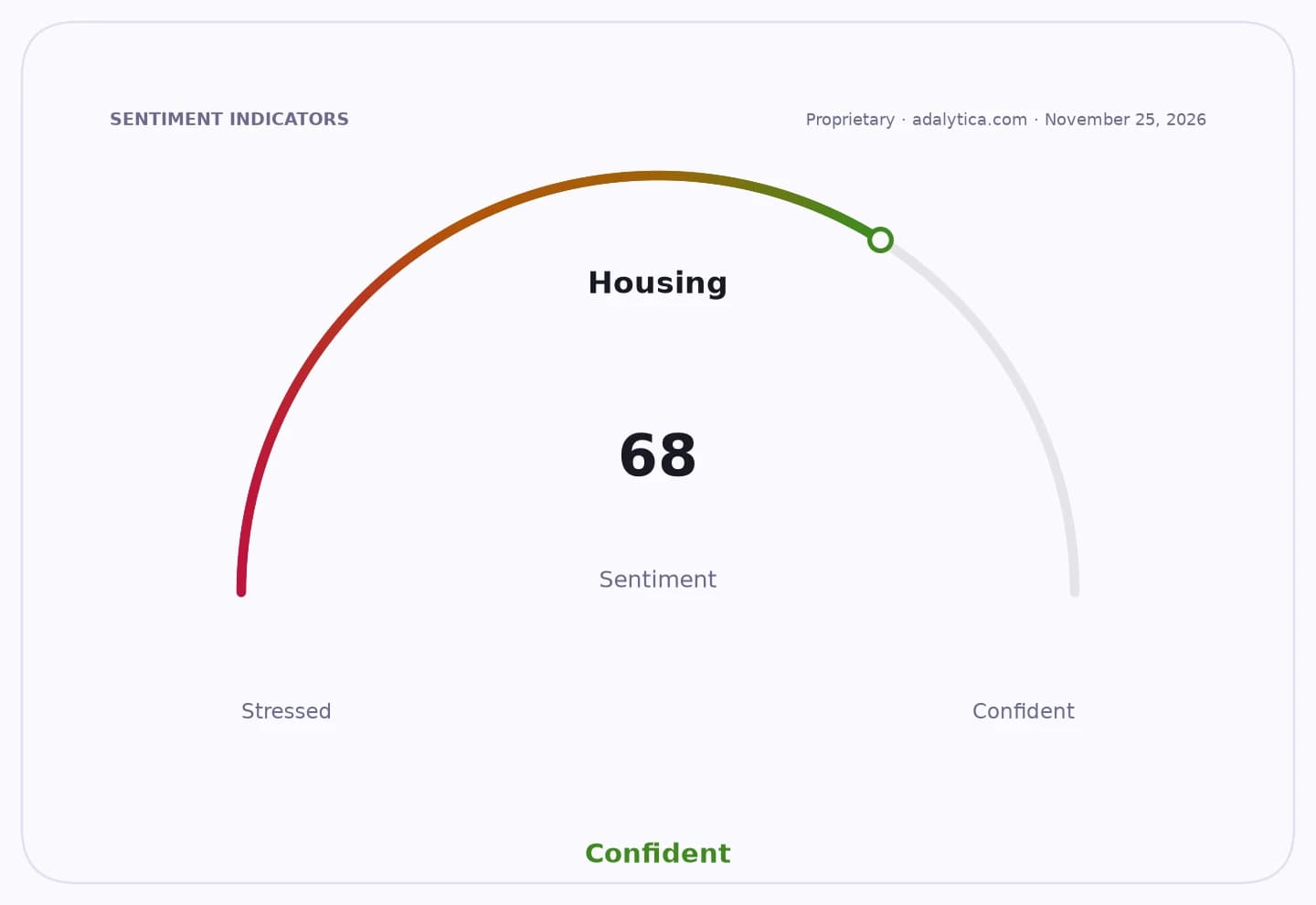
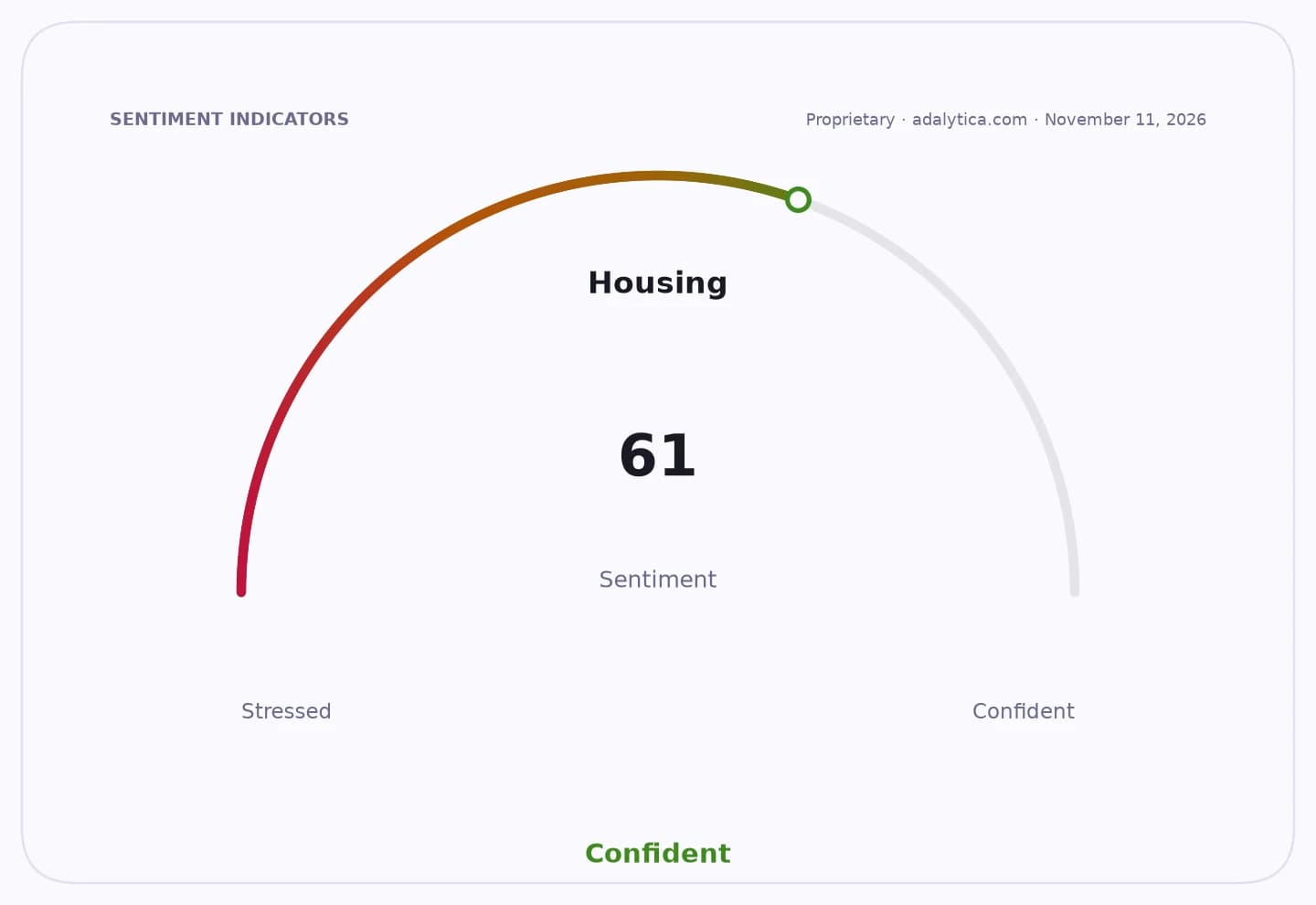
Bank Indonesia’s move to lift the BI rate to 6% is putting fresh pressure on Indonesia’s housing market, even though the government says subsidized and commercial mortgage rates have not yet changed.
Indonesia Housing Market Faces BI Rate Pressure
CPI
That’s the key question for investors, lenders and homebuilders: how long can mortgage pricing stay unchanged after the central bank tightens? In the short run, the answer appears to be “not yet.” Housing Minister Maruarar Sirait said there has been no change so far in loan rates for subsidized or non-subsidized homes, but he is watching the market closely as banks and developers digest the higher policy rate.
Sentiment Indicators
The central bank raised its benchmark by 25 basis points and also lifted the deposit facility to 5.25% and the lending facility to 6.75%, citing the need to support the rupiah and keep inflation in check. That matters because higher policy rates usually work their way through the financial system, raising funding costs for banks and, eventually, mortgage rates for households. For Indonesia, where subsidized housing is meant to support lower-income buyers, any pass-through could quickly affect affordability and the pace of new home purchases.
For investors, the real issue is not just whether rates move higher, but who absorbs the increase. Banks may be able to protect margins for a time, but prolonged pressure from tighter monetary policy tends to show up in loan demand, refinancing activity and housing volumes. Developers tied to entry-level demand are especially exposed if monthly payments rise even modestly. A market that was still stable on Monday can look very different once lenders reprice their funding and borrowers start to feel the pinch.
The broader backdrop is one of caution rather than panic. Indonesia is tightening policy to defend the currency and preempt inflation, but the housing ministry is signaling that there is still room for monitoring rather than immediate alarm. That gives the sector a little breathing room, yet it does not remove the direction of travel. If bank funding costs keep climbing, mortgage rates will likely follow, and the biggest pressure will fall on first-time buyers and subsidized housing programs that depend on predictable credit terms.
For long-term investors, that means Indonesia’s housing-linked names are worth watching rather than chasing. The next few months should show whether the BI rate increase becomes a temporary policy headline or the start of a more sustained squeeze on mortgage affordability. If banks begin passing through higher costs, the winners will be lenders with strong deposit franchises and developers with pricing power; the losers will be borrowers and volume-driven housing plays.
| Entity | Gains | Losses |
|---|---|---|
| Banks | ▲Wider lending spreads | ▼Lower mortgage demand |
| Developers | ▲Stable rates, for now | ▼If rates are repriced higher |
| Homebuyers | ▲Short-term rate relief | ▼Future affordability pressure |
| BI / policymakers | ▲Stronger rupiah support | ▼Slower credit growth |