US mortgage rates fell for a second straight week, giving homebuyers a small break after months of sharply higher borrowing costs, but rates remain more than double the level seen a year ago and housing affordability is still stretched.
US mortgage rates fall to 6.58% for second week
Housing
The average rate on a 30-year fixed mortgage slipped to 6.58% in the week ended Nov. 23 from 6.61%, Freddie Mac said. That followed a near-half-point drop the prior week, yet the benchmark is still far above 3.10% in the same week last year, underscoring how much the Federal Reserve’s tightening campaign has reshaped the housing market.
Sentiment Indicators
The move tracks a pullback in Treasury yields, with the 10-year note around 4.92% and the 2-year near 4.63%, levels that remain elevated but have eased from recent peaks. Mortgage lenders price home loans off longer-dated bond yields, so even modest declines can feed through quickly to borrowing costs.
For investors, lower rates can provide some relief to mortgage originators and homebuilders after a brutal year of demand destruction. Rocket Companies shares rose to $14.25 in the latest session from $13.75 on Nov. 20, while UWM Holdings traded at $1.15, still well below its 200-day moving average of $2.36, reflecting how sensitive the group remains to rate swings and refinancing volumes.
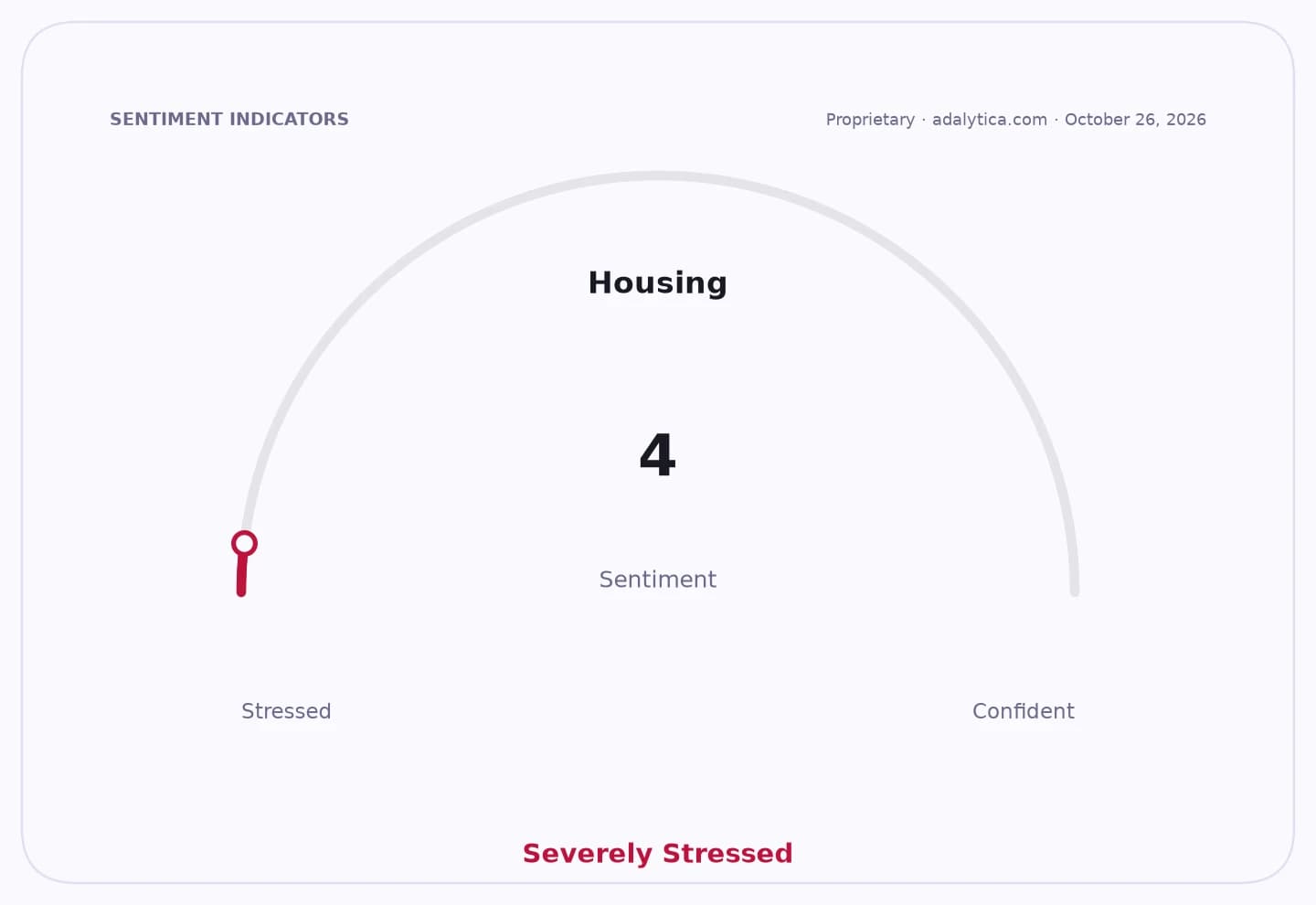
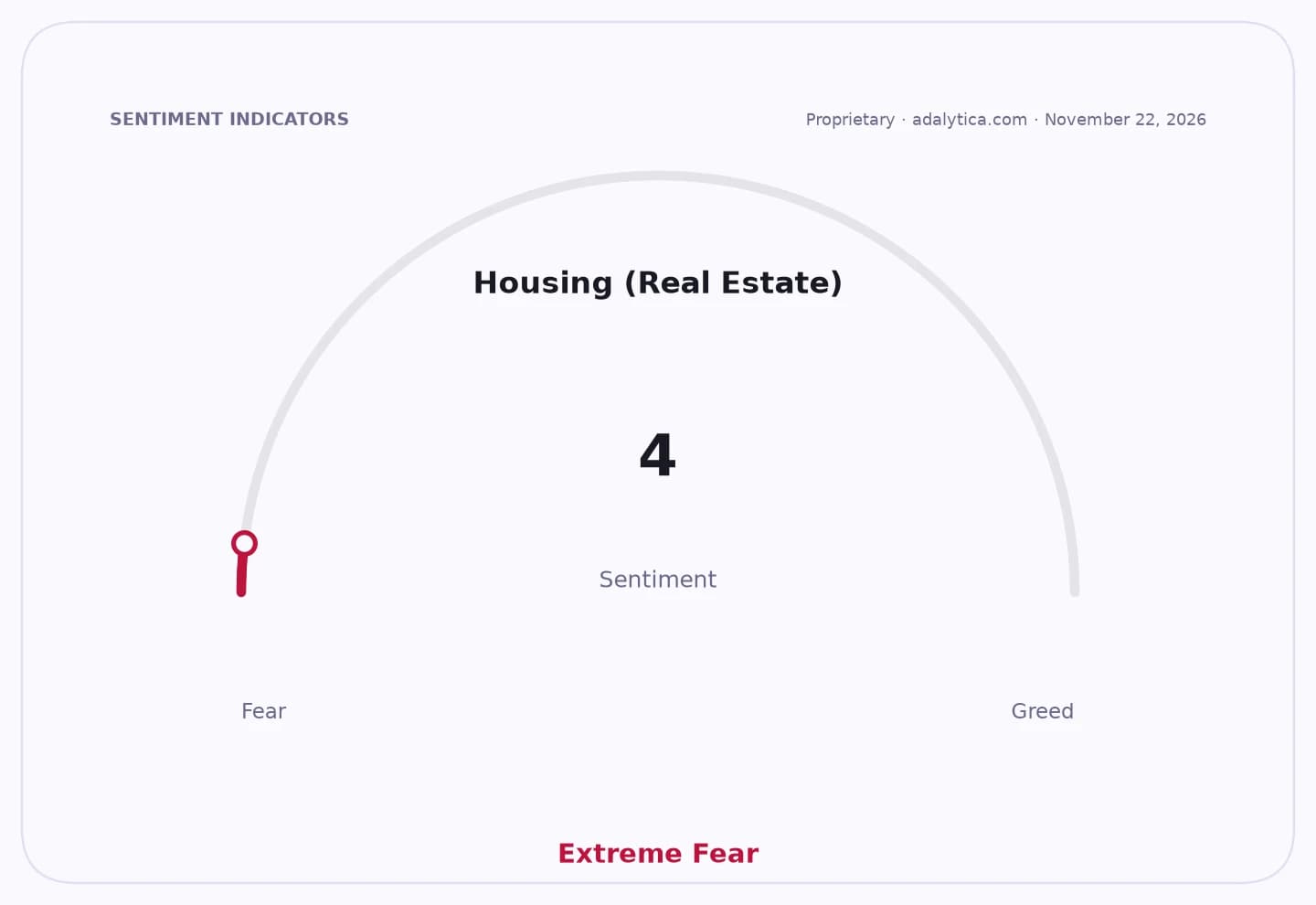
The stakes are bigger than housing alone. Persistent mortgage costs have slowed turnover, kept homeowners locked into older loans and pressured affordability nationwide, while higher financing costs have also filtered into consumer credit more broadly. Adalytica’s housing and rent inflation sentiment gauge showed a neutral reading of 68, even as awareness stayed elevated, suggesting the market still sees housing costs as a live macro risk.
A sustained pullback in rates would help revive purchase demand and refinancing activity, but any lasting relief likely depends on a further drop in Treasury yields and a clearer path for inflation. Until then, housing remains one of the clearest channels through which the Fed’s policy still hits consumers and the broader economy.
| Entity | Gains | Losses |
|---|---|---|
| Homebuyers | ▲Lower monthly payments | ▼Still-stretched affordability |
| Mortgage lenders | ▲More refinancing volume | ▼Pressure if rates stay high |
| Homebuilders | ▲Better demand backdrop | ▼Caution persists at 6%+ rates |
| Existing homeowners | ▲Easier refinancing odds | ▼Less incentive to move |