Mortgage rates have slipped to 6.46%, extending a welcome reprieve for U.S. housing even as borrowing costs remain high enough to keep the market strained.
Mortgage rates fall to 6.46% as housing eases

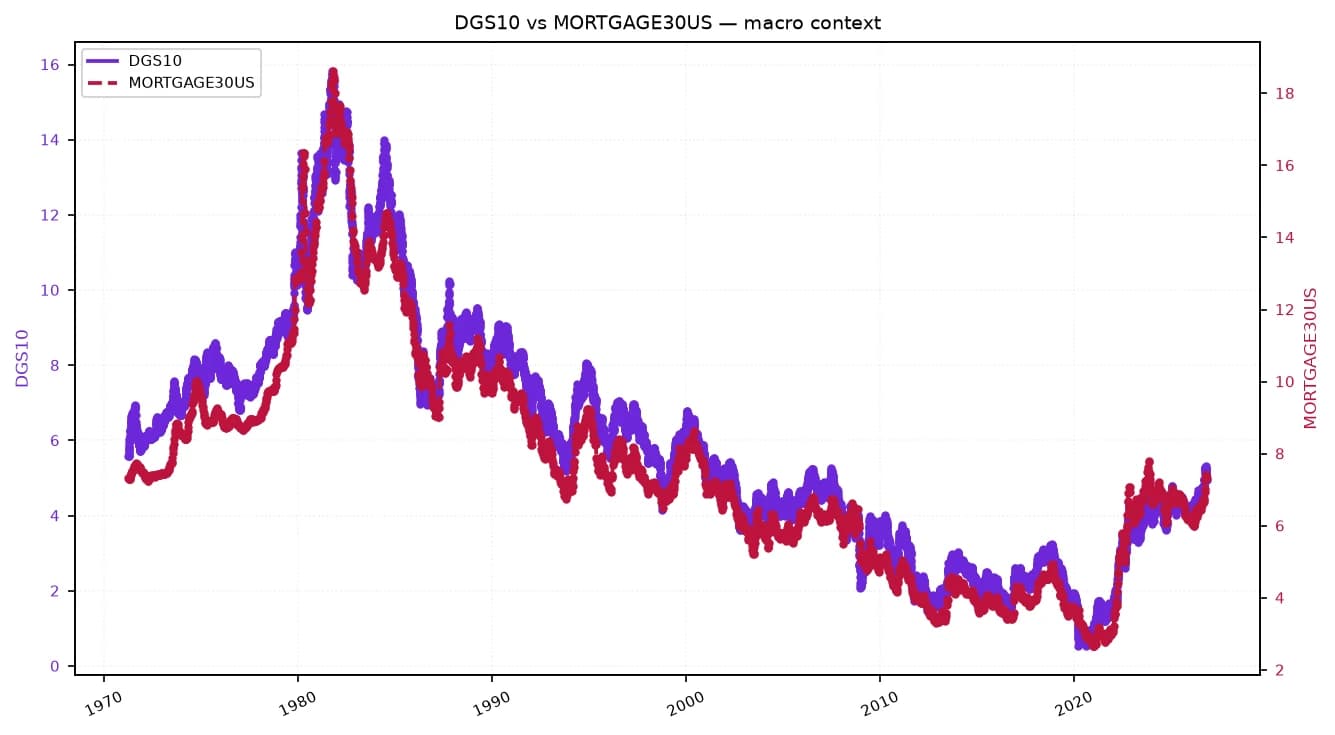
That drop matters because housing is still one of the economy’s most rate-sensitive channels. A 30-year fixed mortgage below 6.5% is a meaningful move from the 7.28% level seen in late September and well under the 7.5% threshold that had been pinching affordability, refinancing activity and existing-home turnover.
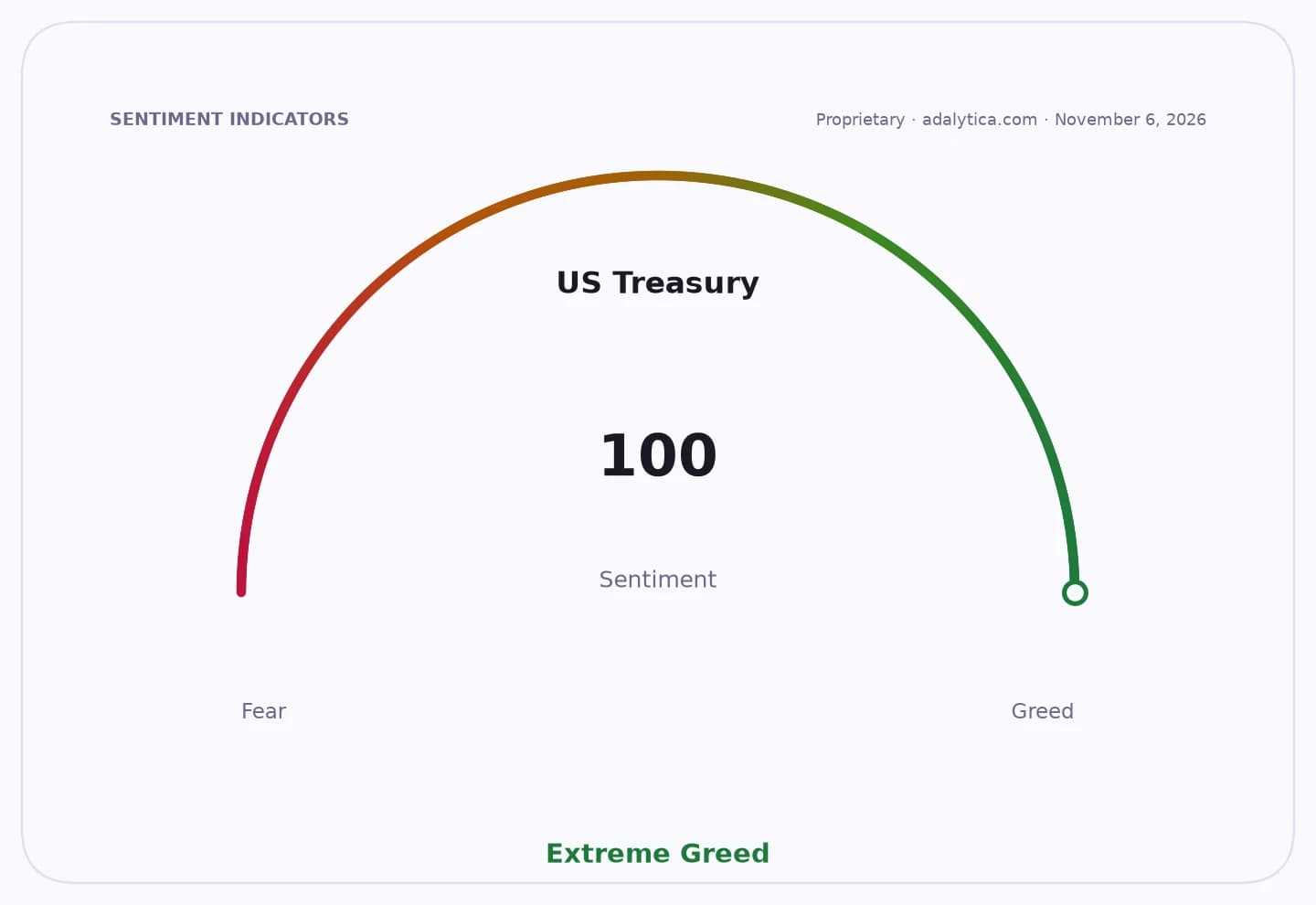
Sentiment Indicators
The pullback has been helped by a decline in the 10-year Treasury yield to around 4.84%, since mortgage pricing tracks long-dated government borrowing costs more than the Federal Reserve’s overnight rate. But the bigger story is what this means for the housing complex: even a modest easing in mortgage rates can unlock sidelined buyers, support homebuilders and improve mortgage originators’ volumes after a punishing stretch.
Investors have already started to price that shift. Rocket Companies has rallied to $15.06 from $14.82 a day earlier and is trading above its 50-day moving average, while UWM Holdings, despite still being far below its longer-term averages, has jumped from $1.15 in mid-October to $1.52. Those moves reflect the market’s instinct that lower rates can quickly feed through to refinance demand, purchase applications and gain-on-sale economics.
MORTGAGE30US vs DGS10 — macro contextadalytica.com
Explore this data interactively — full history, time series and cross-market comparisons.
But this is not a return to a cheap-money housing boom. The 30-year mortgage is still nearly two percentage points above the lows of 2022, and home prices remain elevated on a national basis. That combination means affordability is improving only incrementally, not decisively. Buyers gain some breathing room, but sellers, builders and lenders will still be operating in a market where every quarter-point matters.
For investors, the opportunity is in the second-order effects. If mortgage rates continue to drift lower, the beneficiaries are not just homebuyers but also the toll-road businesses of housing finance: originators, servicing platforms, title and listing operators, and firms tied to transaction volume. The market underestimates how quickly these names can re-rate when activity turns, especially after a long period in which volume expectations were reset lower.
The key catalyst now is whether Treasury yields keep easing and whether the latest mortgage move holds. If it does, housing data, lender earnings and homebuilder sentiment could improve faster than consensus expects. The best positioned investors are those leaning into a normalization trade before the broader market stops treating housing as a dead end.
| Entity | Gains | Losses |
|---|---|---|
| Homebuyers | ▲Lower monthly payments | ▼Less affordability pressure |
| Mortgage originators like RKT and UWMC | ▲More refinance and purchase volume | ▼Less pressure on gain margins |
| Homebuilders | ▲Better demand and traffic | ▼Fewer rate-driven cancellations |
| Existing homeowners/sellers | ▲More buyer interest | ▼Less urgency to slash prices |