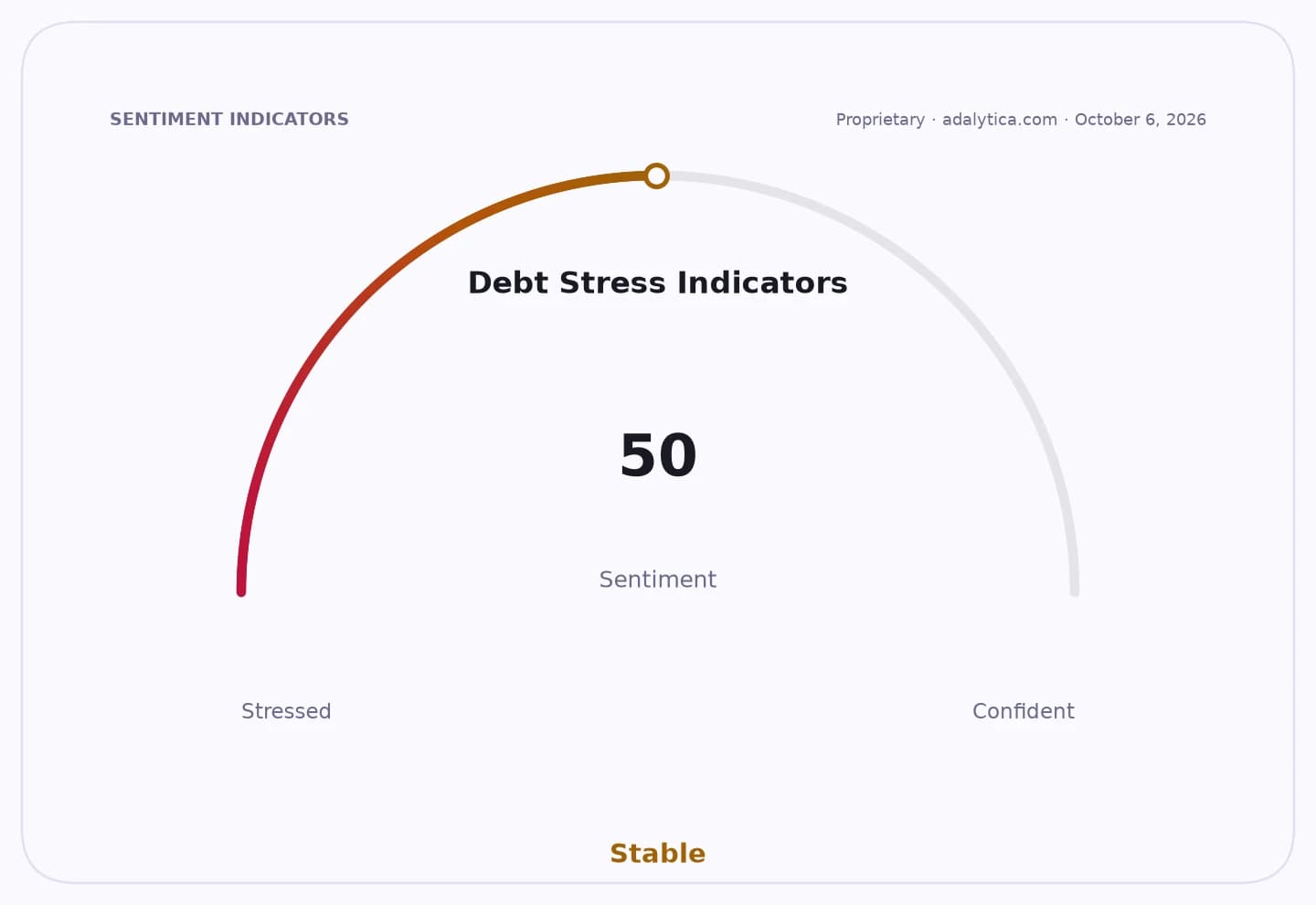
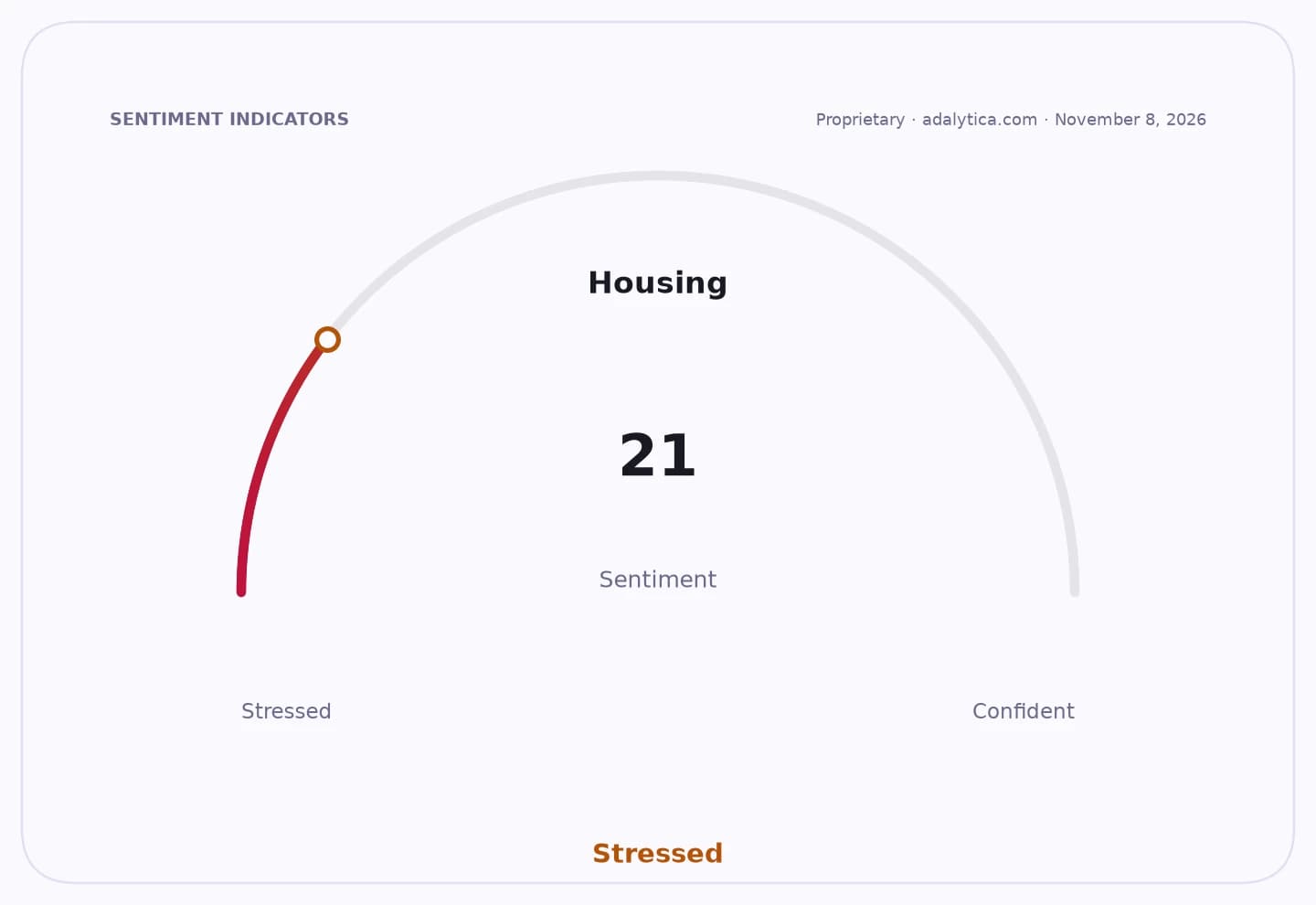
Mortgage refinancing is turning into a test of patience, and the banks look as if they are winning. With the 10-year Treasury yield hovering around 4.8% and the average 15-year mortgage rate still near 6.5%, refinancing no longer offers the easy savings homeowners got in the ultra-low-rate era.
Mortgage refinancing stays weak as rates remain high

That matters because refinancing is not just a household finance story — it is a credit and housing story. When rates stay elevated, borrowers who locked in cheap mortgages have little incentive to move, and banks can afford to be selective. Lenders are effectively calling borrowers’ bluffs: unless the rate drop is large enough to justify the fees and hassle, many households simply stay put.
Sentiment Indicators
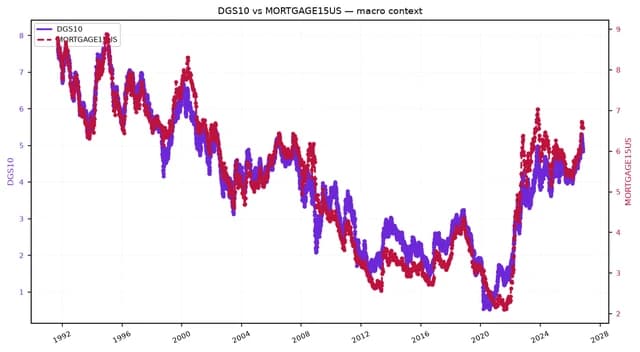
The market backdrop helps explain the shift. The 10-year Treasury, a key benchmark for mortgage pricing, has eased only modestly from just above 4.9% to about 4.84%, while the 15-year mortgage rate remains stubbornly high at 6.57%. That gap keeps refinancing math tough, especially for homeowners who refinanced years ago and already hold financing that is far cheaper than today’s market. In practical terms, the refinance wave that once fueled fee income for mortgage lenders has been replaced by a much more selective borrower pool.
Investors should care because this changes the earnings mix for mortgage-heavy financial firms. Rocket Companies, which depends on originations and servicing, has seen its stock swing sharply as investors weigh whether lower volumes can be offset by better margins. Wells Fargo and JPMorgan, meanwhile, are less exposed than pure mortgage players, but even they flag mortgage banking income and prepayment assumptions as rate-sensitive in their filings. In other words, refinancing activity is now a margin and fee story, not a volume boom.
There is a second-order effect for the broader market as well. Fewer refinancings mean less cash-out activity, slower housing turnover, and less payment relief for homeowners. That can keep consumer spending a bit tighter than it would be in a falling-rate cycle. For banks, it also means mortgage servicers may enjoy steadier fee streams, while originators fight for a smaller share of business.
For long-term investors, the lesson is simple: don’t chase the fantasy of a broad refinancing surge unless borrowing costs fall much more decisively. The best-positioned lenders are those with diversified revenue, strong servicing platforms and enough scale to withstand leaner mortgage demand. If rates keep drifting lower, refinancing can still come back — but right now, banks have the upper hand, and borrowers need a lot more than a modest rate dip to make the math work.
| Entity | Gains | Losses |
|---|---|---|
| Banks/lenders | ▲Better pricing power | ▼Fewer refinance volumes |
| Mortgage servicers | ▲Steadier fee income | ▼Less upfront origination activity |
| Homeowners with existing low-rate loans | ▲Little to gain from refinancing | ▼Higher rates persist |
| RKT and mortgage originators | ▲Potential rebound if rates fall | ▼Slower loan growth now |