Homeowners on tracker mortgages are being hit first by the Bank of England’s return to rate hikes, with typical monthly payments rising about £30 and the shock set to spread to millions more households as fixed deals expire.
Bank of England rate hike lifts UK mortgage costs
The central bank raised its base rate by 0.25 percentage point to 4%, the first increase in more than three years, and that immediately translates into a £30.72 average jump for the 510,000 tracker mortgages still outstanding, according to UK Finance. Borrowers on standard variable rates could see a smaller but still painful £14.28 monthly increase if lenders pass on the full move.
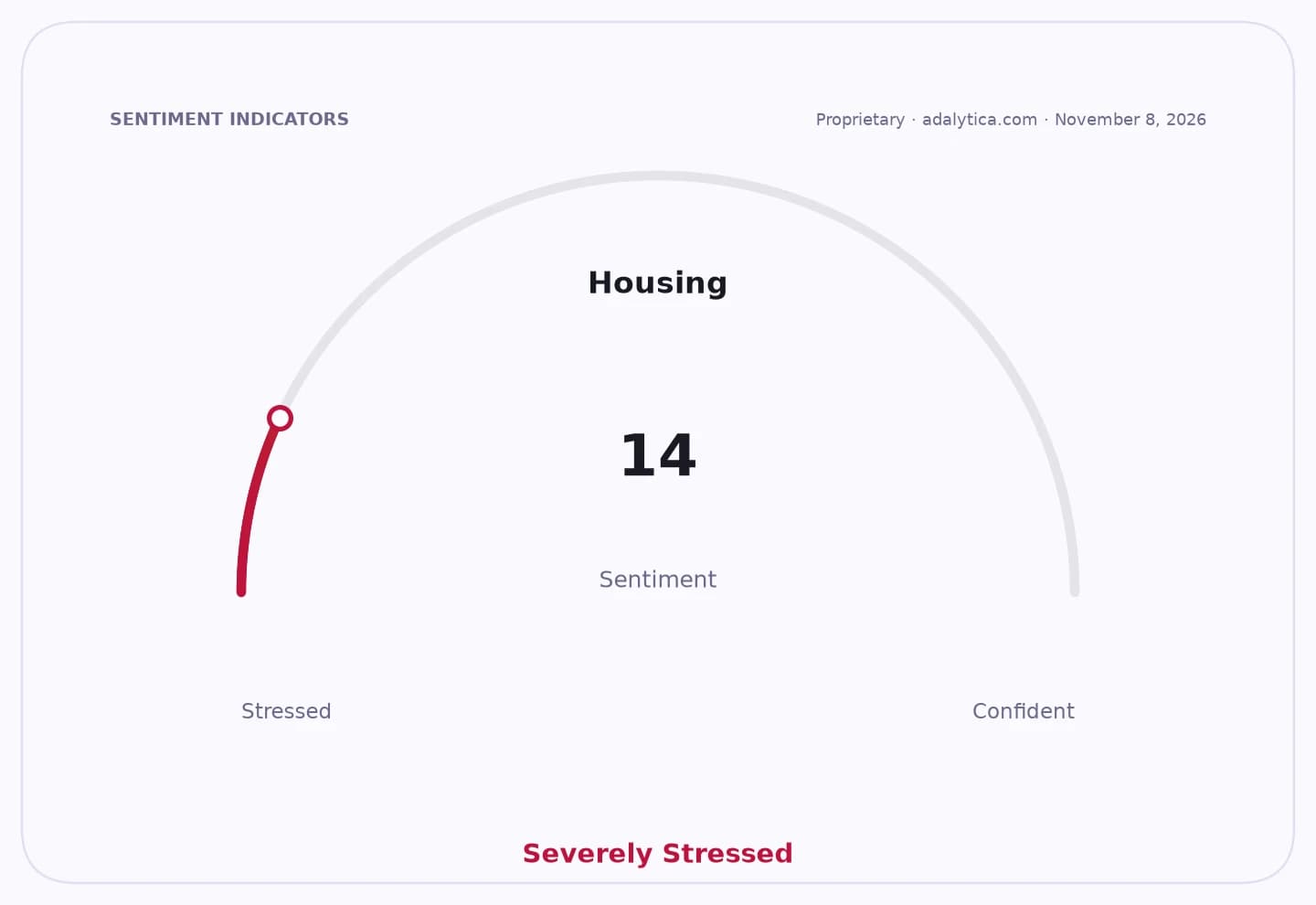
Sentiment Indicators
What makes this moment economically important is not just the size of the hike, but the timing. Around nine in 10 homeowner mortgages are fixed, which delays the hit for most households — but not for long. UK Finance said about 700,000 fixed-rate deals expire in the second half of this year, with another 2.3 million due in 2027. That means the rate move is less a one-off than the opening shot in a broader reset of UK household borrowing costs.
For the housing market, that matters immediately. Higher mortgage rates have already weighed on activity since spring, and Zoopla said sales agreed are down 8% from a year ago. Buyers are becoming more selective, sellers are being forced to price more carefully and affordability is tightening just as the market was hoping for stability. In other words, this is a demand shock as much as a rate shock.
The investable story is broader than residential borrowers. The return of higher base rates changes the economics of the entire UK consumer balance sheet, favoring savers who can finally earn better cash returns while pressuring lenders, brokers and housing-sensitive businesses. Mortgage brokers such as Coreco say borrowers on expiring fixed deals are facing a market already repriced for higher rates, while lenders are warning households to seek help early if affordability starts to crack.
From a market perspective, the message is that the Bank of England is willing to keep policy restrictive even after a long period of easing. That supports sterling and cash yields, but it also raises the risk of slower housing turnover, weaker consumer spending and more strain on rate-sensitive sectors. Financial stocks can benefit from wider deposit margins, yet the real opportunity for investors may be in the second-order winners: savings platforms, price-disciplined lenders and businesses less dependent on mortgage-driven demand.
The market is underestimating how quickly a seemingly modest 25 basis-point move can ripple through the UK economy when millions of borrowers are already close to refinancing. If the bank keeps rates elevated into 2027, as some economists now expect, this is less a single mortgage bill increase than the start of a prolonged affordability squeeze. For investors, the key is to position for a slower housing cycle, stronger saver economics and a more selective consumer backdrop before the full refinancing wave hits.
| Entity | Gains | Losses |
|---|---|---|
| Savers | ▲Better cash returns | ▼Borrowers with cash buffers |
| Tracker borrowers | ▲None | ▼Immediate payment jump |
| Fixed-rate homeowners | ▲Short-term protection | ▼Refinancing at higher rates |
| Housing market | ▲Price discipline | ▼Lower sales, weaker activity |