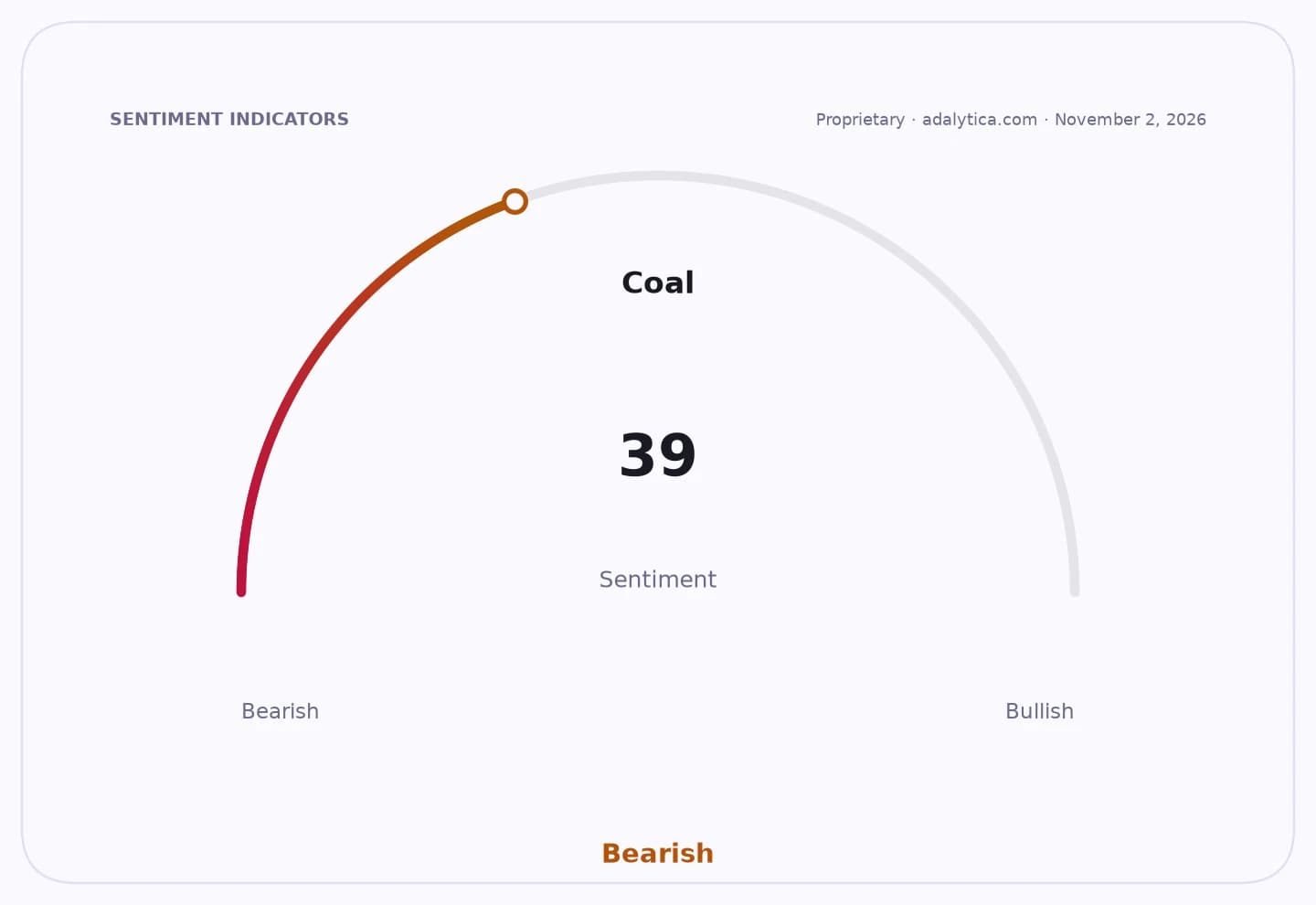
Indonesia’s two biggest commodity export earners were hit hard last week, with crude palm oil and Newcastle coal both tumbling as weaker global demand signals, softer crude prices and policy uncertainty converged ahead of next week’s trade.
Indonesia Palm Oil and Coal Drop on Demand Concerns
For investors, the move matters because CPO and coal are among the main drivers of Indonesia’s commodity-linked export revenue, cash flow for producers and the broader terms of trade. When both markets fall together, the pressure ripples through plantation groups, miners, freight markets and state revenue expectations, while also tightening sentiment around emerging-market commodity plays.
Sentiment Indicators
Malaysia’s benchmark palm oil contract for January 2027 settled at 4,258 ringgit a ton on Friday, down 9.04% on the week and its steepest weekly drop in nearly two years. Newcastle coal closed at $141.10 a ton, off 7.45% for the week after five straight daily declines. Both contracts ended at their weakest levels of the week, underlining how quickly the post-rally unwind gathered pace.
Palm oil took the harder hit in relative terms. The contract fell every trading day last week, extending a two-week losing streak and closing at its lowest since March 5. The slide was driven in part by a broad drop in competing vegetable oils, especially soybean oil, which tends to set the tone for the wider edible oils complex. A weaker crude oil backdrop also reduced the appeal of palm oil in biodiesel production, cutting one of the key demand supports that had helped the market earlier in the year.
The oil move is important beyond the agricultural market because palm oil competes directly with soybean oil, sunflower oil and, increasingly, with energy economics tied to biodiesel mandates. Reuters data showed soybean oil futures in Dalian and Chicago all softened, while crude prices also eased on expectations of some de-escalation in Middle East tensions. A weaker ringgit offered limited relief, making Malaysian palm oil cheaper for foreign buyers, but not enough to offset the broader selloff.
Coal’s drop was less dramatic but equally important for Indonesia because it comes after a long period of volatile trade tied to Asia’s power demand. Newcastle coal has now fallen about 9.6% from its October 19 peak, as Chinese buyers remain cautious and domestic output in China improves. Sxcoal reported that importers in China were still reluctant to step up purchases even with winter stockpiling season approaching, a sign the market does not yet trust that demand will tighten enough to absorb supply comfortably.
That leaves the coal market balanced between two competing forces: wary import demand on one side and persistent tightness in some high-calorific grades on the other. For producers, that means rallies may still be possible, but they are likely to be shallow unless Chinese buying accelerates or weather-related demand strengthens materially.
The policy backdrop added another layer of relevance for Indonesia. Jakarta said it will revise plans that had required strategic commodity exports to pass through a state-linked entity after Dec. 31, 2026. Danantara Sumberdaya Indonesia, or DSI, will instead act as an export-monitoring body rather than a sole exporter, with the rules due to be finalized by mid-November.
That matters because the original proposal had raised concerns about trade frictions, compliance costs and potential delays in commodity flows. A monitoring model is less disruptive for exporters of palm oil, coal and ferroalloys, and should reduce the risk of a policy shock at the turn of the year. But the final cost of verification still matters: the palm oil industry has warned that excessive fees could squeeze margins for growers and processors already facing softer prices.
Technically, both markets look fragile heading into next week. Palm oil is trading below its short-term moving averages and faces support around 4,200 ringgit, while coal sits just above the psychologically important $140 level. A break below those thresholds would likely invite another round of selling from trend-following funds and physical buyers waiting for cheaper entry points.
The near-term outlook now hinges on whether China’s winter restocking materializes fast enough to stabilize coal, and whether vegetable oil and crude markets find a floor to support palm oil. Until then, the dominant story is not just that both Indonesian export-linked commodities fell, but that the market is pricing in a weaker demand backdrop while waiting for clearer policy and trade signals next week.
| Entity | Gains | Losses |
|---|---|---|
| Palm oil buyers | ▲Lower input costs | ▼Palm oil producers |
| Coal utilities/importers | ▲Cheaper fuel costs | ▼Indonesian coal exporters |
| DSI / regulators | ▲More control and transparency | ▼Exporters facing extra compliance |
| Short-term bears | ▲Momentum continues | ▼Long holders of CPO and coal |